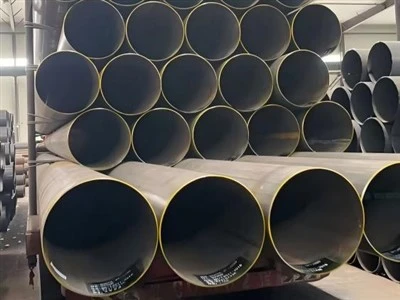
Hey there! As an ERW pipe supplier, I've been deeply involved in the offshore projects scene for quite some time. Offshore projects are no joke - they're high - stakes, challenging, and demand top - notch materials. In this blog, I'm gonna spill the beans on the special requirements for ERW pipes in offshore projects.
Corrosion Resistance
First off, corrosion is the arch - enemy in offshore environments. Saltwater, humidity, and the presence of various chemical compounds in the sea air can eat away at pipes faster than you can say "offshore rig." ERW pipes used in these projects need to be like knights in shining armor against corrosion.
One popular solution is galvanization. A Galvanized Steel Pipe has a zinc coating that acts as a sacrificial anode. The zinc corrodes instead of the steel, protecting the underlying pipe. This is crucial in offshore settings where the pipes are constantly exposed to corrosive elements. We've seen pipes that aren't properly protected start to show signs of rust and degradation within a few months, which can lead to leaks and structural failures.
Another option is using corrosion - resistant alloys. These alloys are specifically formulated to withstand the harsh offshore conditions. They can resist the effects of pitting, crevice corrosion, and stress - corrosion cracking. But hey, these alloys come at a cost, so it's a balance between budget and the level of protection needed.
High Strength and Durability
Offshore projects are all about dealing with extreme forces. Waves, currents, and the weight of the structures themselves put a tremendous amount of stress on the pipes. That's why ERW pipes need to have high strength.
API 5L GR.X42 ERW STEEL PIPE is a great example. It meets the API 5L standard, which is widely recognized in the oil and gas industry, especially for offshore applications. This pipe has a minimum yield strength of 42,000 psi, which means it can handle a lot of pressure without deforming or breaking.
Durability is also key. The pipes need to be able to withstand the constant wear and tear over the long term. We're talking about decades of service in some cases. That means the manufacturing process of the ERW pipes has to be spot - on. Any defects in the weld or the pipe body can lead to premature failure.
Weld Quality
Since ERW pipes are made by welding, the quality of the weld is super important. In offshore projects, a faulty weld can be a disaster. It can cause leaks, which can lead to environmental damage and costly repairs.
The welding process for offshore ERW pipes has to be carefully controlled. We use advanced welding techniques and equipment to ensure that the welds are strong and free of defects. Non - destructive testing methods like ultrasonic testing and X - ray inspection are used to check the quality of the welds. Any weld that doesn't meet the strict standards is rejected.
Dimensional Accuracy
In offshore projects, everything has to fit together like a well - oiled machine. That's why dimensional accuracy is a must for ERW pipes. The pipes need to have the right diameter, wall thickness, and length.
If the pipes are too large or too small, they won't fit properly into the existing infrastructure. This can lead to installation problems and can compromise the integrity of the entire system. For example, ASTM A53 GR.A ERW PIPE has specific dimensional requirements that need to be met. We use precision manufacturing processes and quality control measures to ensure that our pipes meet these requirements.
Flexibility and Bendability
Offshore structures often have complex layouts, and the pipes need to be able to bend and adapt to these layouts. ERW pipes need to have a certain degree of flexibility and bendability.
However, this has to be balanced with the need for strength. You don't want a pipe that bends too easily and loses its structural integrity. We work with engineers to design pipes that can be bent to the required angles without cracking or deforming. This often involves using special heat treatment processes to improve the ductility of the pipes.
Hydrostatic Testing
Before the pipes are shipped to the offshore project site, they need to undergo hydrostatic testing. This test involves filling the pipes with water and pressurizing them to a specified level.
The purpose of this test is to check for leaks and to ensure that the pipes can withstand the internal pressure they'll be subjected to in the offshore environment. Any pipe that fails the hydrostatic test is not suitable for use in the project. It's a crucial step in ensuring the safety and reliability of the pipes.
Certification and Compliance
Offshore projects are highly regulated, and ERW pipes need to meet a variety of certifications and standards. These standards are in place to ensure the safety and quality of the pipes.
We make sure that our pipes are certified to meet international standards like API, ASTM, and ISO. This gives our customers the confidence that they're getting high - quality pipes that are suitable for use in offshore projects.
Installation and Handling Requirements
Once the pipes reach the offshore site, proper installation and handling are crucial. The pipes need to be installed in a way that minimizes stress and damage.
Special equipment and techniques are used for lifting, transporting, and installing the pipes. Workers need to be trained to handle the pipes correctly to avoid any accidents or damage. For example, using the wrong lifting equipment can cause dents or scratches on the pipes, which can weaken them over time.
Cost - Effectiveness
While all these special requirements are important, cost - effectiveness is also a major consideration in offshore projects. The project managers are always looking for ways to reduce costs without compromising on quality.
As a supplier, we work closely with our customers to find the right balance. We offer a range of ERW pipes with different specifications and price points. By understanding the specific needs of the project, we can recommend the most cost - effective solution.


Conclusion
In conclusion, ERW pipes in offshore projects have a ton of special requirements. From corrosion resistance to high strength, weld quality, dimensional accuracy, and more, every aspect needs to be carefully considered.
If you're involved in an offshore project and are looking for high - quality ERW pipes that meet all these special requirements, don't hesitate to reach out. We're here to help you find the perfect solution for your project. Whether it's a small - scale offshore operation or a large - scale oil and gas platform, we've got the expertise and the products to meet your needs. Let's talk and see how we can work together to make your project a success.
References
- API 5L Standard for Line Pipe
- ASTM A53 Standard Specification for Pipe, Steel, Black and Hot - Dipped, Zinc - Coated, Welded and Seamless
- ISO Standards for Steel Pipes and Tubes