


Hey there! I'm a supplier of LSAW steel pipes, and today I want to have a chat about the limitations of these pipes. LSAW, or Longitudinal Submerged Arc Welded, steel pipes are widely used in various industries due to their strength and durability. But like anything else, they've got their own set of drawbacks.
High Production Cost
First off, the production cost of LSAW steel pipes is relatively high. The manufacturing process involves several complex steps. You've got to start with high - quality steel plates. These plates need to be carefully selected to meet specific standards. Then, they go through a series of forming operations to shape them into pipes.
The welding process is crucial and requires specialized equipment and highly skilled welders. The submerged arc welding technique used in LSAW pipe production demands precise control to ensure the quality of the weld. All these factors, from the raw materials to the labor and equipment, drive up the cost.
Compared to some other types of pipes like the Ssaw Steel Pipe, which has a different manufacturing process, LSAW pipes can be significantly more expensive. For smaller projects or those with tight budgets, this high cost can be a major deterrent.
Limited Production Efficiency
Another limitation is the limited production efficiency. The production of LSAW steel pipes is a time - consuming process. Each pipe is made one by one, and the forming and welding operations take a fair amount of time.
In large - scale construction projects where a large quantity of pipes is needed in a short period, the slow production rate of LSAW pipes can be a real headache. Construction schedules can be delayed, and this can lead to additional costs for the project. For example, if a pipeline project has a strict deadline and the supply of LSAW pipes is not fast enough, it can cause the entire project to fall behind schedule.
Size and Thickness Constraints
LSAW steel pipes also have some size and thickness constraints. There are practical limits to the diameter and wall thickness that can be produced. For extremely large - diameter pipes or pipes with very thick walls, the manufacturing process becomes even more challenging and costly.
Manufacturers need to have the appropriate equipment and technology to produce pipes of non - standard sizes. In some cases, it might not be feasible at all. This can be a problem for industries that require pipes with unique dimensions. For instance, in some offshore oil and gas projects, specific large - diameter and thick - walled pipes are needed, and if LSAW pipes can't meet those requirements, alternative pipe types have to be considered.
Corrosion Susceptibility
Corrosion is another issue with LSAW steel pipes. Even though steel is a strong material, it's still susceptible to corrosion when exposed to certain environments. If the pipes are used in areas with high humidity, acidic soil, or saltwater, corrosion can occur over time.

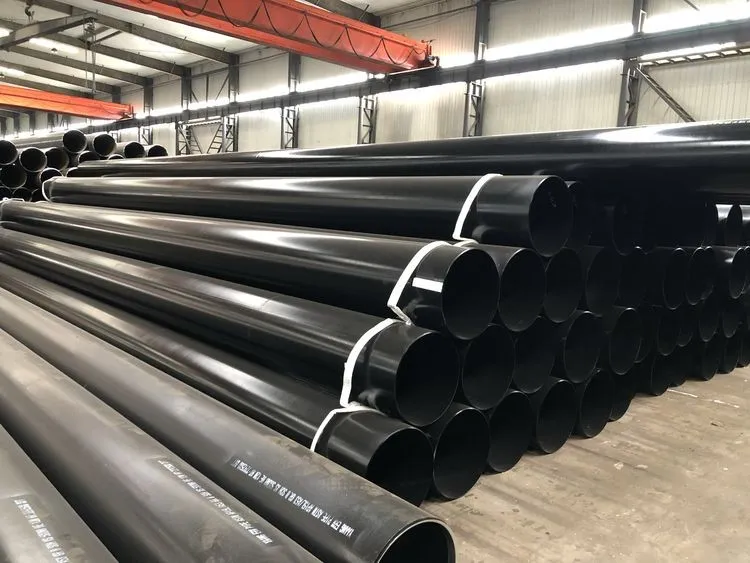
Corrosion can weaken the pipes, reduce their lifespan, and even lead to leaks. To prevent corrosion, additional protective coatings are required. These coatings add to the cost of the pipes and also require proper application and maintenance. If the coating is damaged during transportation or installation, the pipes are at risk of corrosion.
Weld Defects
The welding process, while crucial for the integrity of LSAW steel pipes, can also introduce some problems. Weld defects such as porosity, cracks, and lack of fusion can occur. These defects can compromise the strength and durability of the pipes.
Detecting and fixing these weld defects can be a difficult and time - consuming process. Non - destructive testing methods like ultrasonic testing and radiographic testing are used to detect the defects, but these methods also add to the production cost. And if the defects are not detected in time, they can lead to failures in the pipes during use.
Transportation and Installation Challenges
Transporting and installing LSAW steel pipes can be a challenge. Due to their size and weight, special transportation equipment is required. They need to be handled carefully to avoid damage during transit.
During installation, the pipes need to be aligned precisely, especially in projects where a long pipeline is being constructed. Any misalignment can cause problems in the overall performance of the pipeline. And because of their heavy weight, additional equipment and labor are needed for installation, which again adds to the cost.
Market Competition
In the market, LSAW steel pipes face tough competition from other types of pipes. As I mentioned earlier, Ssaw Steel Pipe has a different manufacturing process and is often more cost - effective. There are also other types of pipes like seamless pipes, which have their own advantages.
The market demand for LSAW pipes can be affected by the availability and cost - effectiveness of these alternative products. For us as suppliers, it means we have to work hard to convince customers that the benefits of LSAW pipes outweigh their limitations.
Environmental Impact
The production of LSAW steel pipes also has an environmental impact. The manufacturing process consumes a large amount of energy and generates a significant amount of waste. The use of raw materials like steel plates also has an environmental cost.
As more and more industries are becoming environmentally conscious, this can be a limitation for LSAW pipes. Customers may prefer to use pipes that have a lower environmental impact, even if they have to pay a bit more.
Despite all these limitations, LSAW steel pipes still have their place in many industries. They are known for their high strength and reliability, especially in applications where the quality of the pipe is of utmost importance. For example, in the oil and gas industry, API5L LSAW STEEL PIPE is widely used because it meets the strict standards of the industry.
If you're in the market for steel pipes and are considering LSAW pipes, it's important to weigh the limitations against the benefits. We, as a LSAW steel pipe supplier, are always here to help you make the right decision. If you have any questions or want to discuss your specific requirements, don't hesitate to reach out. We can provide you with more detailed information and offer solutions that fit your needs. Whether it's for a small - scale project or a large - scale industrial application, we're ready to assist you in your procurement process.
References
- Steel Pipe Manufacturing Handbook
- Journal of Pipeline Engineering and Construction
- Industry Reports on Steel Pipe Market Trends


