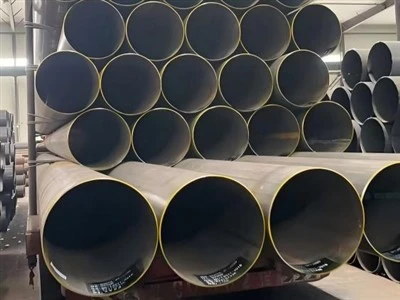
Hey there! As a supplier of hot formed hollow sections, I've had my fair share of experiences in the industry. Today, I wanna talk about the limitations of hot formed hollow sections.
First off, let's understand what hot formed hollow sections are. These are basically metal sections that are formed while the metal is in a heated state. They come in various shapes like rectangular, square, and circular, and are used in a wide range of applications, from construction to manufacturing.
One of the major limitations is the cost. The process of hot forming is quite energy - intensive. You need to heat the metal to a specific temperature, and maintaining that temperature throughout the forming process requires a lot of energy. This energy consumption directly translates into higher production costs. And as a supplier, I know that these costs are often passed on to the customers. For example, if a customer is looking for a large quantity of Rectangular Tube, the high cost associated with hot forming might make them think twice. They might start considering alternative manufacturing methods or materials that are more budget - friendly.
Another limitation is the dimensional accuracy. While hot forming can produce some pretty complex shapes, achieving high - precision dimensions can be a challenge. When the metal is heated, it expands, and during the cooling process, it contracts. This expansion and contraction can lead to slight variations in the final dimensions of the hollow section. In applications where very tight tolerances are required, like in some high - tech machinery or aerospace components, these dimensional inaccuracies can be a deal - breaker. For instance, if a customer needs S355J2H STEEL STRUCTURAL HOLLOW SECTIONS for a project where precise measurements are crucial, the potential dimensional variations from hot forming could cause problems.
Surface finish is also an area where hot formed hollow sections have limitations. The heating and forming process can sometimes result in a rough or uneven surface. Oxidation can occur on the surface of the metal during heating, leaving behind a scale. Removing this scale can be an additional step in the manufacturing process, which again adds to the cost. A poor surface finish might not be suitable for applications where aesthetics are important, such as in architectural projects. Customers might expect a smooth and clean surface for a building facade, and if the hot formed hollow section doesn't meet those expectations, it won't be a viable option.


The mechanical properties of hot formed hollow sections can also be a bit of a double - edged sword. While the hot forming process can improve some mechanical properties like strength and ductility, it can also lead to inconsistent properties throughout the section. The rapid heating and cooling can create internal stresses within the metal, which might affect its long - term performance. For example, in a situation where the hollow section is used in a structure that will be subjected to dynamic loads, these internal stresses could potentially lead to premature failure. If a customer is using API 5L PSL2 X52 Line Pipe for transporting fluids under high pressure, any inconsistency in the mechanical properties could pose a significant risk.
Hot formed hollow sections also have limitations when it comes to material selection. Not all metals are suitable for hot forming. Some metals might have a very narrow temperature range for forming, which makes the process difficult to control. Others might react differently to the heating and cooling cycles, leading to poor quality sections. This limited material selection can be a drawback for customers who have specific material requirements based on the application. For example, if a customer needs a specific alloy with unique corrosion - resistant properties, and that alloy can't be easily hot formed, they'll have to look for other manufacturing methods.
In terms of production speed, hot forming can be relatively slow. The heating and cooling cycles take time, and setting up the equipment for each batch can also be time - consuming. This slow production speed can be a problem when there are tight deadlines. If a customer has a large - scale project with a short timeline, the slow production of hot formed hollow sections might not be able to meet their needs. They might prefer a manufacturing method that can produce the required quantity in a shorter period.
Now, despite these limitations, hot formed hollow sections still have their place in the market. They offer certain advantages like the ability to create complex shapes and good overall strength. And as a supplier, I'm always working on ways to minimize these limitations. We're constantly investing in new technologies and processes to improve dimensional accuracy, reduce costs, and enhance the surface finish.
If you're in the market for hot formed hollow sections and have specific requirements, don't let these limitations scare you off. We're here to work with you to find the best solutions. Whether you need Rectangular Tube, S355J2H STEEL STRUCTURAL HOLLOW SECTIONS, or API 5L PSL2 X52 Line Pipe, we can have a detailed discussion about your project and see how we can meet your needs. So, feel free to reach out and let's start a conversation about your next project.
References
- General knowledge from years of experience in the hot formed hollow section industry.
- Industry reports on metal forming processes and their limitations.