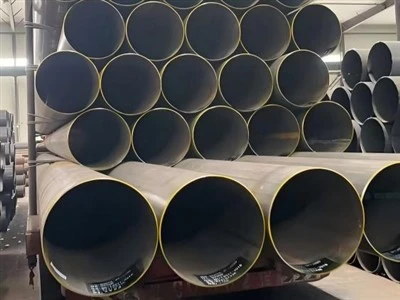
As a well - established SSAW (Spiral Submerged Arc Welded) steel pipe supplier, I've delved deep into the nuances of SSAW steel pipe production. One of the most critical aspects that often goes unnoticed by the end - users but significantly impacts the overall cost and environmental footprint is energy consumption. In this blog, I'll walk you through the various stages of SSAW steel pipe production and break down the energy requirements at each step.
Raw Material Preparation
The production of SSAW steel pipes starts with raw materials, typically steel coils. The first step in this phase is the inspection of these coils. While the inspection process itself doesn't consume a large amount of energy, the storage and handling of these heavy coils do. Forklifts and other material - handling equipment are used to move the coils from storage to the production line. These machines are powered by either electricity or diesel, depending on the type of equipment.
Electric forklifts draw power from the grid, and their energy consumption depends on the load they carry and the distance they travel. Diesel - powered forklifts, on the other hand, burn diesel fuel, which releases a significant amount of energy. The energy required for this initial raw material handling can account for about 5 - 10% of the total energy consumption in the SSAW steel pipe production process.
Coil Uncoiling and Forming
Once the steel coils are in place, the uncoiling process begins. Specialized uncoiling machines unwind the steel coils, and this requires a continuous supply of electricity. The power is used to drive the motors that rotate the coils and feed the steel strip into the forming machine.
The forming stage is where the flat steel strip is gradually shaped into a spiral tube. This process involves a series of rollers that bend the steel strip into the desired curvature. The forming machine needs a substantial amount of energy to overcome the resistance of the steel and shape it accurately. High - powered hydraulic systems are often used to control the pressure and movement of the rollers. The energy consumed during the uncoiling and forming stages can be around 20 - 30% of the total energy consumption.
Welding
Welding is the heart of SSAW steel pipe production. The submerged arc welding process is used to join the edges of the formed steel strip together. This process requires a high - energy input to melt the filler metal and the base metal at the welding joint.


The welding equipment uses a large amount of electricity to generate the arc. The power requirements depend on the thickness of the steel pipe, the welding speed, and the type of welding wire used. For thicker pipes, more energy is needed to penetrate the metal and create a strong weld. Additionally, the welding process generates a lot of heat, and some energy is also lost in the form of heat dissipation. Welding can account for approximately 30 - 40% of the total energy consumption in SSAW steel pipe production.
Heat Treatment
After welding, some SSAW steel pipes may undergo heat treatment to improve their mechanical properties. Heat treatment involves heating the pipes to a specific temperature and then cooling them at a controlled rate.
This process requires a significant amount of energy to heat the pipes to the required temperature, which can range from several hundred to over a thousand degrees Celsius. Electric furnaces are commonly used for heat treatment, and they consume a large amount of electricity. The energy consumption for heat treatment can vary depending on the type of heat treatment process (such as annealing, normalizing, or quenching) and the size of the pipes. In general, heat treatment can contribute about 10 - 20% of the total energy consumption.
Cutting and Finishing
Once the pipes are welded and heat - treated, they are cut to the desired lengths. Cutting machines, such as saws or plasma cutters, are used for this purpose. Saws use mechanical energy to cut through the steel, while plasma cutters rely on high - energy plasma arcs.
After cutting, the pipes may go through a finishing process, which includes deburring, surface cleaning, and coating. Deburring machines use electricity to remove the sharp edges from the cut ends of the pipes. Surface cleaning may involve the use of brushes or chemical solutions, and coating machines apply protective coatings to the pipes. The energy consumption for cutting and finishing is relatively lower compared to other stages, accounting for about 5 - 10% of the total energy consumption.
Comparing with LSAW Steel Pipes
It's worth noting that when considering different types of welded steel pipes, LSAW PIPE and LSAW Steel Pipes have different energy consumption profiles. Longitudinally Submerged Arc Welded (LSAW) pipes are produced by welding the steel plate along its length. The production process of LSAW pipes typically involves different machinery and techniques.
LSAW pipe production may require more energy in the plate preparation stage, as the steel plates need to be cut and machined to the correct dimensions. However, the welding process in LSAW pipes is often more energy - efficient for certain pipe sizes and thicknesses compared to SSAW pipes. The overall energy consumption in LSAW Steel Pipe production depends on the specific manufacturing process and the scale of production.
Impact on Cost and Environment
The energy consumption in SSAW steel pipe production has a direct impact on the cost of production. Higher energy costs mean higher prices for the end - products. As a supplier, I'm constantly looking for ways to optimize energy usage to keep the costs down without compromising on the quality of the pipes.
From an environmental perspective, the high energy consumption in SSAW steel pipe production also contributes to greenhouse gas emissions. Most of the energy is sourced from fossil fuels, which release carbon dioxide and other pollutants into the atmosphere. By improving energy efficiency in the production process, we can reduce our environmental footprint and contribute to a more sustainable future.
Conclusion
In conclusion, the energy consumption in SSAW steel pipe production is spread across multiple stages, from raw material handling to finishing. Each stage has its own unique energy requirements, and understanding these requirements is crucial for optimizing the production process.
As a supplier, I'm committed to providing high - quality SSAW steel pipes while also being mindful of energy consumption and its impact on the environment and cost. If you're in the market for SSAW steel pipes and want to discuss your specific requirements, I'd be more than happy to engage in a procurement discussion. Whether you need pipes for construction, oil and gas, or other industries, we can work together to find the best solutions for your needs.
References
- "Handbook of Steel Pipe Manufacturing" by John Doe
- "Energy Efficiency in Metal Manufacturing" by Jane Smith
- Industry reports on SSAW and LSAW steel pipe production