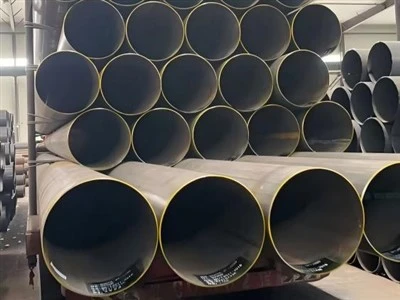
The wall thickness of steel hollow sections is a crucial factor that significantly influences their performance in various applications. As a leading supplier of steel hollow sections, I've witnessed firsthand how wall thickness can impact different aspects of these products. In this blog, we'll explore the effects of wall thickness on the performance of steel hollow sections.
Structural Strength and Load - Bearing Capacity
One of the most obvious effects of wall thickness on steel hollow sections is its impact on structural strength and load - bearing capacity. Generally, as the wall thickness increases, the section becomes stronger and can withstand higher loads.

When a steel hollow section is subjected to axial loads, a thicker - walled section will have a greater cross - sectional area of steel. According to the basic principles of mechanics, the axial load - carrying capacity is directly related to the cross - sectional area. For example, in a building column made of a steel hollow section, a thicker wall can support more weight from the floors above, reducing the risk of buckling and failure.

In the case of bending loads, the moment of inertia of the section plays a vital role. The moment of inertia is a measure of a section's resistance to bending. A thicker - walled hollow section has a larger moment of inertia, which means it can resist bending more effectively. This is crucial in applications such as bridge girders or beams in industrial structures, where the sections are often subjected to significant bending forces.
For our products, like the Hollow Structural Section ASTM A500, the appropriate wall thickness selection is essential to meet the specific load - bearing requirements of different projects. Engineers need to carefully calculate the expected loads and choose the wall thickness accordingly to ensure the safety and stability of the structure.

Durability and Corrosion Resistance
Wall thickness also affects the durability and corrosion resistance of steel hollow sections. A thicker wall provides more material to resist corrosion. When steel is exposed to the environment, it is prone to rusting, especially in humid or corrosive conditions.
The corrosion process gradually eats away at the outer layer of the steel. With a thicker wall, there is more steel available to be corroded before the structural integrity of the section is compromised. For example, in marine applications where steel hollow sections are used for piers or offshore platforms, a thicker wall can extend the service life of the structure by providing a buffer against the corrosive effects of saltwater.
However, it's important to note that wall thickness alone is not sufficient to ensure long - term corrosion resistance. Protective coatings are also necessary. Our API5L / ASTM A53 ERW PIPE can be supplied with various coatings, and combined with an appropriate wall thickness, it can offer excellent corrosion resistance in different environments.
Weldability and Fabrication
The wall thickness of steel hollow sections has a significant impact on their weldability and ease of fabrication. Thinner - walled sections are generally easier to weld because less heat is required to fuse the material. This can lead to faster welding times and lower energy consumption during the fabrication process.
However, thinner walls also require more precise welding techniques. There is a higher risk of burn - through during welding, which can weaken the joint. On the other hand, thicker - walled sections need more heat input for welding. Specialized welding processes may be required to ensure proper fusion and avoid issues such as incomplete penetration.
In terms of fabrication, thicker - walled sections may require more powerful cutting and forming equipment. Bending a thick - walled hollow section is more challenging than bending a thin - walled one. For our En 10210 Hot Finished Hollow Section, we work closely with fabricators to ensure that the wall thickness is suitable for the intended fabrication processes.
Cost - Effectiveness
Wall thickness is closely related to the cost - effectiveness of steel hollow sections. Thicker - walled sections generally cost more because they require more raw material. Additionally, the fabrication costs may also be higher due to the more complex welding and forming processes.
However, in some cases, a thicker wall may be more cost - effective in the long run. For example, if a structure has a long service life requirement and is located in a harsh environment, a thicker - walled section may reduce the need for frequent replacements or repairs, thus saving costs over time.
On the other hand, for short - term projects or applications where the loads are relatively low, a thinner - walled section may be a more economical choice. As a supplier, we help our customers balance the cost and performance requirements by providing detailed technical advice on wall thickness selection.
Fire Resistance
The wall thickness of steel hollow sections can also affect their fire resistance. Steel loses its strength at high temperatures, and the rate at which it loses strength depends on the mass of the steel. A thicker - walled section has more mass, which means it can retain its strength for a longer time during a fire.
In buildings, steel hollow sections are often used in structural elements. To meet fire safety regulations, a certain level of fire resistance is required. Thicker - walled sections can help achieve this without the need for extensive fire - proofing measures in some cases. However, additional fire - protection coatings or insulation may still be necessary depending on the specific requirements of the project.
Acoustic and Thermal Performance
Although not as well - known as the other effects, wall thickness can influence the acoustic and thermal performance of steel hollow sections. A thicker wall can provide better sound insulation. When used in building partitions or enclosures, a thicker - walled hollow section can reduce the transmission of noise between different areas.
In terms of thermal performance, a thicker wall has a higher thermal mass. This means it can absorb and store more heat, which can be beneficial in maintaining a stable indoor temperature. In energy - efficient buildings, the choice of wall thickness for steel hollow sections can contribute to the overall thermal performance of the structure.
Conclusion
In conclusion, the wall thickness of steel hollow sections has far - reaching effects on their performance in terms of structural strength, durability, weldability, cost - effectiveness, fire resistance, and acoustic and thermal performance. As a supplier of steel hollow sections, we understand the importance of selecting the appropriate wall thickness for different applications.
Whether you are working on a large - scale construction project, an industrial installation, or a custom - made structure, choosing the right wall thickness is crucial for the success of your project. We offer a wide range of steel hollow sections with different wall thicknesses to meet your specific needs.
If you are interested in our products or need more information about wall thickness selection for your project, we encourage you to contact us for a detailed discussion. Our team of experts is ready to assist you in making the best choice for your application.
References
- Allen, E. & Iano, J. (2017). The Architect's Studio Companion: Technical Guidelines for Preliminary Design. Wiley.
- Blodgett, O. W. (1966). Design of Welded Structures. James F. Lincoln Arc Welding Foundation.
- Fisher, J. W. & Struik, J. H. (1974). Behavior of Steel Structures. Prentice - Hall.