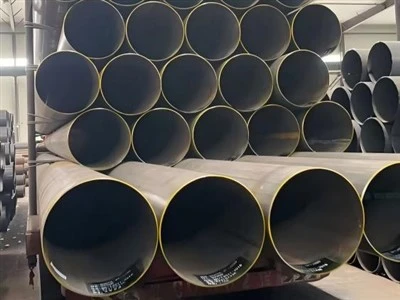
Hey there! I'm a supplier of SSAW steel pipes, and today I wanna share with you how to process the bevel of SSAW steel pipes.
First off, let's understand what a bevel is. A bevel on a SSAW steel pipe is an angled cut at the end of the pipe. It's super important for welding. When you're joining two pipes together, a well - processed bevel ensures a strong and reliable weld.
Why is Beveling Necessary?
Before we dive into the process, let me tell you why beveling is so crucial. When you just butt two pipes together without a bevel and try to weld them, you might end up with a weak joint. The weld might not penetrate deeply enough, and there could be gaps or lack of fusion. With a bevel, there's more surface area for the weld metal to bond to. This results in a much stronger and more durable connection.
Preparation Work
The first step in processing the bevel of SSAW steel pipes is preparation. You need to have the right tools. A good pipe beveling machine is a must - have. There are different types of beveling machines, like manual ones for smaller operations and automated ones for large - scale production.
You also need to make sure the pipe is clean. Any dirt, rust, or debris on the pipe surface can affect the quality of the bevel and the subsequent weld. You can use a wire brush or a grinder to clean the end of the pipe where the bevel will be cut.
Measuring and Marking
Once the pipe is clean, it's time to measure and mark the bevel. You need to know the angle of the bevel required. Common bevel angles for SSAW steel pipes range from 30° to 45°. This angle depends on the welding process and the application of the pipes.
Use a protractor or a bevel gauge to measure and mark the angle on the end of the pipe. Make sure your markings are clear and accurate. You can use a scribe or a chalk to make the markings visible.
Cutting the Bevel
Now comes the actual cutting part. If you're using a manual beveling machine, you'll need to secure the pipe firmly. Then, align the cutting tool with the markings you made earlier. Slowly start the machine and guide it along the marked line to cut the bevel.
For automated beveling machines, the process is a bit different. You input the required bevel angle and other parameters into the machine's control panel. The machine will then automatically position the cutting tool and cut the bevel. It's much faster and more precise than the manual method, especially for mass production.
Quality Control
After cutting the bevel, you need to do some quality control. Check the angle of the bevel using a bevel gauge. It should match the required angle within an acceptable tolerance. Usually, a tolerance of ±1° is considered good.
Also, look at the surface finish of the bevel. It should be smooth without any rough edges or unevenness. Any rough areas can cause problems during welding, like poor weld bead formation. If you find any issues, you can use a grinder to smooth out the bevel.
Different Types of Bevels
There are different types of bevels for SSAW steel pipes. The most common ones are the single V - bevel and the double V - bevel.
A single V - bevel is used when you're welding one side of the joint. It's relatively simple to cut and is suitable for many applications.
A double V - bevel is used for thicker pipes. It involves cutting a V - shaped bevel on both sides of the pipe end. This type of bevel allows for better penetration and a stronger weld, especially for pipes with a large wall thickness.
Comparison with Other Pipe Types
When we talk about pipe beveling, it's worth comparing SSAW steel pipes with other types like LSAW Steel Pipe and LSAW PIPE.
LSAW pipes are made by longitudinal submerged arc welding, while SSAW pipes are made by spiral submerged arc welding. The beveling process for LSAW pipes is similar in principle, but there might be some differences in the cutting parameters due to the different manufacturing processes.
For example, LSAW pipes might have a more uniform wall thickness compared to SSAW pipes, which could affect the beveling angle and the cutting speed.
Special Considerations for EN 10217 SSAW PIPE
If you're dealing with EN 10217 SSAW PIPE, there are some special considerations. EN 10217 is a European standard for steel pipes. The beveling process for these pipes needs to meet the requirements of this standard.
The standard specifies the allowable bevel angles, surface finish, and other quality parameters. You need to make sure that your beveling process complies with these requirements. This might involve more strict quality control and documentation.
Conclusion and Call to Action
In conclusion, processing the bevel of SSAW steel pipes is a crucial step in ensuring the quality of the final welded joints. By following the steps I've outlined above, you can achieve a high - quality bevel that will result in strong and reliable welds.


If you're in the market for high - quality SSAW steel pipes or need more information about the beveling process, don't hesitate to reach out. We're here to provide you with the best products and services. Whether you're a small - scale contractor or a large - scale industrial user, we can meet your needs.
References
- "Steel Pipe Welding Handbook"
- "Pipe Beveling Techniques and Best Practices"
- EN 10217 Standard Documentation