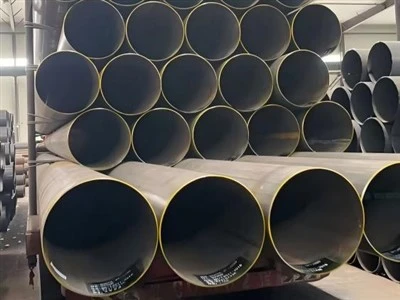
Hey there! As a supplier of SSAW (Spiral Submerged Arc Welded) steel pipes, I often get asked about how to measure the roundness of these pipes. It's a crucial aspect, especially when it comes to ensuring the quality and functionality of the pipes in various applications. In this blog, I'll share some practical methods and insights on measuring the roundness of SSAW steel pipes.
Why Measuring Roundness Matters
Before we dive into the measurement methods, let's quickly understand why roundness is so important. SSAW steel pipes are used in a wide range of industries, such as oil and gas, construction, and water supply. A pipe with poor roundness can lead to problems like uneven stress distribution, leakage, and difficulty in installation. For example, in oil and gas pipelines, an out - of - round pipe may cause issues with the flow of fluids and increase the risk of corrosion at the points of stress concentration.
Tools for Measuring Roundness
There are several tools that can be used to measure the roundness of SSAW steel pipes.
Caliper
A caliper is a simple and commonly used tool. It can be either a vernier caliper or a digital caliper. You just need to measure the diameter of the pipe at different points around its circumference. To get an accurate measurement, it's recommended to take at least three measurements at equal intervals around the pipe. For instance, you can measure at 0°, 120°, and 240°. The difference between the maximum and minimum diameters gives you an indication of the pipe's roundness. However, calipers have their limitations. They are more suitable for small - to medium - sized pipes, and the accuracy can be affected by the operator's skill.
Micrometer
A micrometer provides a more precise measurement compared to a caliper. It can measure the diameter of the pipe with a high degree of accuracy. Similar to using a caliper, you need to take multiple measurements around the pipe's circumference. Micrometers are especially useful when you need to measure the roundness of pipes with tight tolerances. But they are also more expensive and require more careful handling.
Roundness Measuring Instrument
This is a specialized tool designed specifically for measuring roundness. It works by rotating the pipe or the measuring probe around the pipe's axis while continuously measuring the distance from the center of the pipe to the outer surface. The instrument then analyzes the data and provides detailed information about the pipe's roundness, such as the form error and the roundness deviation. Roundness measuring instruments are very accurate and can handle pipes of various sizes. However, they are quite expensive and may require trained personnel to operate.
Step - by - Step Measurement Process
Here's a step - by - step guide on how to measure the roundness of an SSAW steel pipe using basic tools like a caliper:
- Prepare the Pipe
- Make sure the pipe is clean and free from any debris or dirt on the surface where you'll be taking the measurements. If there are any bumps or dents, note their locations as they may affect the measurement.
- Mark the Measurement Points
- Use a marker to mark at least three points around the pipe's circumference at equal intervals. This will ensure that you get a representative measurement of the pipe's roundness.
- Take the Measurements
- Open the caliper and place it across the diameter of the pipe at each marked point. Make sure the caliper is perpendicular to the pipe's axis for an accurate measurement. Take the readings and record them.
- Calculate the Roundness
- Find the maximum and minimum diameters from the recorded measurements. The roundness is then calculated as the difference between the maximum and minimum diameters. For example, if the maximum diameter is 100.5 mm and the minimum diameter is 99.8 mm, the roundness is 100.5 - 99.8 = 0.7 mm.
Factors Affecting Roundness Measurement
There are several factors that can affect the accuracy of roundness measurement.
Pipe Surface Condition
As mentioned earlier, a dirty or damaged pipe surface can lead to inaccurate measurements. Rust, scale, or weld beads can interfere with the contact between the measuring tool and the pipe, resulting in incorrect readings.
Measurement Location
The location where you take the measurements can also affect the results. If you measure near the ends of the pipe, the roundness may be different from the middle part due to the manufacturing process. It's best to take measurements in the middle of the pipe, away from the welded joints if possible.
Temperature
Temperature can cause the pipe to expand or contract, which in turn affects its diameter. If you're taking measurements in a hot or cold environment, it's important to consider the temperature effect and make appropriate corrections if necessary.


Comparison with LSAW Steel Pipes
When it comes to pipe manufacturing, you might also hear about LSAW PIPE or LSAW Steel Pipe and LSAW Steel Pipes. LSAW (Longitudinal Submerged Arc Welded) pipes are manufactured using a different process compared to SSAW pipes. The manufacturing process can influence the roundness of the pipes. LSAW pipes are usually made from a single steel plate, which may result in a different roundness characteristic compared to SSAW pipes, which are formed by spirally welding a steel strip. However, the methods of measuring roundness are generally similar for both types of pipes.
Importance of Roundness in Different Applications
In the oil and gas industry, the roundness of pipes is crucial for ensuring a smooth flow of oil and gas. A pipe with good roundness reduces the friction inside the pipe, which in turn reduces energy consumption and the risk of pipeline blockages.
In construction, round pipes are often used for structural purposes. Pipes with proper roundness can better withstand the loads and stresses applied to them, ensuring the stability of the structure.
Conclusion
Measuring the roundness of SSAW steel pipes is an important step in ensuring their quality and suitability for different applications. Whether you use a simple caliper or a specialized roundness measuring instrument, the key is to take multiple measurements and account for the factors that can affect the accuracy. As a SSAW steel pipe supplier, I understand the importance of providing pipes with high - quality roundness. If you're in the market for SSAW steel pipes or have any questions about roundness measurement, feel free to contact us for more information and to start a procurement discussion.
References
- ASTM A252 Standard Specification for Welded and Seamless Steel Pipe Piles
- ISO 1101 Geometrical Product Specifications (GPS) - Geometrical tolerancing - Tolerances of form, orientation, location and run - out