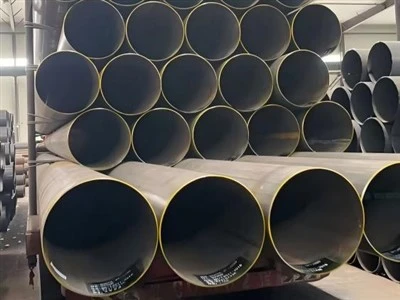
Ensuring the tightness of welded joints in EN 10210 hollow sections is a critical aspect of manufacturing and construction processes. As a reliable supplier of EN 10210 HOLLOW SECTIONS, I understand the importance of high - quality welded joints for the structural integrity and performance of the final products. In this blog, I will share some key strategies and considerations to achieve tight welded joints in EN 10210 hollow sections.
Understanding EN 10210 Hollow Sections
EN 10210 is a European standard that specifies the technical delivery conditions for hot - finished structural hollow sections of non - alloy and fine grain steels. These hollow sections are widely used in various applications, such as building structures, bridges, and mechanical engineering. The tightness of welded joints is crucial because it directly affects the strength, durability, and leak - proof properties of the structures made from these sections.
Material Selection
The first step in ensuring tight welded joints is to select the appropriate EN 10210 hollow sections. Different grades of steel within the EN 10210 standard have different chemical compositions and mechanical properties. For example, En 10210 S355j2h Hollow Sections offer good weldability and high strength, which are ideal for applications where strong and tight welded joints are required. It is essential to choose a grade that is suitable for the specific welding process and the intended application.
Before welding, the surface of the EN 10210 hollow sections must be properly prepared. Any rust, oil, dirt, or oxide layers on the surface can affect the quality of the weld. Surface cleaning can be done using methods such as grinding, sandblasting, or chemical cleaning. Grinding is a common method for removing small amounts of surface contaminants, while sandblasting can be used for larger - scale cleaning. Chemical cleaning, on the other hand, can be effective in removing stubborn contaminants. After cleaning, the surface should be free of any loose particles or residues to ensure good contact between the welding electrode and the base metal.
Welding Process Selection
The choice of welding process is another important factor in ensuring tight welded joints. There are several welding processes available, including shielded metal arc welding (SMAW), gas metal arc welding (GMAW), and submerged arc welding (SAW). Each process has its own advantages and disadvantages.
- Shielded Metal Arc Welding (SMAW): This is a simple and widely used welding process. It is suitable for welding in various positions and can be used for both thick and thin sections. However, it may require more skill to achieve high - quality welds, and the welding speed is relatively slow.
- Gas Metal Arc Welding (GMAW): GMAW is a fast and efficient welding process. It uses a continuous wire electrode and a shielding gas to protect the weld from oxidation. This process is suitable for high - volume production and can produce high - quality welds with good appearance.
- Submerged Arc Welding (SAW): SAW is a high - productivity welding process that is commonly used for welding thick sections. It uses a granular flux to cover the weld, which provides excellent protection against oxidation and produces high - quality, deep - penetration welds.
Welding Parameters
Proper welding parameters are essential for achieving tight welded joints. The main welding parameters include welding current, voltage, welding speed, and electrode diameter. These parameters need to be carefully adjusted according to the thickness of the EN 10210 hollow sections, the welding process, and the type of electrode used.
- Welding Current: The welding current affects the heat input and the penetration of the weld. Too low a current may result in incomplete fusion, while too high a current can cause excessive melting and distortion.
- Voltage: The voltage affects the arc length and the stability of the welding arc. A proper voltage setting is necessary to maintain a stable arc and ensure good weld quality.
- Welding Speed: The welding speed determines the amount of heat input per unit length of the weld. A too - fast welding speed may lead to insufficient fusion, while a too - slow speed can cause excessive heat input and distortion.
- Electrode Diameter: The electrode diameter is selected based on the thickness of the material being welded. A larger electrode diameter can be used for thicker sections, while a smaller diameter is suitable for thinner sections.
Quality Control during Welding
During the welding process, strict quality control measures should be implemented to ensure the tightness of the welded joints. Visual inspection is the first step in quality control. The welder should check the appearance of the weld for any visible defects, such as cracks, porosity, or lack of fusion.
Non - destructive testing (NDT) methods can also be used to detect internal defects in the welded joints. Common NDT methods include ultrasonic testing (UT), radiographic testing (RT), and magnetic particle testing (MT). Ultrasonic testing is used to detect internal flaws such as cracks and lack of fusion. Radiographic testing can provide a detailed image of the internal structure of the weld, allowing for the detection of small defects. Magnetic particle testing is suitable for detecting surface and near - surface defects in ferromagnetic materials.
Post - Weld Treatment
After welding, post - weld treatment is necessary to improve the quality and tightness of the welded joints. Heat treatment is a common post - weld treatment method. It can relieve residual stresses in the weld, improve the mechanical properties of the weld metal, and reduce the risk of cracking.
Stress - relieving heat treatment involves heating the welded structure to a specific temperature and holding it for a certain period of time before slowly cooling it. This process helps to reduce the internal stresses caused by the welding process, which can improve the long - term performance of the welded joints.
Comparison with Other Products
In the market of hollow sections, there are other standards and products available, such as En 10219 Hollow Sections and API 5L PSL1 X52 Line Pipe. While these products also have their own applications and advantages, EN 10210 hollow sections are specifically designed for structural applications. The focus on achieving tight welded joints in EN 10210 sections is to meet the high - strength and durability requirements of structural projects.
Compared with En 10219 hollow sections, which are more suitable for cold - formed applications, EN 10210 sections are hot - finished, providing better mechanical properties for welding and structural use. API 5L PSL1 X52 line pipe is mainly used for oil and gas transportation, and its welding requirements are more focused on pressure - resistance and leak - proof properties in the pipeline system.

Conclusion
Ensuring the tightness of welded joints in EN 10210 hollow sections requires a comprehensive approach, including proper material selection, surface preparation, welding process selection, control of welding parameters, quality control during welding, and post - weld treatment. By following these strategies, we can produce high - quality welded joints that meet the strict requirements of various applications.

As a supplier of EN 10210 HOLLOW SECTIONS, I am committed to providing high - quality products and technical support to our customers. If you are interested in our EN 10210 hollow sections or have any questions about welding and ensuring the tightness of welded joints, please feel free to contact us for procurement and further discussions.

References
- European Committee for Standardization. (2006). EN 10210 - 1:2006, Hot finished structural hollow sections of non - alloy and fine grain steels - Part 1: Technical delivery conditions.
- American Society for Nondestructive Testing. (2019). Nondestructive Testing Handbook, Volume 7: Welding Inspection.
- Welding Handbook Committee. (2018). Welding Handbook, Volume 2: Welding Processes.