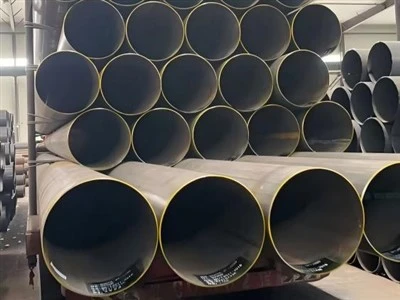
Hey there! I'm a supplier of seamless mechanical pipes, and today I want to chat about how to determine the wall thickness tolerance of these pipes. It's a crucial aspect that can greatly affect the performance and quality of the pipes, so let's dive right in.
First off, why is wall thickness tolerance so important? Well, in mechanical applications, pipes need to withstand various pressures, loads, and environmental conditions. If the wall thickness deviates too much from the specified range, it can lead to issues like reduced strength, uneven stress distribution, and even premature failure. So, getting that tolerance right is key to ensuring the pipes work as intended.
Industry Standards and Specifications
The first step in determining wall thickness tolerance is to look at the relevant industry standards and specifications. These standards are like the rulebooks for the manufacturing and use of seamless mechanical pipes. For example, standards from organizations like ASTM (American Society for Testing and Materials) and ISO (International Organization for Standardization) provide clear guidelines on acceptable wall thickness variations.
ASTM has different standards for different types of seamless mechanical pipes. For instance, ASTM A53 is commonly used for black and hot-dipped, zinc-coated, welded and seamless steel pipe, which is suitable for mechanical and pressure applications. It specifies the allowable wall thickness tolerance based on the nominal wall thickness of the pipe.
ISO standards, on the other hand, are more globally recognized. They ensure that pipes meet certain quality and performance criteria no matter where they are manufactured or used. When you're dealing with international clients or projects, adhering to ISO standards can be a big plus.
Measuring the Wall Thickness
Once you know the standards, you need to actually measure the wall thickness of the pipes. There are several methods for doing this, and the choice depends on factors like the pipe size, material, and the level of accuracy required.
One common method is using ultrasonic thickness gauges. These gauges work by sending ultrasonic waves through the pipe wall and measuring the time it takes for the waves to bounce back. Based on the speed of sound in the pipe material, the gauge can calculate the wall thickness. Ultrasonic gauges are non-destructive, which means they don't damage the pipe during the measurement process. They're also relatively quick and easy to use, making them a popular choice in many manufacturing and inspection settings.
Another method is magnetic induction. This method is suitable for ferromagnetic materials, like most steel pipes. A magnetic field is applied to the pipe, and the change in the magnetic field due to the presence of the pipe wall is measured. This change is then used to determine the wall thickness. Magnetic induction is also non-destructive and can provide accurate measurements.
For pipes with larger diameters or thicker walls, you might use mechanical calipers. These are simple tools that can directly measure the outer and inner diameters of the pipe. By subtracting the inner diameter from the outer diameter and dividing by two, you can calculate the wall thickness. However, mechanical calipers might not be as accurate as ultrasonic or magnetic methods, especially for pipes with complex shapes or small wall thicknesses.
Factors Affecting Wall Thickness Tolerance
There are several factors that can affect the wall thickness tolerance of seamless mechanical pipes. Understanding these factors can help you better control and determine the tolerance.
One major factor is the manufacturing process. Seamless pipes are typically made through processes like hot rolling or cold drawing. During hot rolling, the pipe is heated to a high temperature and then passed through a series of rollers to reduce its diameter and increase its length. The high temperature can cause some variations in the wall thickness due to uneven cooling and thermal expansion. Cold drawing, on the other hand, involves pulling the pipe through a die at room temperature. This process can also introduce some small variations in the wall thickness, especially if the die is not properly aligned or the drawing speed is not consistent.
The material of the pipe also plays a role. Different materials have different properties, such as hardness, ductility, and thermal conductivity. These properties can affect how the material behaves during the manufacturing process and, consequently, the wall thickness tolerance. For example, a harder material might be more difficult to shape, which could lead to larger variations in the wall thickness.
The size of the pipe is another factor. Generally, larger pipes are more difficult to manufacture with tight wall thickness tolerances. This is because there are more variables involved, such as the length of the pipe and the amount of material being processed. Smaller pipes, on the other hand, can be more precisely controlled, resulting in smaller wall thickness variations.
Setting the Tolerance
Based on the industry standards, the measurement results, and the factors affecting the wall thickness, you can then set the appropriate tolerance for your seamless mechanical pipes. When setting the tolerance, you need to balance between the requirements of the application and the cost of manufacturing.


If the application requires high precision, such as in aerospace or high-pressure hydraulic systems, you'll need to set a relatively tight tolerance. This might mean using more advanced manufacturing techniques and more precise measurement tools, which can increase the cost. On the other hand, if the application is less demanding, such as in general structural applications, you can set a looser tolerance, which can reduce the manufacturing cost.
For example, if you're supplying Boiler Steel Pipe, which is used in high-temperature and high-pressure environments, you'll need to ensure a very tight wall thickness tolerance to guarantee the safety and efficiency of the boiler. On the other hand, Seamless Structural Steel Pipe used in building construction might have a slightly looser tolerance as long as it meets the structural requirements.
Quality Control and Inspection
Once you've set the wall thickness tolerance, it's important to implement a strict quality control and inspection process. This ensures that all the pipes you supply meet the specified tolerance.
During the manufacturing process, you should conduct in-process inspections at regular intervals. This can help you identify any issues early on and make adjustments to the manufacturing parameters if necessary. For example, if you notice that the wall thickness is starting to deviate from the tolerance, you can adjust the roller pressure in hot rolling or the drawing speed in cold drawing.
After the pipes are manufactured, a final inspection should be carried out. This can involve randomly selecting a sample of pipes from each batch and measuring their wall thickness using the appropriate methods. If any pipes are found to be outside the tolerance range, they should be either reworked or rejected.
Conclusion
Determining the wall thickness tolerance of seamless mechanical pipes is a complex but important process. By following the industry standards, using the right measurement methods, considering the factors affecting the tolerance, setting the appropriate tolerance, and implementing a strict quality control and inspection process, you can ensure that the pipes you supply meet the highest quality standards.
If you're in the market for high-quality St52 Seamless Mechanical Tube or other seamless mechanical pipes, I'd love to have a chat with you. Whether you have specific requirements for wall thickness tolerance or any other questions about our products, don't hesitate to reach out. Let's work together to find the perfect pipes for your needs.
References
- ASTM International. Various ASTM standards related to seamless steel pipes.
- International Organization for Standardization (ISO). ISO standards for seamless mechanical pipes.