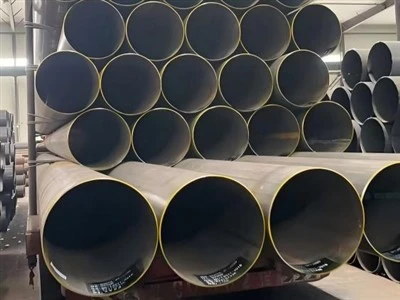
Hey there! I'm a supplier of hot formed hollow sections, and today I'm super stoked to take you on a journey through how these awesome products are manufactured.
Starting with the Raw Materials
First off, we've got to talk about the raw materials. Usually, we start with high - quality steel billets. These billets are like the building blocks for our hot formed hollow sections. Steel is a go - to because it's strong, durable, and can withstand all sorts of stress and pressure.
The selection of the steel is crucial. Different grades of steel can offer different properties. For example, if you're looking for something with high strength, you might go for a steel grade that's known for its tensile strength. We at our end make sure to choose the best - fitting steel for the requirements of the hot formed hollow sections we plan to produce.
Heating the Steel
Once we have our steel billets, the next big step is heating them up. And we're not talking about a little warm - up; we're talking about getting them red - hot! The billets are placed in a furnace where the temperature can soar up to around 1200 - 1300 degrees Celsius. This high temperature is essential because it makes the steel malleable.


When the steel is hot, it's like soft clay. We can shape it more easily without causing cracks or breaks. It's a bit of a balancing act, though. If the steel isn't heated enough, it won't be malleable enough to form properly. But if it's over - heated, it can start to lose some of its good properties.
Piercing the Heated Billet
After the steel is all nice and hot, we move on to the piercing process. We use a piercing mill for this. The piercing mill has a pair of rolls that rotate in the same direction, and a piercing plug in the middle.
As the heated billet is fed into the mill, the rolls grip it and rotate it. The piercing plug then moves forward and pushes through the center of the billet, creating a hole. This is how the basic shape of the hollow section starts to take form. It's a pretty intense process, and things have to be just right to get a smooth and consistent hole.
Rolling and Shaping
Once we have the pierced billet, which is now a kind of rough - shaped hollow tube, it goes through the rolling process. The rolling step is all about refining the shape and dimensions of the hollow section.
We use different types of rolling mills depending on the final shape we want to achieve. For example, if we're making a square or rectangular hollow section, we'll use a series of mills that gradually shape the tube into the desired cross - section.
During rolling, the steel is still hot, which allows the metal to flow and take on the new shape easily. We also have to control the speed and pressure of the rolling mill to make sure the dimensions are accurate. Oh, and speaking of different types of steel products, if you're interested in ASTM A572 GR.50 LSAW PIPE, it goes through a different but equally interesting manufacturing process.
Sizing and Finishing
After rolling, the hot formed hollow section might need some sizing. This is to make sure that it meets the exact specifications in terms of diameter, wall thickness, and length. We use sizing mills to do this. The sizing mills are designed to give the final, precise dimensions to the hollow section.
Once the sizing is done, the section goes through a finishing process. This can include things like straightening, cutting to length, and surface treatment. Straightening ensures that the section is perfectly straight, which is important for many applications. Cutting to length is self - explanatory; we cut the section into the required lengths.
Surface treatment is also a crucial step. We might do things like painting, galvanizing, or applying an anti - corrosion coating. This helps to protect the steel from rust and other forms of corrosion, which can extend the lifespan of the hot formed hollow section. And if you're also keen on Carbon Steel Hollow Section, similar finishing steps are involved to ensure its quality.
Quality Control
Throughout the entire manufacturing process, quality control is of utmost importance. We have a team of experts who are constantly checking the products at every step.
For example, in the early stages, we check the quality of the raw materials. We look for things like impurities, flaws, or incorrect chemical compositions. During the heating and shaping processes, we monitor the temperature, pressure, and other parameters to make sure everything is working as it should.
After the final product is made, we do a comprehensive inspection. We use things like non - destructive testing methods such as ultrasonic testing and magnetic particle testing to check for internal and surface defects. Only when the product passes all the quality tests do we consider it ready for the market. And if you thought all hollow sections are made the same way, ASTM A500 Gr.c Cold Formed Hollow Section has a different quality - control regime because of its cold - forming process.
Why Choose Hot Formed Hollow Sections?
Now, you might be wondering, why should I choose hot formed hollow sections? Well, there are several reasons.
First of all, they're incredibly strong. Thanks to the high - temperature forming process, the steel has a better grain structure, which gives it superior strength compared to some other types of products.
Secondly, they're very versatile. They can be used in a wide range of applications, from construction and architecture to automotive and manufacturing. You can use them for building frames, support structures, or even in some decorative elements.
Thirdly, hot formed hollow sections are more cost - effective in the long run. Because of their durability and resistance to corrosion, they don't need to be replaced as often, which can save you a lot of money over time.
Let's Talk Business
If you're in the market for high - quality hot formed hollow sections, I'd love to chat with you. Whether you have a small project or a large - scale industrial need, we've got the products and the expertise to meet your requirements.
We can work together to figure out the best steel grade, dimensions, and finishing options for your specific application. So, don't hesitate to reach out for a quotation. We're here to make sure you get the best value for your money.
References
- Steel Manufacturing Handbook: Basic Principles and Processes
- Journal of Metallurgical Engineering: Research on Hot Forming of Steel Products
- Industry Guidelines for Quality Control in Steel Product Manufacturing