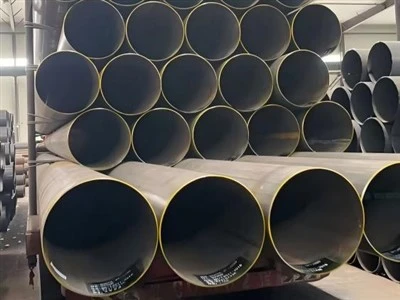
The expansion coefficient is a crucial physical property that significantly influences the performance and application of boiler steel pipes. As a seasoned supplier of boiler steel pipes, I've witnessed firsthand how this seemingly technical aspect can make or break the efficiency and safety of boiler systems. In this blog, we'll explore in-depth how the expansion coefficient affects the use of boiler steel pipes and why it matters to our customers.
Understanding the Expansion Coefficient
Before delving into its impact, let's first understand what the expansion coefficient is. In simple terms, the expansion coefficient, often referred to as the coefficient of thermal expansion (CTE), measures how much a material expands or contracts when its temperature changes. It is expressed as the fractional change in length or volume per unit change in temperature. Different materials have different expansion coefficients, which are determined by their atomic structure and bonding characteristics.
For boiler steel pipes, the expansion coefficient is a critical factor because boilers operate under high-temperature conditions. As the temperature inside the boiler rises, the steel pipes expand. If the expansion is not properly accounted for, it can lead to a variety of problems, including mechanical stress, deformation, and even failure of the pipes.
Impact on Pipe Installation and Design
One of the primary ways the expansion coefficient affects the use of boiler steel pipes is during the installation and design phase. When designing a boiler system, engineers must consider the expansion and contraction of the pipes due to temperature changes. This involves calculating the expected expansion based on the material's expansion coefficient, the operating temperature range, and the length of the pipes.
For example, if a boiler steel pipe has a high expansion coefficient, it will expand more significantly as the temperature increases. To accommodate this expansion, engineers may need to incorporate expansion joints or flexible connections into the pipe system. These components allow the pipes to expand and contract freely without causing excessive stress on the joints or other parts of the system.
Failure to account for the expansion coefficient during installation can lead to serious problems. For instance, if the pipes are installed too tightly without any allowance for expansion, they may buckle or crack under the thermal stress. This can result in leaks, reduced efficiency, and even safety hazards.
Influence on Pipe Material Selection
The expansion coefficient also plays a crucial role in the selection of boiler steel pipe materials. Different types of steel have different expansion coefficients, and choosing the right material is essential to ensure the long-term performance and reliability of the boiler system.
For high-temperature applications, materials with low expansion coefficients are often preferred. These materials expand less with temperature changes, reducing the risk of mechanical stress and deformation. For example, some specialty steels, such as stainless steel, have relatively low expansion coefficients compared to carbon steel. This makes them suitable for use in boilers operating at high temperatures.
However, material selection is not solely based on the expansion coefficient. Other factors, such as strength, corrosion resistance, and cost, also need to be considered. As a boiler steel pipe supplier, we work closely with our customers to understand their specific requirements and recommend the most suitable materials for their applications.
Effects on Boiler Efficiency and Performance
The expansion coefficient can also have a significant impact on the efficiency and performance of the boiler system. When the pipes expand and contract due to temperature changes, it can affect the flow of fluids and gases inside the boiler. This can lead to pressure drops, uneven heat distribution, and reduced heat transfer efficiency.
For example, if the pipes expand too much, it can create gaps or constrictions in the flow path, increasing the resistance to fluid flow. This requires the boiler to work harder to maintain the desired flow rate, resulting in higher energy consumption and lower efficiency. On the other hand, if the pipes contract too much, it can cause blockages or disruptions in the flow, leading to uneven heating and potential damage to the boiler components.
To mitigate these effects, it is essential to choose boiler steel pipes with appropriate expansion coefficients and to design the system to accommodate the expected expansion and contraction. Regular maintenance and inspection of the pipes can also help to identify and address any issues related to expansion before they become major problems.
Case Studies and Real-World Examples
To illustrate the importance of the expansion coefficient in the use of boiler steel pipes, let's look at some real-world examples.
In a large industrial boiler system, a carbon steel pipe with a relatively high expansion coefficient was used without proper consideration of the expansion allowance. As the boiler heated up, the pipes expanded significantly, causing the joints to loosen and leak. This not only resulted in a loss of steam and energy but also posed a safety risk to the operators. The problem was eventually resolved by replacing the pipes with a stainless steel material with a lower expansion coefficient and installing expansion joints to accommodate the expansion.
In another case, a power plant was experiencing reduced efficiency and uneven heat distribution in its boiler system. After a thorough investigation, it was found that the expansion coefficient of the pipes was not properly accounted for during the design. The pipes were expanding and contracting in an unpredictable manner, causing disruptions in the flow of water and steam. By adjusting the design to include expansion joints and using a material with a more suitable expansion coefficient, the efficiency of the boiler system was significantly improved.
Our Product Offerings and Solutions
As a leading supplier of boiler steel pipes, we offer a wide range of products to meet the diverse needs of our customers. Our product portfolio includes API 5L GR.X42 SMLS STEEL PIPE, Seamless Structural Steel Pipe, and Seamless Mechanical Pipe, among others.
We understand that every boiler system is unique, and we work closely with our customers to provide customized solutions. Our team of experts can help you select the right materials based on your specific requirements, including the operating temperature, pressure, and flow rate. We also offer technical support and guidance throughout the installation and maintenance process to ensure the optimal performance of your boiler system.
Conclusion
In conclusion, the expansion coefficient is a critical factor that affects the use of boiler steel pipes in many ways. It influences the installation, design, material selection, efficiency, and performance of the boiler system. By understanding the impact of the expansion coefficient and taking appropriate measures to account for it, you can ensure the long-term reliability and safety of your boiler system.


If you are in the market for high-quality boiler steel pipes or need assistance with your boiler system design and installation, we invite you to contact us. Our experienced team is ready to help you find the best solutions for your needs. Let's work together to build a more efficient and reliable boiler system.
References
- ASME Boiler and Pressure Vessel Code.
- "Handbook of Thermal Expansion" by John R. Barclay.
- "Materials Science and Engineering: An Introduction" by William D. Callister Jr. and David G. Rethwisch.