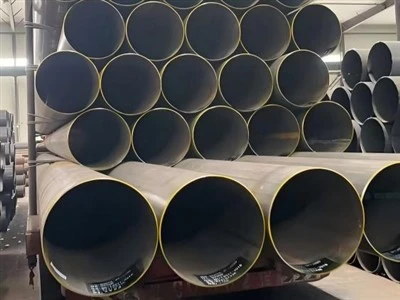
Can AS 1163 Hollow Sections Be Welded?
As a supplier of AS 1163 hollow sections, I often encounter inquiries regarding the weldability of these products. This blog aims to provide a comprehensive and in - depth exploration of whether AS 1163 hollow sections can be welded, delving into the technical aspects, best practices, and associated considerations.
Understanding AS 1163 Hollow Sections
AS 1163 is an Australian standard that specifies the requirements for structural steel hollow sections. These sections are commonly used in a wide range of construction and engineering applications due to their high strength - to - weight ratio, durability, and aesthetic appeal. They come in various shapes such as rectangular, square, and circular, and different grades to suit different load - bearing and environmental conditions.
Weldability of AS 1163 Hollow Sections
The short answer is yes, AS 1163 hollow sections can be welded. However, several factors need to be considered to ensure successful welding:
Material Composition
The chemical composition of the steel in AS 1163 hollow sections plays a crucial role in weldability. Most of these sections are made of carbon steel with specific alloying elements. The carbon content, in particular, affects the hardness and susceptibility to cracking during welding. Higher carbon content can lead to increased hardness in the heat - affected zone (HAZ), which may result in cracking. Generally, for AS 1163 sections, if the carbon equivalent (CE) is within an acceptable range, welding can be carried out with proper techniques. The carbon equivalent is calculated based on the amounts of carbon, manganese, silicon, nickel, chromium, molybdenum, and other elements in the steel.
Welding Process
There are several welding processes that can be used for AS 1163 hollow sections:
- Shielded Metal Arc Welding (SMAW): Also known as stick welding, SMAW is a commonly used process. It is relatively simple and can be used in various field conditions. However, it requires some skill to control the arc and achieve good weld quality. The electrode selection is critical, and it should be compatible with the base metal of the AS 1163 section.
- Gas Metal Arc Welding (GMAW): This process, also called MIG (Metal Inert Gas) welding, offers high productivity and good weld quality. It uses a consumable wire electrode and a shielding gas to protect the weld pool from atmospheric contamination. GMAW is suitable for both thin - walled and thick - walled AS 1163 hollow sections.
- Flux - Cored Arc Welding (FCAW): FCAW is similar to GMAW but uses a flux - cored wire instead of a solid wire. It can be used in outdoor conditions without the need for a separate shielding gas in some cases. This process is known for its high deposition rate and good penetration.
Pre - welding and Post - welding Treatments
Pre - welding treatments are essential to ensure successful welding of AS 1163 hollow sections. These may include:
- Cleaning: The surfaces to be welded must be clean and free from rust, oil, grease, and other contaminants. This can be achieved by using solvents, wire brushing, or grinding.
- Pre - heating: For thicker sections or steels with higher carbon equivalents, pre - heating may be required to reduce the cooling rate in the HAZ and prevent cracking. The pre - heating temperature depends on the section thickness and the steel grade.
Post - welding treatments are also important:
- Stress Relieving: After welding, stress relieving can be carried out to reduce the internal stresses in the welded joint. This is typically done by heating the welded area to a specific temperature and holding it for a certain period before slowly cooling it.
- Inspection: Non - destructive testing methods such as ultrasonic testing, magnetic particle testing, or radiographic testing can be used to check for any internal defects in the weld.
Applications and Welding in Practice
AS 1163 hollow sections are used in many applications, including building structures, bridges, and industrial equipment. In building construction, they are often welded together to form frames and supports. For example, in a multi - story building, the columns and beams made of AS 1163 hollow sections are welded to create a stable structural framework.
In bridge construction, the welding of AS 1163 sections needs to meet strict quality standards. The joints must be able to withstand high dynamic loads and environmental factors such as corrosion. Special welding procedures and inspection protocols are usually implemented to ensure the integrity of the welded joints.
Comparison with Other Hollow Section Standards
It's interesting to compare AS 1163 hollow sections with other international standards. For example, the En 10210 S460nh Hollow Section and ASTM A500 Gr.b Hollow Section. While the basic principle of weldability is similar across these standards, there may be differences in material composition, mechanical properties, and welding requirements. The En 10210 S460nh hollow section is a European standard, and it may have different alloying elements and performance characteristics compared to AS 1163. Similarly, the ASTM A500 Gr.b hollow section, an American standard, also has its own unique features.


Big Size Hollow Sections and Welding
Our company also offers BIG SIZE HOLLOW SECTION. Welding big - size AS 1163 hollow sections presents additional challenges. The larger mass and thickness require more careful pre - heating and post - welding treatments. The heat input during welding needs to be carefully controlled to avoid excessive distortion. Special welding techniques and equipment may be required to ensure proper fusion and penetration in the thick sections.
Conclusion
In conclusion, AS 1163 hollow sections can be welded successfully with the right knowledge, techniques, and procedures. The key is to understand the material properties, select the appropriate welding process, and carry out proper pre - and post - welding treatments. Whether it's for small - scale construction projects or large - scale industrial applications, welding AS 1163 hollow sections can provide a strong and reliable connection.
If you are in the market for AS 1163 hollow sections or have any questions regarding their welding and application, we invite you to contact us for a detailed discussion. Our team of experts is ready to assist you in finding the best solutions for your projects.
References
- Australian Standard AS 1163 - Structural steel hollow sections
- Welding Handbook, American Welding Society
- Steel Construction Manual, American Institute of Steel Construction