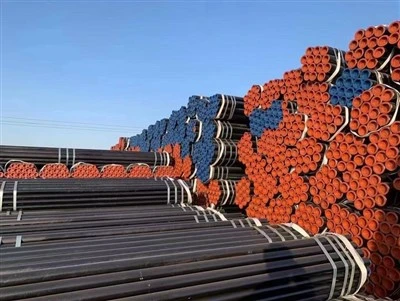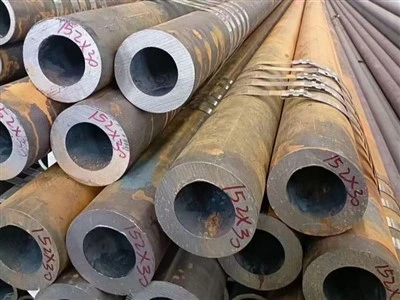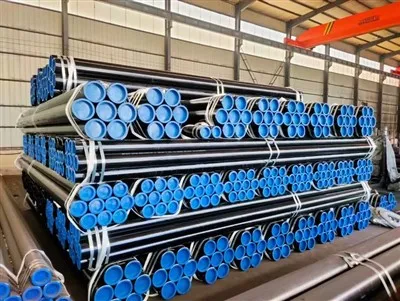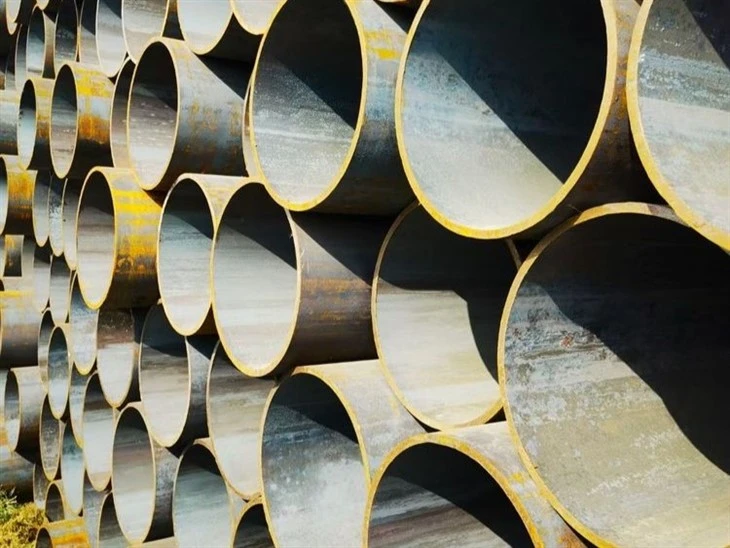


Tianjin Brisk Metalwork Co., Ltd. is one of the leading manufacturers and suppliers of en 10210 seamless hollow section in China. We have world-leading production equipment and strong manufacturing capabilities. Please feel free to buy bulk durable en 10210 seamless hollow section from our factory.
Tianjin Brisk Steel is one of the EN 10210 SEAMLESS HOLLOW SECTION in China. Our products are mainly exported to the Middle East, Southeast Asia, Europe, New Zealand, and other regions.If you would like to learn more about our products, feel free to contact us and send your purchase list.


Quick Spec Table
| Property | Typical Range |
|---|---|
| Shapes covered | Circular (CHS), Square (SHS), Rectangular (RHS) - all seamless |
| Outer size range | 21.3 mm – 406.4 mm OD (circular); roughly up to 300 x 300 mm (square/rectangular) |
| Wall thickness | 2.0 mm – 40 mm, depending on size |
| Standard | EN 10210-1 (technical delivery) / EN 10210-2 (tolerances, dimensions) |
| Grades | S235JRH, S275J0H, S355J2H (H suffix denotes hollow section) |
| Production route | Hot-formed from seamless round tube - pierced and elongated billet, then shaped |
| Length | Typically 6–12 m, mill-dependent |
| Test/inspection | Hydrostatic or NDT (ultrasonic/eddy current) per EN 10210-1 delivery condition |
The Size Ceiling Nobody Mentions Until You Hit It
Seamless hollow section has a hard practical limit that welded hollow section doesn't: it's made by piercing and elongating a solid round billet, then hot-forming that seamless tube into its final shape. That piercing process caps out on diameter - most mills can't run seamless mother tube much past roughly 400–450 mm OD before the piercing process becomes unreliable or uneconomical. Above that, every hollow section on the market, seamless or not, is welded.
This matters at the buying stage because it's a common point of confusion: someone specifies "seamless" out of habit or a general sense that it's the premium option, without checking whether their required size is even available seamless. If your project needs anything above roughly 400 mm CHS or a square/rectangular section with those bounding dimensions, seamless isn't on the table - the spec needs to move to welded (EN 10219 cold-formed or hot-finished welded) regardless of preference.
When Seamless Actually Earns Its Premium
Seamless costs more than welded hollow section of the same size and grade - often 20–40% more depending on size and market. That premium is worth paying in specific situations, and not worth paying in others:
Worth it:
- High-pressure or fatigue-cycling service - hydraulic cylinders, pressure vessels, and piping subject to repeated pressure cycling benefit from having no seam to act as a stress concentration point or inspection weak spot.
- Heavy machining after delivery - if the section will be bored, threaded, or machined significantly, a weld seam can behave differently than the parent metal under the cutting tool, creating inconsistent surface finish or tool wear. Seamless avoids that variable entirely.
- Critical structural connections with full-section capacity assumptions - some design codes assign a slightly different (more conservative) capacity to welded hollow section at the seam location; seamless sidesteps that de-rating.
- Offshore, subsea, or sour-service environments - where seam corrosion or seam-related NDT failure has an outsized consequence, seamless is frequently mandated by project spec regardless of cost.
Not worth it:
- General building structure framing (columns, beams, bracing) - EN 10219 welded hollow section is designed and tested to carry these loads with a well-established seam-quality track record; paying the seamless premium here is rarely justified by the structural engineer's actual requirements.
- Static, low-cycle applications - fencing, handrail, low-pressure conveyance - where a weld seam introduces no meaningful risk.
- Large sizes above the seamless ceiling - see above; the option doesn't functionally exist, so there's no premium/no-premium decision to make.
Frequently Asked Questions (FAQ)
Q: Why does seamless square tube have a bigger corner radius than welded square tube?
A: Because it's hot-formed from round seamless tube rather than cold-rolled from flat strip, and hot-forming a thick section into a square shape doesn't compress the corner as tightly as strip roll-forming does.
Q: Do I need seamless hollow section for a building structure project?
A: Usually not. Standard building structural framing is designed around welded hollow section (EN 10219), which is tested and code-rated for structural use. Seamless is typically reserved for pressure, fatigue-critical, or heavily machined applications rather than general framing.
Q: What does the "H" in grades like S355J2H mean?
A: The H suffix denotes that the grade designation applies specifically to hollow sections (as opposed to plate or open sections), per EN 10210's grade naming convention - it doesn't indicate a different chemistry from the base S355J2 designation.
Q: Can EN 10210 seamless hollow section be hot-dip galvanized?
A: Yes, with the same general precaution as any hollow section - welded box sections (in this case, only relevant if further fabricated with closed welds) need vent holes for galvanizing; plain seamless tube sections galvanize without that concern since they have no internal cavity welds to trap gas.


Hot Tags: en 10210 seamless hollow section, China en 10210 seamless hollow section manufacturers, suppliers, factory, alloy steel seamless pipe, carbon steel seamless pipe, seamless pipe expansion, seamless pipe fabrication, seamless pipe for plumbing, seamless pipe normalization