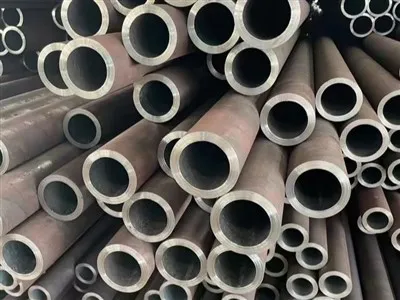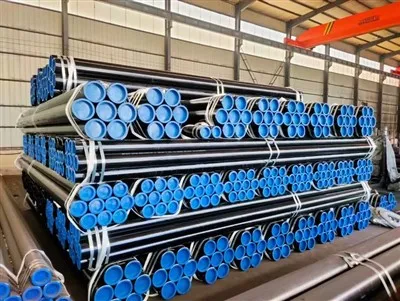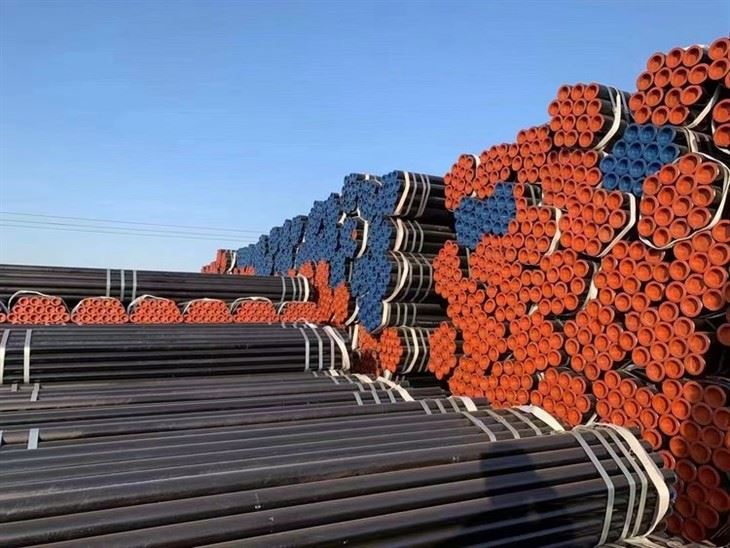
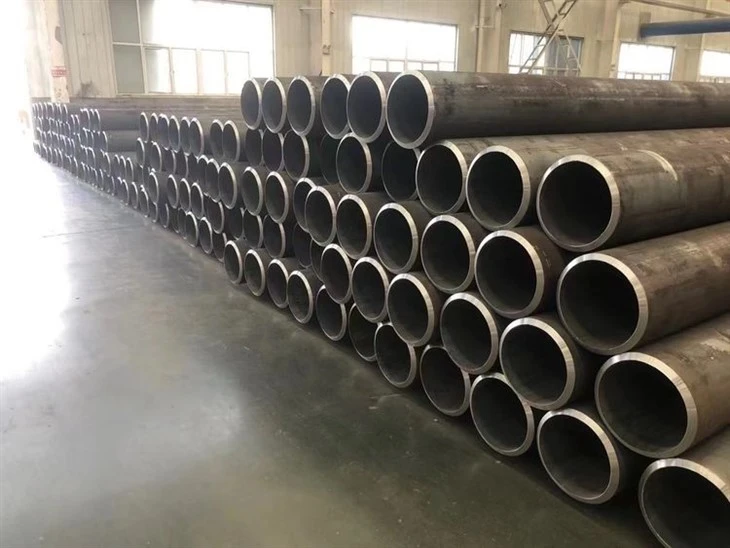
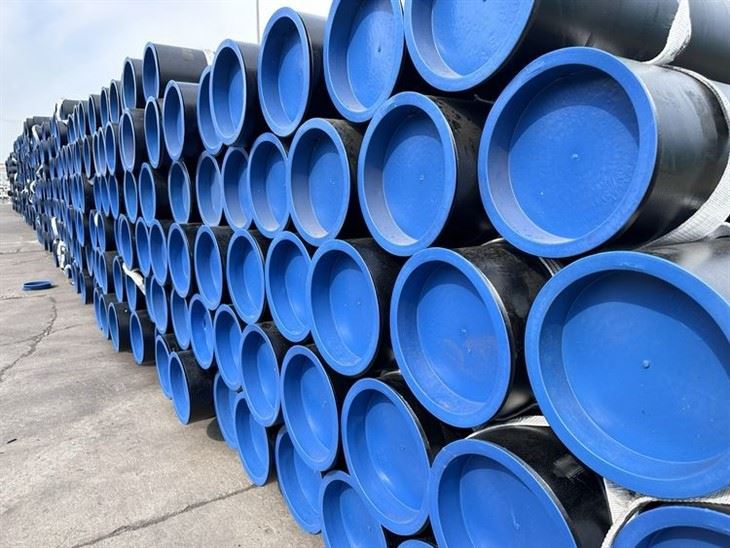
Tianjin Brisk Steel is one of Carbon Seamless Pipe in China. Our products are mainly exported to the Middle East, Southeast Asia, Europe, New Zealand, and other regions.If you would like to learn more about our products, feel free to contact us and send your purchase list.


What "Carbon Seamless Pipe" Means
Carbon seamless pipe is manufactured from a solid carbon steel billet, which is heated and pierced through its center using a rotary piercing mill, then rolled and sized to final outside diameter and wall thickness. Because the pipe is formed from a single piece of steel rather than rolled from strip and welded shut, there is no longitudinal or spiral seam anywhere along its length - a structural difference from ERW (electric resistance welded) or SSAW (spiral submerged arc welded) pipe, both of which rely on a welded seam.
This production route naturally limits diameter range compared to welded pipe: seamless pipe is typically available up to roughly 24 inches (610 mm) OD before piercing-mill capability and cost become limiting factors, while welded pipe routinely extends to much larger diameters.
Common Standards and Grades
Carbon seamless pipe is most frequently ordered under one of these standards, each targeting a different service application:
| Standard | Typical Grade | Primary Use |
|---|---|---|
| ASTM A106 | Grade B, Grade C | High-temperature piping (power plants, refineries) |
| ASTM A53 | Grade B (Type S, seamless) | General-purpose piping, structural and mechanical use |
| API 5L | Grade B, X42–X70 | Oil and gas transmission pipelines |
ASTM A106 is the standard most engineers reach for by default when the pipe will see elevated temperature - it includes specific requirements for high-temperature mechanical properties that A53 does not carry. ASTM A53 covers a broader, more general-purpose seamless (and welded) pipe used across mechanical, structural, and lower-severity piping applications. Confirming which standard your project actually specifies - rather than treating "carbon seamless pipe" as a single interchangeable product - is one of the most common sourcing mistakes buyers make.
Mechanical Properties
For the most commonly ordered grade, ASTM A106 Grade B:
- Yield strength (min): 240 MPa (35,000 psi)
- Tensile strength (min): 415 MPa (60,000 psi)
- Elongation: minimum requirement varies by wall thickness, per the standard's table
- Maximum carbon content: 0.30%
- Maximum service temperature: governed by ASME B31.1/B31.3 piping code allowable stress tables, not the material standard alone
A106 Grade C carries higher minimum yield and tensile requirements (275 MPa / 485 MPa) for applications needing greater strength at a given wall thickness, at some cost to weldability.
Where Carbon Seamless Pipe Is the Right Choice
Seamless pipe is generally specified when:
- The piping system operates at elevated temperature or pressure where weld-seam integrity is a design and code concern
- The application falls under a piping code (ASME B31.1, B31.3) that applies a joint efficiency factor penalizing welded pipe relative to seamless
- Critical or hazardous service (steam, hydrocarbon process lines) makes weld-seam inspection history a material selection factor
- Smaller-to-medium diameters are involved, where seamless production is both available and cost-competitive
For larger diameter, lower-pressure, or general utility piping, welded pipe (ERW or SSAW, depending on size) is frequently the more economical choice, and modern welded pipe with full-length NDT inspection performs reliably in a wide range of services. Buyers should confirm their piping code and project specification actually require seamless before assuming it's necessary by default.
Frequently Asked Questions (FAQ)
Q: What's the difference between ASTM A106 and ASTM A53 seamless pipe?
A: A106 is written specifically for high-temperature service and includes mechanical property requirements tied to elevated-temperature performance; A53 covers general-purpose seamless and welded pipe without the same high-temperature focus. A106 is generally the correct choice for process and power piping; A53 is common in general mechanical and lower-severity applications.
Q: Is carbon seamless pipe stronger than welded pipe of the same grade?
A: Not necessarily in base material strength - the practical advantage of seamless pipe is the absence of a weld seam as a potential defect location, which matters most in high-pressure, high-temperature, or fatigue-sensitive service rather than in raw tensile strength.
Q: What sizes are typically available in carbon seamless pipe?
A: Most seamless production covers roughly 1/8" through 24" NPS, though exact availability depends on the mill's piercing capability - confirm size and schedule availability directly with your supplier for anything at the larger end of that range.
Q: Can carbon seamless pipe be used for sour or corrosive service?
A: Standard ASTM A106/A53 material is not automatically qualified for sour service - sour or NACE MR0175-compliant applications require additional material qualification and should be specified separately in the purchase order.


Hot Tags: carbon seamless pipe, China carbon seamless pipe manufacturers, suppliers, factory