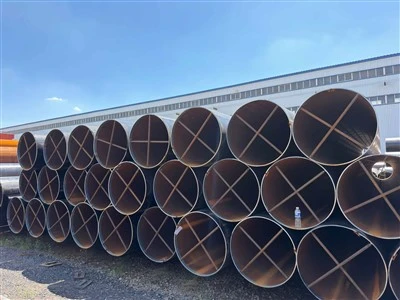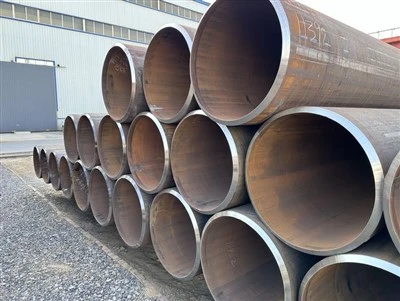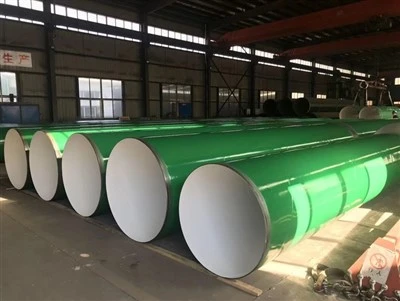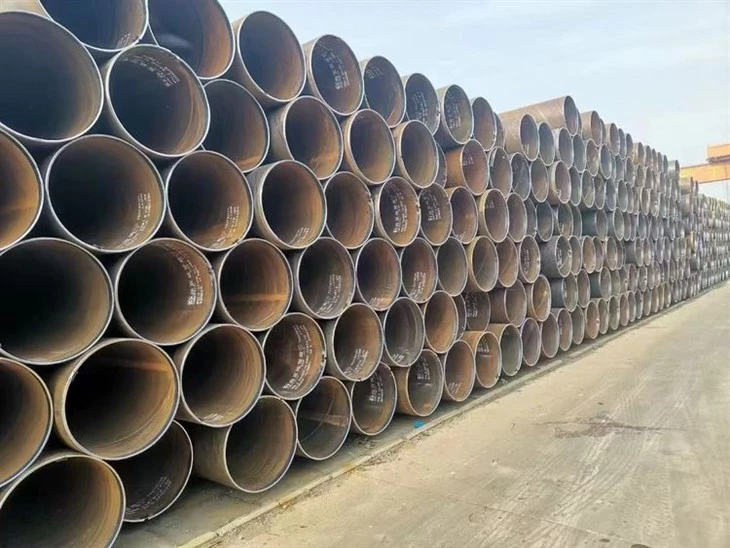
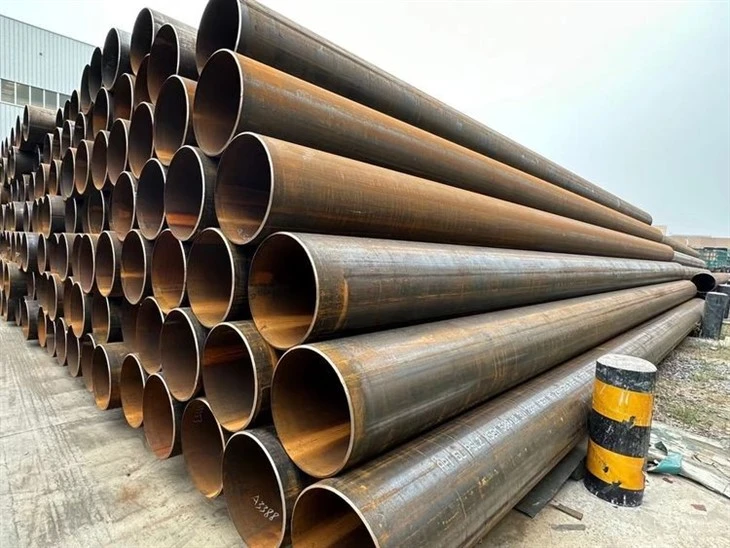
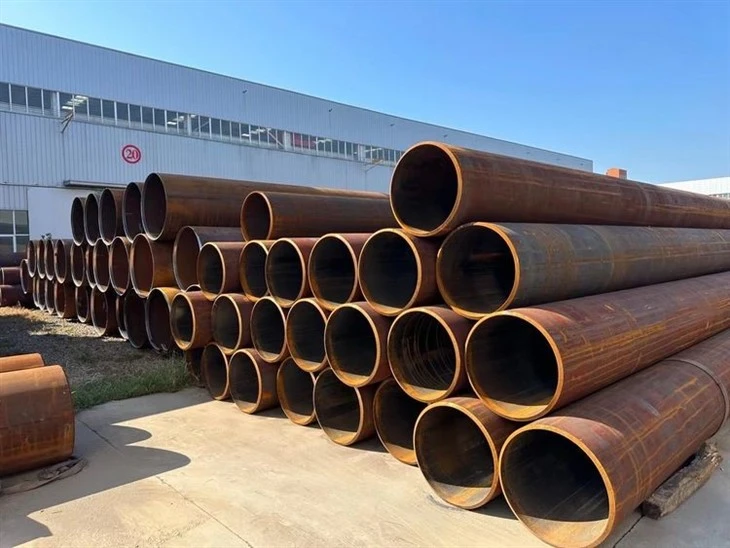
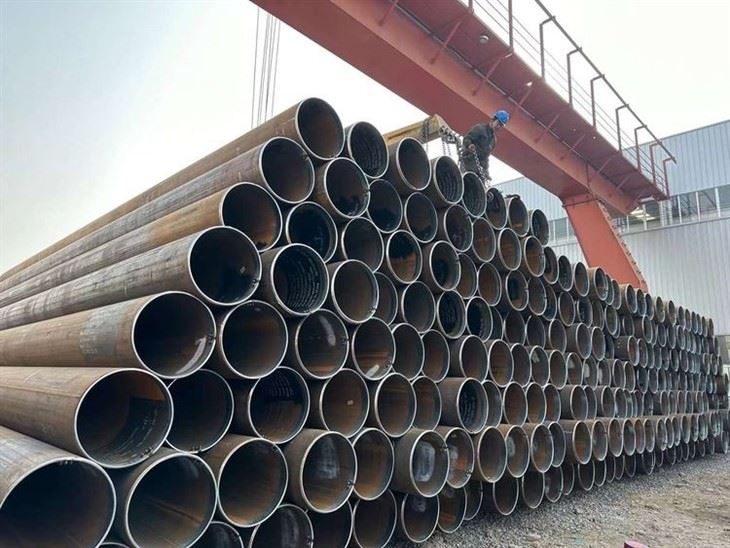
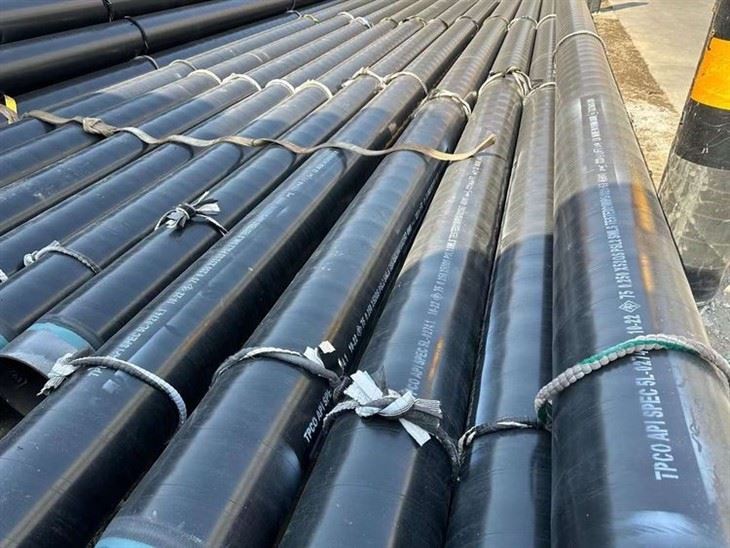
Tianjin Brisk Steel is one of the Fluid Transportation LSAW Pipe in China. Our products are mainly exported to the Middle East, Southeast Asia, Europe, New Zealand, and other regions.If you would like to learn more about our products, feel free to contact us and send your purchase list.


Quick Spec Reference
| Parameter | Typical Range |
|---|---|
| Outer diameter | 406 mm – 3,048 mm (16" – 120") |
| Wall thickness | 6 mm – 40 mm |
| Length | 6 m – 18 m |
| Common standards | API 5L |
| Common grades | Gr.B, X42–X65, S235–S355, Q235B–Q345B |
| Weld process | Double-sided submerged arc welding (DSAW) |
| Typical use | Municipal water supply, seawater intake/desalination, industrial process water, irrigation and agricultural water transfer |
Fluid Transportation Is a Different Design Problem Than Oil & Gas Pipeline
Most LSAW pipe content online is written for oil and gas transmission, but a large share of LSAW pipe actually goes into moving water and other non-hydrocarbon fluids - municipal supply mains, desalination intake lines, irrigation networks, and industrial process water systems. These lines share LSAW's core advantage (large diameter, heavy wall, plate-formed construction) but are governed by a different set of standards and design priorities: internal pressure is usually lower than a gas transmission line, but internal lining against water chemistry, external coating against long-term buried or submerged exposure, and joint type for a specific installation method carry more weight in the spec than they typically do for a hydrocarbon pipeline.
Standards That Actually Govern Water and Fluid Transport Pipe
API 5L - still used where the fluid line sits closer to an oil-and-gas-adjacent facility or where the buyer's engineering basis already standardizes on API 5L regardless of the fluid being carried.
The standard chosen affects more than paperwork - AWWA C200 and EN 10224 both build in assumptions about lining and coating that a straight API 5L pipeline spec does not, since gas transmission pipe doesn't need to consider what the pipe wall does when constantly wetted from the inside.
Lining and Coating Matter More Here Than on a Gas Line
A gas pipeline's internal surface sees dry product; a water transmission line's internal surface sees constant wetted contact, which makes internal lining a central spec decision rather than an optional add-on. Cement-mortar lining is the long-standing default for large-diameter water mains, chosen for its compatibility with potable water chemistry and its resistance to the flow-induced wear that plain steel would eventually suffer. Epoxy lining is the common alternative where weight, cure time, or specific water chemistry make cement mortar less suitable. External coating follows the same logic as any buried pipe - 3LPE, FBE, or coal tar epoxy depending on soil conditions and project standard - but the internal side of the spec is where fluid-transport LSAW pipe diverges most clearly from its oil-and-gas counterpart.
One Point Worth Confirming Before Ordering
Buyers sourcing LSAW pipe for a water or fluid project sometimes default to reusing an API 5L oil-and-gas spec sheet because it's the most commonly available reference, then discover during commissioning that the pipe has no internal lining at all - because a straight API 5L order, correctly filled, doesn't include one unless lining is separately specified. The base pipe standard confirms wall thickness and mechanical properties; it says nothing about lining unless the purchase order calls it out explicitly as a separate line item, which is worth checking before assuming a standard pipeline spec automatically covers what a water transmission project actually needs.
FAQ
Q: Can API 5L pipe be used for water transmission instead of AWWA C200?
A: Yes, and it's done regularly, but API 5L alone does not specify internal lining or the water-specific testing AWWA C200 includes - if the pipe needs cement-mortar or epoxy lining, that has to be added to the order separately rather than assumed to come with an API 5L base spec.
Q: What's the difference between AWWA C200 and EN 10224?
A: Both cover steel pipe for water conveyance, but they come from different regional standard systems with different chemistry, dimensional, and testing requirements - the choice usually comes down to which standard the project's engineering basis or local regulatory framework specifies.
Q: Does fluid transportation LSAW pipe need a different wall thickness than oil and gas pipe?
A: Not necessarily by default - wall thickness is set by the specific project's design pressure and diameter, and water transmission lines often run at lower pressure than gas transmission, which can allow a thinner wall for the same diameter, but this has to be calculated per project rather than assumed.
Q: Is cement-mortar lining required on all water transmission LSAW pipe?
A: No - it's the common default for large-diameter potable water mains, but epoxy lining or no lining at all can be specified depending on the fluid being carried, water chemistry, and project-specific requirements.


Hot Tags: fluid transportation lsaw pipe, China fluid transportation lsaw pipe manufacturers, suppliers, factory, building structure lsaw pipe, building structure steel pipe, compact lsaw pipe, easy to install lsaw pipe, LSAW PIPES, marine steel pipe