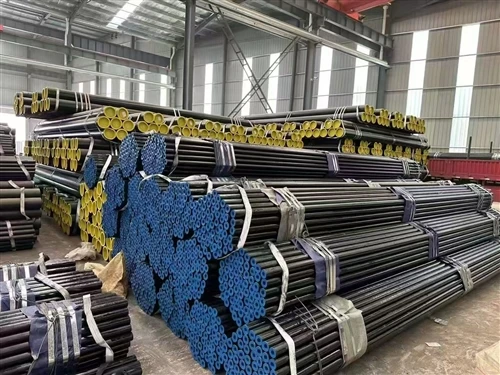
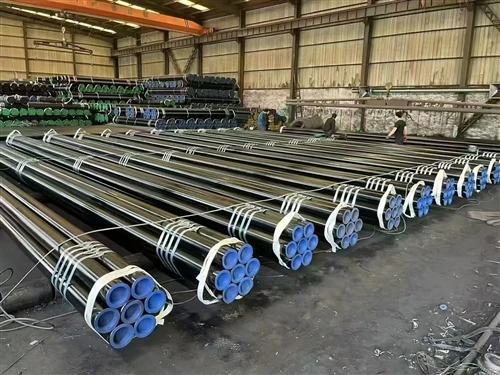
API 5L ERW steel pipe is one of the most widely used line pipe options for transporting oil, natural gas, water and other hydrocarbon or fluid media. Selecting the proper steel grade (Gr.B, X42, X46, X52 and higher grades) is not only about matching tensile and yield strength; it also ties closely to operating pressure, ambient temperature, media composition, pipe installation method, safety code requirements and long-term service life.
A wrong grade selection may lead to overspending on unnecessary high-strength pipe, or worse, create hidden risks such as pipe deformation, weld cracking and premature failure during operation. Below is a step-by-step guide to help engineers, procurement managers and project contractors make a rational grade selection for your pipeline project.
1. Start with your pipeline's operating pressure and design stress
The core foundation of grade selection is the pipeline design pressure. Higher internal pressure requires steel with higher minimum yield strength. API 5L steel grades are named after their minimum yield strength:
- Gr.B: minimum yield strength 241 MPa (35 ksi)
- X42: minimum yield strength 290 MPa (42 ksi)
- X46: minimum yield strength 317 MPa (46 ksi)
- X52: minimum yield strength 359 MPa (52 ksi)
When calculating wall thickness under ASME B31 or pipeline design codes, yield strength directly participates in the wall thickness formula. If your project works under low pressure, such as short-distance water transfer, low-pressure gathering lines, or auxiliary service pipelines, API 5L Gr.B ERW pipe is usually cost-effective.
For medium-pressure oil and gas gathering pipelines, X42 and X46 become common choices. X52 is selected for pipelines with relatively higher working pressure or larger diameter, where designers want to reduce wall thickness and cut total material weight while maintaining safety margin.
👉 Read more: [API 5L ERW Pipe Grades B X42 X46 X52 | Brisk Steel]
2. Evaluate service temperature and Charpy V-notch impact requirements
Temperature is a critical factor affecting steel toughness, especially for pipelines installed in cold regions. At low temperatures, steel tends to lose ductility and become brittle, which increases fracture risk. API 5L differentiates PSL1 and PSL2 product specification levels. PSL2 has mandatory Charpy impact test requirements, while PSL1 does not require routine impact testing.
- Gr.B ERW PSL1: Suitable for moderate and warm ambient conditions, non-critical service.
- If your pipeline runs in cold winter areas or sub-zero operating temperature, even Gr.B may need PSL2 with specified impact energy.
- X42, X46, X52 PSL2: Mandatory Charpy test for both pipe body and weld seam. When temperature drops, X grades provide better low-temperature performance compared with ordinary carbon steel, but you still need to specify test temperature according to your project minimum design temperature.
For projects in tropical areas with stable warm temperature, PSL1 can be acceptable after full risk assessment. For hydrocarbon transmission, cross-country pipelines, or any pipeline where sudden rupture would cause safety hazards, PSL2 is normally recommended regardless of steel grade.

3. Analyze transported media: corrosion and hydrogen cracking risk
The fluid inside the pipeline changes your grade selection logic.
- Clean natural gas or non-corrosive water: Grade selection mainly depends on pressure and temperature. Standard API 5L ERW pipe works well.
- Sour service (media containing H₂S): This is a special scenario. High-strength steel is more susceptible to sulfide stress cracking (SSC). In sour environments, you cannot simply pick X52 just for high pressure. You need to follow NACE MR0175 requirements, control hardness limit and select suitable steel composition, heat treatment and inspection standard. Sometimes a lower grade with strict hardness control is safer than a higher-strength grade.
- Media with CO₂, free water or solid particles: Corrosion and erosion need separate countermeasures like internal coating, while steel grade still bears the structural load. Corrosion allowance is added in wall thickness calculation, which is independent from yield grade selection.
4. Consider construction methods: field bending, welding and installation
Different installation methods impose different mechanical loads on the pipe:
- Cold field bending: Higher strength grades have higher springback. X52 is harder to bend on site than Gr.B. If your project requires many field bends, Gr.B or X42 is easier for construction teams.
- Welding performance: Lower carbon equivalent in Gr.B brings easier weldability. X42/X46/X52 have controlled carbon and manganese content to keep weldability, but field welding procedures need qualified WPS/PQR. Higher strength grades usually require stricter preheat and post-heat controls during welding.
- Handling & transportation: X grades have higher mechanical strength, but weld seam still needs protection. ERW seam integrity must be verified by hydrostatic test or ultrasonic inspection.
5. Project location & external loads
Buried pipelines bear soil pressure, live load from vehicles, ground settlement and seismic forces. Above-ground pipelines face wind load.
- Short buried distribution lines with light external load: Gr.B / X42
- Long trunk lines, heavy cover depth, seismic zones: X46 or X52 may be considered together with wall thickness design. If your route includes rocky terrain, rocks may cause external denting. Toughness and ductility requirements should be increased accordingly, which affects PSL selection more than steel grade itself.
6. PSL 1 vs PSL 2 selection (critical companion choice with steel grade)
Many buyers only focus on Gr.B / X42 / X46 / X52 and ignore PSL.
- PSL1: Basic chemical and mechanical requirements, no mandatory Charpy impact test, simpler inspection. Used for non-hazardous fluid, low-risk pipeline.
- PSL2: Tighter chemical composition limits, mandatory Charpy impact test, more strict NDT, traceability, and more stringent documentation. Required for dangerous fluid transmission, oil & gas trunk lines, projects under strict regulatory control.
Notes: You can order API 5L Gr.B PSL2, or X42 PSL1, but PSL2 is strongly preferred for most oil and gas transmission projects.

7. Cost, lead time and supply availability
Material cost rises as steel grade increases.
- Gr.B ERW: most cost-effective, widely available, shorter lead time.
- X42 / X46: moderate premium over Gr.B, common stock for standard OD & WT.
- X52: higher raw material and production cost, tighter mill control on chemical composition and mechanical properties.
For budget-controlled projects, engineers often optimize wall thickness first instead of upgrading steel grade. Using Gr.B with slightly thicker wall can sometimes achieve the same design pressure at lower total cost than thin-wall X52 pipe.
8. Verify inspection & testing requirements matched with your grade
Different grades have the same core inspection options for ERW line pipe: hydrostatic test or non-destructive electric test on weld seam.
When you select higher grades such as X46, X52, the mill must strictly control alloy elements, grain structure and mechanical uniformity. The MTR (Mill Test Report) shall list actual yield strength, tensile strength, chemical composition and Charpy results if PSL2. Always confirm that the pipe test certificates match your selected grade and PSL level before shipment.
9. Summary for grade selection workflow
- Confirm design pressure → calculate required wall thickness
- Confirm minimum design temperature → decide whether Charpy impact is needed (PSL1 / PSL2)
- Check transported media: sweet service or sour service
- Evaluate construction method: field bending, welding procedure
- Assess external loads from burial or above-ground installation
- Compare material cost and supply availability
- Finalize steel grade and PSL level, specify inspection requirements
Gr.B fits low-pressure, non-critical pipelines. X42 and X46 are versatile for medium-pressure oil & gas gathering lines. X52 is suitable for medium-high pressure trunk pipelines where weight reduction is valuable. Never select API 5L ERW steel grade only based on experience; always combine design calculation, environment condition and regulatory requirements.