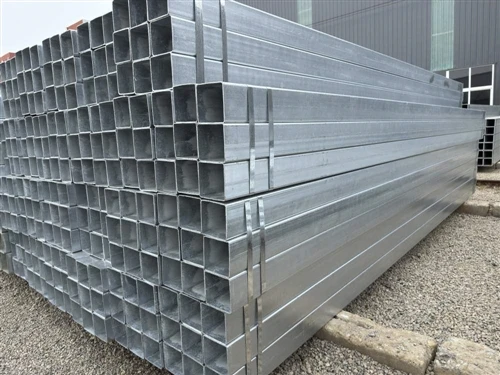
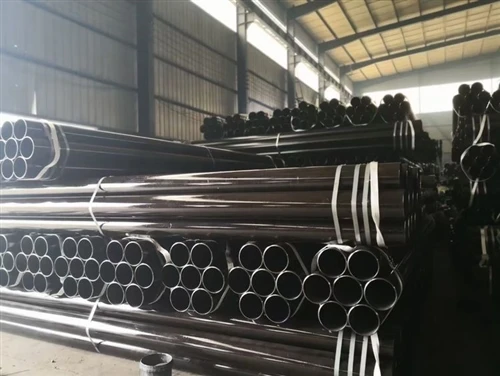
Galvanized steel pipe is one of the most widely used corrosion-resistant piping products in construction, water supply, agriculture, and industrial manufacturing. The term "galvanized" refers to a zinc coating applied to steel - a process named after 18th-century Italian scientist Luigi Galvani, whose early work on electrical reactions in metals eventually gave rise to the broader field of electrochemistry that underpins how zinc protects steel today. Despite the name's origin in electrical science, most galvanized pipe on the market is coated by a purely thermal process - hot-dip immersion - rather than an electrical one, which is a common point of confusion worth clearing up early.


This guide covers how galvanized steel pipe is actually made, the real differences between the methods sold under that name, the standards that govern quality, and what to check before ordering - written for buyers who need more than a marketing description before committing to a purchase order.
How Zinc Protects Steel: The Basic Mechanism
Zinc protects steel in two distinct ways, and understanding both explains why galvanized pipe performs the way it does in the field.
Barrier protection: the zinc layer physically separates the steel from moisture, oxygen, and corrosive elements in the environment, the same way any coating does.
Sacrificial (cathodic) protection: this is the part unique to zinc. Zinc is more electrochemically reactive than steel, so if the coating is scratched or damaged and bare steel is exposed, the surrounding zinc corrodes preferentially and continues protecting the exposed steel until the nearby zinc is consumed. This is why galvanized pipe with minor surface scratches doesn't rust immediately at the scratch - a meaningful practical advantage over coatings that only provide barrier protection, such as most paints, which offer no protection once breached.


How Hot-Dip Galvanizing Is Actually Done, Step by Step
Understanding the process helps explain why quality varies between suppliers, and what actually determines a good coating versus a poor one.
- Degreasing. The pipe is cleaned in a caustic or detergent bath to remove oil, grease, and shop dirt left over from forming and welding.
- Acid pickling. The pipe is immersed in a dilute acid bath (typically hydrochloric acid) to strip mill scale and surface rust down to bare, reactive steel. Incomplete pickling is one of the most common causes of poor coating adhesion.
- Fluxing. A zinc ammonium chloride flux bath removes any remaining oxide film and prevents the steel from re-oxidizing in the moments before it enters the zinc.
- Galvanizing (immersion). The pipe is lowered into a kettle of molten zinc at roughly 450°C. The steel's iron reacts with the zinc to grow a series of zinc-iron intermetallic layers, with a layer of essentially pure zinc solidifying on top as the pipe is withdrawn.
- Cooling / quenching. The pipe is cooled, often by water quenching, which also helps stop further alloy growth once the desired coating structure has formed.
- Inspection. Coating thickness, adhesion, and surface finish are checked - commonly by magnetic thickness gauge, and sometimes by a copper sulfate (Preece) test for coating continuity - before the pipe is released for shipment.

Each of these steps is a potential point of failure if rushed. A pipe that skips adequate pickling time, for example, can come out of the zinc bath looking coated while having poor underlying adhesion that shows up later as flaking or peeling in service - which is exactly why coating thickness alone isn't a complete quality picture; adhesion and surface preparation records matter just as much.
The Three Products Commonly Sold as "Galvanized Pipe"
This is where buyers most often get confused, because three genuinely different processes are marketed under similar names.
1. Hot-Dip Galvanized (After Fabrication)
The pipe is formed and welded first, then the complete, finished pipe is immersed in a kettle of molten zinc at approximately 450°C (842°F). The zinc reacts with the iron in the steel to form a series of zinc-iron alloy layers, topped with a layer of relatively pure zinc - a true metallurgical bond rather than a surface film. Because the entire pipe, including the weld seam, cut ends, and any complex geometry, goes through the bath together, coverage is complete and uniform, including in areas a coating applied before fabrication couldn't reach as effectively.
Typical coating thickness for after-fabrication hot-dip galvanizing commonly falls in the range of 55–100+ microns depending on steel thickness and the governing standard, with international standards such as ISO 1461 setting a minimum average of 85 microns for steel sections thicker than 6 mm.
2. Pre-Galvanized (Continuous Line / Mill Galvanized)
Steel strip or sheet is galvanized first - typically by passing it through a continuous hot-dip or electrogalvanizing line at high speed - and is then slit, roll-formed, and welded into pipe afterward. The coating is thinner (commonly in the range of 12–50 microns) and, critically, the weld seam is formed after galvanizing, so the seam area loses its zinc coating during welding unless it's separately touched up.
3. Electro-Galvanized
Zinc is applied via an electroplating process rather than thermal immersion, producing a thin, smooth, uniform coating - generally the thinnest of the three methods. It's chosen where appearance and precise, thin coating control matter more than maximum corrosion resistance, such as indoor components, appliance housings, and some automotive parts. It is rarely the right choice for buried, submerged, or long-term outdoor pipe applications.
Quick Comparison
| Factor | Hot-Dip (after fabrication) | Pre-Galvanized (mill/continuous) | Electro-Galvanized |
|---|---|---|---|
| Coating thickness (typical) | ~55–100+ microns | ~12–50 microns | Generally under 25 microns |
| Weld seam coverage | Full - coated after welding | Reduced/absent unless touched up | Depends on when applied |
| Governing standard example | ASTM A123, ISO 1461 | ASTM A653 or mill-specific spec | ASTM B633 or similar |
| Typical best use | Outdoor, buried, structural, water/gas piping | Indoor conduit, light structural, appearance-driven uses | Indoor components, decorative or light-duty parts |
| Relative cost | Higher | Lower | Lowest |
Standards That Govern Galvanized Steel Pipe
Buyers should know which standard is actually being referenced, since "galvanized" alone isn't a specification:
- ASTM A53 - covers black and hot-dip galvanized seamless and welded (ERW) steel pipe for mechanical and pressure applications; galvanizing under A53 must meet ASTM A123 coating requirements.
- ASTM A123/A123M - the general specification for zinc (hot-dip galvanized) coatings on iron and steel products, referenced by many other pipe standards for coating thickness and quality.
- ISO 1461 - the international equivalent, widely used outside North America, specifying minimum coating thickness by steel section thickness.
- ASTM A653 - governs continuous hot-dip galvanized (and galvannealed) steel sheet, relevant to pre-galvanized pipe made from coated strip.
- BS EN 10240 / EN 10255 - European standards covering protective coatings on steel tubes and light-duty tube for threading and welding.
Applications by Industry
Water supply and plumbing: galvanized pipe was historically standard for residential water lines; while copper and plastic piping (PEX, PVC) have largely replaced it in new residential construction in many markets, galvanized pipe remains common in agricultural water systems, irrigation, and some municipal infrastructure.
Structural and construction: scaffolding, handrails, fencing, and structural framing frequently use galvanized pipe for corrosion resistance without the cost of stainless steel.
Oil, gas, and industrial fluid transport: galvanized pipe is used for lower-pressure, less corrosive service; higher-pressure or sour-service transmission lines typically use FBE- or multi-layer-coated LSAW or ERW pipe instead, since galvanizing isn't generally designed or tested for compatibility with buried pipeline cathodic protection systems the way pipeline-specific coatings are.
Agriculture: greenhouse framing, fencing, and irrigation piping commonly specify galvanized pipe for its balance of cost and outdoor durability.
Fire protection systems: galvanized pipe is used in some sprinkler and fire suppression piping, particularly in dry systems where standing water and corrosion risk over time are a design concern.
Advantages and Limitations
Advantages:
- Sacrificial protection continues working even after minor coating damage, unlike most paints
- Relatively low cost compared to stainless steel or specialty coatings
- Long track record and wide standardization (ASTM, ISO, EN) across markets
- Suitable for a broad range of atmospheric and mild-to-moderate corrosive environments
Limitations worth being upfront about:
- Coating life is finite and proportional to thickness - it is not a permanent solution in aggressive environments (marine splash zones, high-chloride soil, strong acids/alkalis)
- Field welding or cutting removes zinc locally and requires touch-up (cold galvanizing compound or metallizing) to restore protection at that spot
- Zinc coatings can react adversely with certain concrete formulations (fresh concrete) and some chemical environments - compatibility should be checked for unusual service conditions
- Not generally recommended for potable water systems in some jurisdictions due to historical concerns about lead solder and pipe-joint compounds used with older galvanized plumbing systems - modern lead-free installations reduce this concern, but local plumbing codes should be checked
How Coating Quality Is Actually Tested
Three checks matter most when verifying galvanized pipe quality, and buyers can reasonably request records for each:
Thickness testing. Magnetic thickness gauges are the most common field and mill method, taking multiple readings around the pipe's circumference and along its length, since coating thickness is rarely perfectly uniform. Standards specify both a minimum average and a minimum single-reading value, so a supplier should be able to provide both, not just an average.
Adhesion testing. A simple, standard test involves striking the coating with a hammer or subjecting it to a controlled bend; a properly bonded coating won't flake or peel away from the base steel. Poor pickling or fluxing during manufacturing is the most common root cause of adhesion failures.
Coating continuity (Preece/copper sulfate test). A copper sulfate solution is applied to the surface; bare or thinly coated steel reacts and turns a copper color, while properly coated zinc does not react, making it a simple way to spot pinholes or thin spots that thickness gauging alone might miss between measurement points.
Buying Guide: What to Verify Before Ordering
- Confirm which of the three galvanizing methods you're actually being quoted. Ask directly whether the pipe is galvanized after fabrication (full hot-dip) or made from pre-galvanized strip. This single question resolves most disputes about coating quality later.
- Request the specific governing standard, not just the word "galvanized." ASTM A123, ISO 1461, and A653 each define different minimum thicknesses and test methods - get the standard named in writing on the purchase order.
- Ask for actual coating thickness or coating mass test data, not a general compliance statement. Reputable suppliers can provide magnetic thickness gauge readings or coating mass (weight-per-area) results from testing.
- Match the coating class to your actual exposure environment. A coating adequate for dry indoor conduit is not necessarily adequate for buried or coastal outdoor service - discuss your specific environment rather than accepting a generic "galvanized" spec.
- Clarify weld seam protection, especially for pre-galvanized pipe. If the seam wasn't touched up after welding, that's a long, continuous weak point running the pipe's full length.
- Plan for field weld and cut-end protection in your installation budget. This is routine, not optional, and should be planned for rather than discovered as a surprise cost after installation.
- Check compatibility with your intended fluid or environment, particularly for anything beyond standard water, air, or mild atmospheric service - some chemicals and fresh concrete contact are known problem areas for zinc coatings.