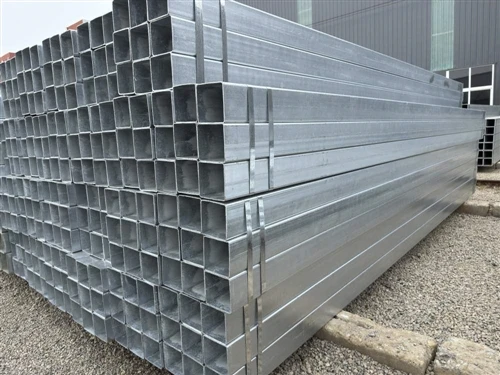
Square Hollow Section (SHS)?
Advantage: square, all right-angled edges
Characteristics: Higher symmetry compared to RHS, more conducive to joining and welding. Uniform surface, suitable for coating.
Application: Commonly used in frame structures of buildings, brackets of manufacturing equipment, etc.
What is Rectangular Hollow Section (RHS)?
Advantages: rectangular shape, different lengths on both sides of the edge
Characteristics: Great bending strength, especially when loaded with long sides. But also due to its asymmetry, the load capacity changes
Application: For load-bearing beams, door frames, machine frames and structures requiring strength in different directions.
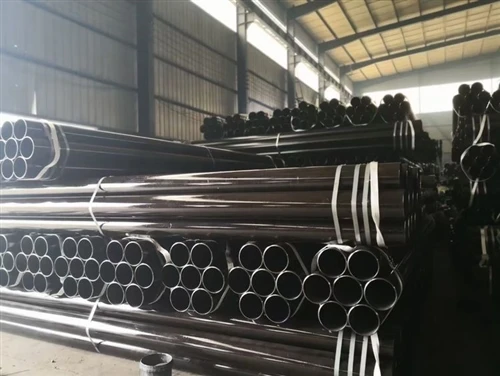
What is Circular Hollow Section (CHS)?
Advantages: symmetrical shape, can accept forces from all directions, balanced performance under load.
Characteristics: excellent torsional and rotational properties, good mechanical properties, can do fluid transportation
Applications: construction, support. Railing and other occasions that require uniform force
The term "Hollow Section" (HSS: Hollow Structural Section) refers to a type of metal profile with a hollow tubular cross-section. The term is used predominantly in the United States, or other countries which follow US construction or engineering terminology. These sections are also sometimes called tube steel or structural tubing. They are usually made of metal, though other materials such as plastic or fiberglass are sometimes used. The most common metals used for making hollow sections are carbon steel (CS), stainless steel (SS), aluminum (Al), and copper (Cu). Alloys such as titanium, zirconium, etc. can also be used to make hollow sections.
Hollow sections are important for their use in the construction industry because they offer many benefits. For example, they have a high strength-to-weight ratio which makes them ideal for use in load-bearing applications. They are also very stiff and resistant to torsional forces, making them ideal for use in columns and beams. In addition, hollow sections offer good resistance to impact and abrasion, making them suitable for use in structural applications where there is a risk of impact or abrasion. Finally, hollow sections have a very high resistance to corrosion and are therefore often used in corrosive environments such as offshore oil