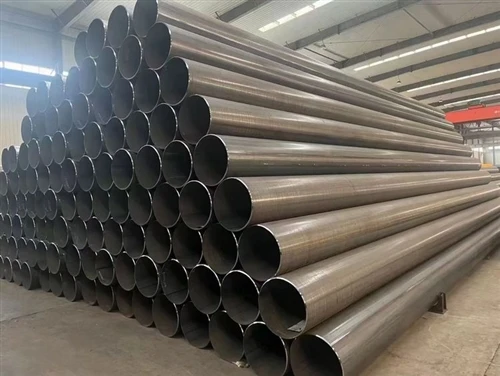
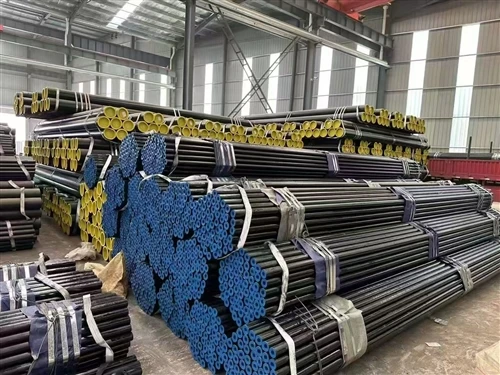
What is AS 1163 Steel Pipe?
AS/NZS 1163 is the standard for cold-formed resistance-welded steel hollow sections in Australia and New Zealand. It applies to all steel hollow sections used in building structures.
The standard has multiple grades such as C250, C350, C450, etc. The grade value represents the minimum yield strength of the material (in MPa).
The testing requirements of AS/NZS 1163 include how to cut samples for tensile and impact tests, the aging process, the quality of the hollow section length, and the external welds. These steps help ensure that the product meets quality standards.
Types and Grades of AS 1163
AS/NZS 1163 covers a variety of types and grades, including:
Circular Hollow Sections (CHS) in grades C250, C250L0, C350, C350L0, C450, and C450L0
Rectangular Hollow Sections (RHS) in grades C250, C250L0, C350, C350L0, C450, and C450L0
Square Hollow Sections (SHS) in grades C250, C250L0, C350, C350L0, C450, and C450L0
The AS 1163 standard provides a variety of options for structural requirements of different strengths. The following are the characteristics and application scenarios of several key grades C250, C350 and C450.
AS 1163 C250
AS 1163 C250 has a minimum yield strength of 250 megapascals (MPa). It is low cost, easy to process and weld, suitable for projects with limited budgets and low strength requirements.
AS 1163 C350
AS 1163 C350 is the most commonly used grade in AS 1163, with a yield strength of 350 MPa, and is widely used in frame structures of commercial buildings.
AS 1163 C450
Its minimum yield strength is 450 MPa. It has high strength and low temperature toughness, and is often used in heavy structures.
Manufacturing Process of AS 1163 Hollow Sections
The manufacturing process of AS 1163 hollow sections involves a series of carefully controlled steps to produce cold-formed electric resistance welded (ERW) structural steel hollow sections that meet the stringent requirements of the standard.
The process ensures that the sections meet the mechanical properties, dimensional tolerances and quality standards specified in AS/NZS 1163:2016. Below are the detailed steps of the manufacturing process.
Raw Material Selection
The process begins with the selection of high-quality steel coils, usually made from low carbon steel to meet the chemical composition requirements of AS 1163. The steel must meet the carbon equivalent (CE) limits of the standard.
Forming and Welding
AS 1163 uses cold forming work hardening to increase the strength of the steel. Once the steel strip is formed into a tubular shape, the edges are joined together and welded using electric resistance welding (ERW).
Surface Treatment and Finishing
Hollow sections are usually treated with a rolled surface treatment. AS 1163 involves other surface treatments such as galvanizing and coating.
Mechanical Test Requirements of AS 1163 Pipe