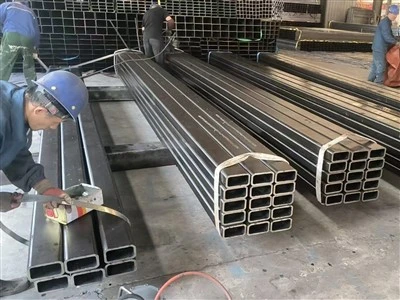
Tianjin Brisk Metalwork Co., Ltd. is one of the leading manufacturers and suppliers of structural rectangular pipe for building construction in China. We have world-leading production equipment and strong manufacturing capabilities. Please feel free to buy bulk durable structural rectangular pipe for building construction from our factory.
Tianjin Brisk Steel is one of the Structural Rectangular Pipe for Building Construction in China. Our products are mainly exported to the Middle East, Southeast Asia, Europe, New Zealand, and other regions.If you would like to learn more about our products, feel free to contact us and send your purchase list.
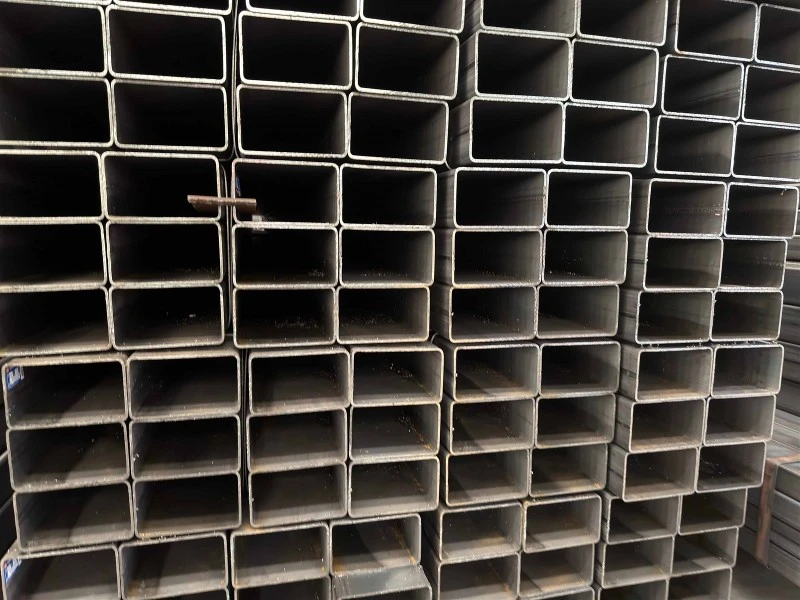


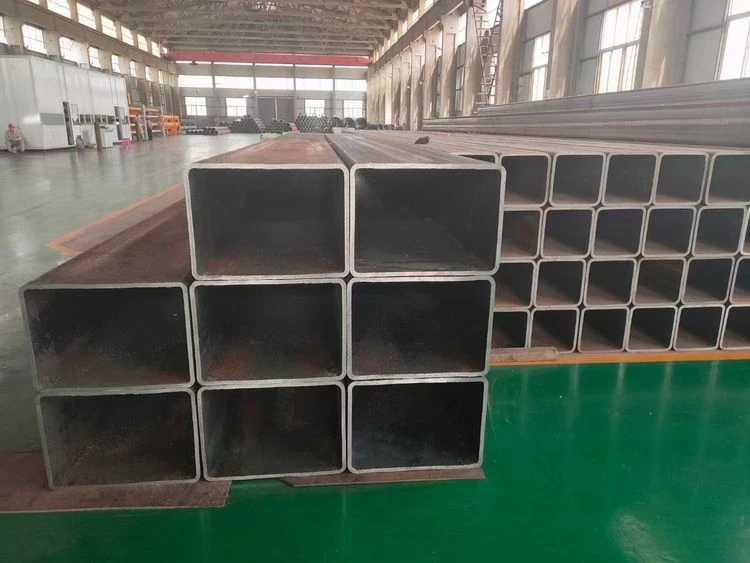
Why Building Design Uses Rectangular Structural Tube
Efficient use of material for combined axial and bending loads. Building columns often carry a combination of axial load (from floors and roof above) and lateral bending (from wind or seismic forces). The closed, symmetric shape of rectangular HSS resists both efficiently, which is a meaningful reason it has displaced wide-flange sections in some column applications, particularly where architectural exposure favors a cleaner profile.
Torsional resistance for perimeter and bracing members. Closed sections resist torsion far more effectively than open sections of comparable weight, which matters for perimeter beams and eccentrically loaded members where torsional load can't be ignored in design.
Compatibility with architecturally exposed structural steel (AESS). Where the structure is intentionally visible - atrium columns, canopy supports, exposed roof framing - rectangular HSS offers a clean, consistent profile that architects specify for its appearance as much as its structural performance, which brings additional fabrication and finish tolerance requirements beyond standard structural specification.
Established design methodology within building codes. Rectangular HSS design is well covered within AISC 360 (US) and equivalent international structural steel design standards, giving structural engineers a mature, code-recognized basis for connection design, including HSS-specific provisions for welded and bolted connections that differ from open-section design.
Standards and Grades for Building Construction
ASTM A500 - the most common US standard for cold-formed welded structural HSS, with Grade B and Grade C covering the majority of building structural applications.
ASTM A1085 - a newer structural HSS standard with tighter wall thickness tolerances and mandatory Charpy toughness testing, increasingly specified where designers want the added quality assurance it provides over A500.
EN 10219 - the European standard for cold-formed structural hollow sections, paired with Eurocode 3 design provisions on projects following European structural codes.
AISC 360 - not a material standard but the design specification US structural engineers use to size and connect HSS members; understanding that your design was calculated against a specific edition matters when confirming your material order matches the design basis.
Where This Product Shows Up in a Typical Building
- Primary columns in low-to-mid-rise steel-framed buildings, sized from the design's governing axial and moment loads
- Roof and floor bracing using rectangular HSS diagonal or chevron bracing members for lateral force resistance
- Perimeter and spandrel beams where torsional loading from eccentric floor framing favors a closed section
- Canopy and entrance structure framing where exposed steel is part of the architectural design
- Curtain wall and façade support framing where rectangular tube provides a clean mullion or support profile
FAQ
Q: Can A500 and A1085 rectangular tube be used interchangeably in the same building?
A: Not without engineering review - while both are structural HSS standards, they have different mechanical property and toughness requirements, and a design calculated for one standard's properties shouldn't be filled with the other without the engineer of record confirming the substitution is acceptable for that specific member.
Q: Does structural rectangular tube need to be galvanized for building construction?
A: Not by default - interior structural steel and steel that will be fireproofed or otherwise protected is commonly left in mill (black) finish. Exterior-exposed structural members, canopies, and some parking structure applications more often specify galvanized or painted finish for long-term corrosion protection; the requirement depends on the specific exposure condition, not the fact that it's building construction generally.
Q: What makes architecturally exposed structural steel (AESS) different to order than standard structural tube?
A: AESS typically carries tighter dimensional tolerances, specific surface finish requirements, and weld appearance standards that go beyond what's needed for steel that will be covered by finishes or fireproofing - this usually means selecting a fabricator experienced with AESS categories and confirming the mill product itself meets the tighter tolerance requirements before fabrication starts.
Q: Why would an engineer specify A1085 instead of the more common A500?
A:A1085 includes mandatory Charpy V-notch toughness testing and tighter wall thickness tolerances that A500 doesn't require, which some engineers prefer for seismic design or other applications where material toughness and precise section properties matter more than the cost savings of standard A500 material.


Hot Tags: structural rectangular pipe for building construction, China structural rectangular pipe for building construction manufacturers, suppliers, factory, hollow section contraction, hollow section drainage systems, hollow section fluctuation, hollow section process, hollow section project solution, retail hollow section