Tianjin Brisk Metalwork Co., Ltd. is one of the leading manufacturers and suppliers of structural hollow steel section in China. We have world-leading production equipment and strong manufacturing capabilities. Please feel free to buy bulk durable structural hollow steel section from our factory.
Tianjin Brisk Steel is one of the Structural Hollow Steel Section in China. Our products are mainly exported to the Middle East, Southeast Asia, Europe, New Zealand, and other regions.If you would like to learn more about our products, feel free to contact us and send your purchase list.


What Shapes and Sizes Do We Produce?
The category covers three cross-sectional families:
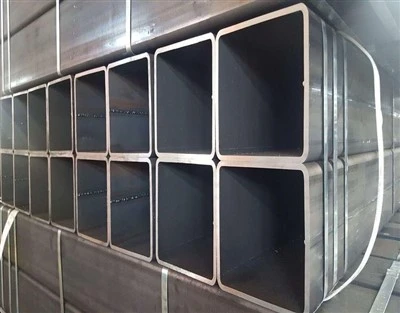
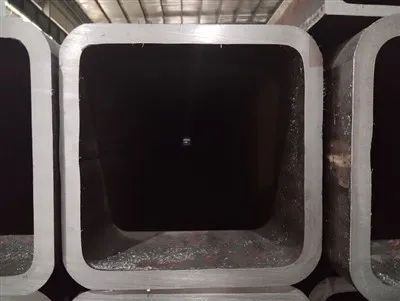
- SHS (Square Hollow Section) - equal-sided square tube, the most common structural profile for columns
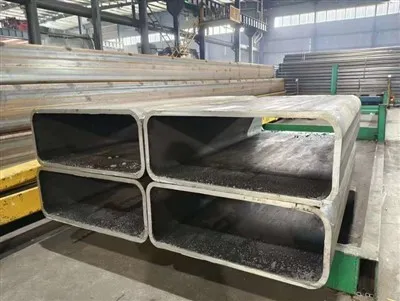
- RHS (Rectangular Hollow Section) - unequal-sided tube, chosen when a member needs more strength on one axis than the other (beams, spanning members)
- CHS (Circular Hollow Section) - round tube, used where axial/torsional symmetry matters, or for architectural exposure
All three shapes are produced under the same family of standards, and switching between them on a project rarely changes which standard applies - it changes the section properties you're designing against, not the specification.
What's the Difference Between Hot-Finished and Cold-Formed Hollow Sections?
This is the single most important distinction in the entire hollow section category, and it is where we see the most buyer confusion.
Cold-formed hollow sections start as coil, are roll-formed into shape at room temperature, and welded (typically ERW/HFW) along a seam - the corners are formed by bending, which leaves locked-in residual stress and a smaller corner radius. Hot-finished hollow sections are either seamless (round tube reshaped hot into square/rectangular) or welded-and-then-normalized above the steel's transformation temperature, which relieves the forming stress and gives a more rounded, more uniform corner.
The practical difference shows up in design wall thickness, corner strength, and weldability at the corners - hot-finished sections generally carry a more favorable design basis in structural codes because the cold-work stress has been removed. Cold-formed sections cost less and are more widely available in smaller sizes, but some codes apply a design discount to account for the unrelieved forming stress. Neither route is "better" in the abstract - the right one depends on your code basis, load case, and size.
Which Standards Do We Manufacture To?
| Standard | Region | Process Route |
|---|---|---|
| EN 10210 | Europe | Hot-finished (seamless, or welded and normalized) |
| EN 10219 | Europe | Cold-formed welded |
| ASTM A500 | United States | Cold-formed welded |
| ASTM A501 | United States | Hot-formed, welded or seamless |
| ASTM A1085 | United States | Cold-formed welded, guaranteed minimum wall |
| AS/NZS 1163 | Australia / New Zealand | Cold-formed welded |
| JIS G3466 | Japan | Cold-formed welded (STKR400 / STKR490) |
Running this range from one facility means a project that needs, say, EN 10219 for the main structure and AS/NZS 1163 for a local secondary package can be produced and shipped together, with one set of production and QC records rather than two separate supply chains.
How Do We Control Quality Across the Range?
- Coil and billet sourcing - chemistry verified against the target standard and grade before forming begins, whether the route is hot-finished or cold-formed
- In-line dimensional control - outside dimension, wall thickness, and straightness checked continuously during forming, not spot-sampled at the end of the run
- Weld seam testing - eddy current or ultrasonic testing on every welded length, with full traceability back to coil heat number
- Mechanical testing by lot - tensile, yield, and (where the standard requires it) Charpy impact testing carried out per production lot, not assumed from a single mill baseline
- Normalizing where the standard requires it - hot-finished welded sections are heat-treated above the transformation temperature as part of the process, not treated as an optional extra step
- Galvanizing quality control - coating thickness verified against the governing standard (ISO 1461 or equivalent), with vent and drain hole sizing engineered to the section's cross-sectional area on larger pieces
Every order ships with a mill test certificate covering chemistry, mechanical properties, and dimensional compliance, traceable to heat number.
What Finishes Are Available?
Every standard and shape above is available bare (black) or hot-dip galvanized, produced to order rather than limited to a fixed stock list. Black sections are common where the pipe will be coated downstream as part of a fabricated assembly, or used indoors where corrosion exposure is limited. Galvanized sections are standard for outdoor, embedded, or coastal-exposure structural members.
What Applications Use Hollow Sections?
- Building structure - columns, braced frames, and exposed architectural steelwork, where SHS/RHS profiles and consistent corner geometry matter for connection design
- Industrial and process structure - equipment supports, pipe racks, and platform framing
- Infrastructure - noise barriers, guardrail posts, and sign structure framing, often galvanized
- Agricultural and light structural - smaller cold-formed sections for framing and general fabrication
Where to Go From Here
This page covers the category at a high level - each standard above has its own detailed specification, tolerance, and grade guidance on our site, broken down by process route, shape, and (where applicable) grade class. If you already know your standard, go directly to that page; if you're still deciding between hot-finished and cold-formed, or between two regional standards for an export project, send us your application, load case, and project location and we can point you to the right one before you order.
FAQ
Q: Can I substitute one country's hollow section standard for another on the same project?
A: Generally not without engineering review. Standards that look similar (EN 10210 vs EN 10219, or any of the ASTM A500/A501/A1085 family) carry different design wall thickness assumptions and corner properties, and structural calculations are typically run against one specific standard's section-property tables.
Q: Do I need hot-finished or cold-formed hollow section for my project?
A: It depends on your governing code, load case, and size. Hot-finished sections generally carry a more favorable design basis for corner strength and are more common at larger sizes; cold-formed sections are more widely available and lower cost at smaller sizes. If your structural engineer specified a standard already, that decision has typically already been made for you.
Q: What is the difference between SHS, RHS, and CHS?
A: SHS is square, RHS is rectangular, and CHS is round hollow section. All three are produced under the same standards families - the choice between them is a structural design decision (axis strength, connection type, appearance) rather than a sourcing one.
Q: Is galvanized hollow section the same specification as black hollow section?
A: Yes, the underlying standard, shape, and mechanical properties are the same - galvanizing is an added finish, not a different product standard. Larger galvanized sizes do carry additional considerations like vent/drain hole sizing that black sections don't require.


Hot Tags: structural hollow steel section, China structural hollow steel section manufacturers, suppliers, factory, aluminum hollow section, EN 10210 S355NH HOLLOW SECTION, hollow section information, hollow section technology, quality hollow section, RECTANGULAR HOLLOW SECTION