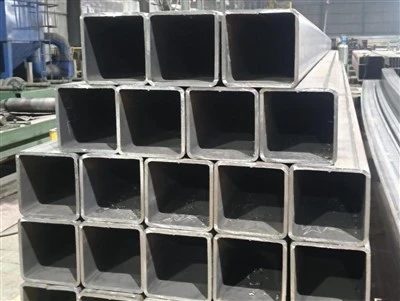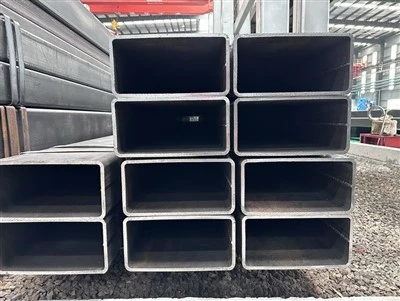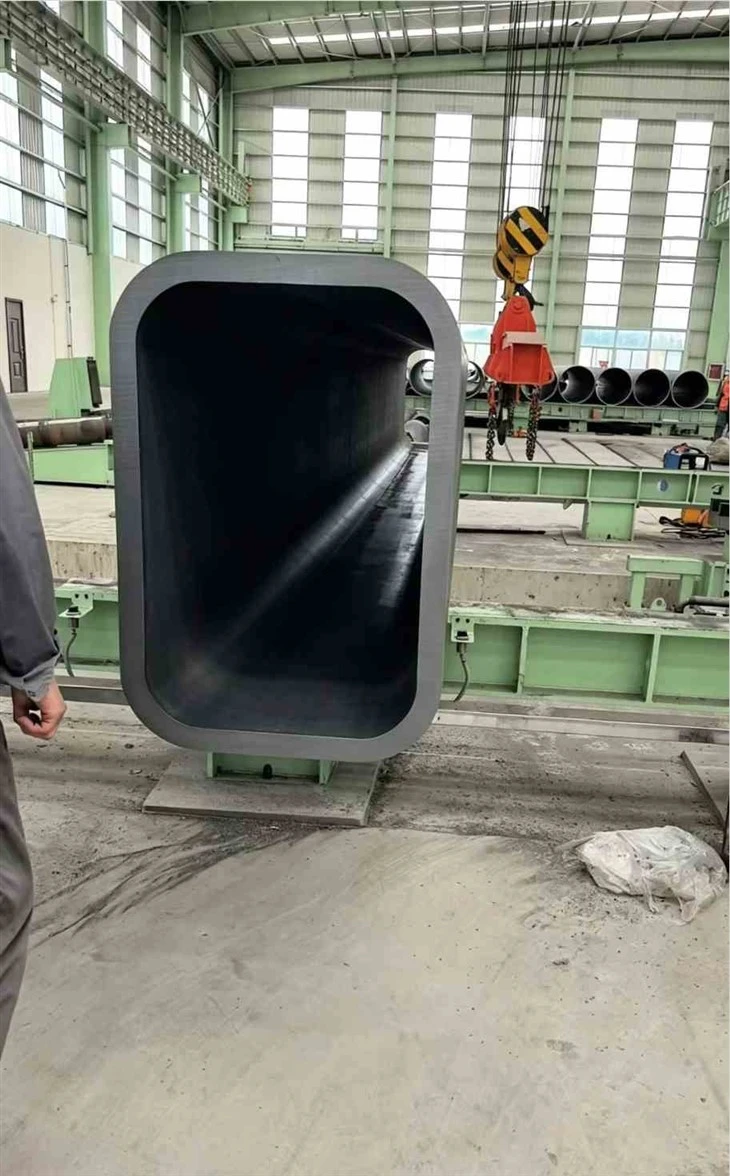
Tianjin Brisk Steel is one of the Large‑diameter galvanized SHS/RHS in China. Our products are mainly exported to the Middle East, Southeast Asia, Europe, New Zealand, and other regions.If you would like to learn more about our products, feel free to contact us and send your purchase list.


Quick Specification Reference
| Item | Typical Range |
|---|---|
| Shape | Square (SHS) and Rectangular (RHS) |
| Outer size | 20x20 mm to 500x500 mm (custom sizes on request) |
| Wall thickness | 2 mm to 25 mm |
| Corner radius | Near-zero (true sharp corner), independent of wall thickness |
| Standard cold-formed corner radius for comparison | Approximately 2x wall thickness (t), per EN 10219 / ASTM A500 |
| Length | Up to 12 m, mill-cut lengths available |
| Material grades | S235, S275, S355 (EN); ASTM A36 / A500 equivalent chemistry on request |
| Surface finish | Mill/black, hot-dip galvanized, primed, or blasted |
| Standard use | Architectural exposed steel, curtain wall structure, custom fabrication |
Why Size Changes the Galvanizing Problem, Not Just the Cost
Vent and drain holes have to scale with cross-section, not stay a fixed size. On small tube, a standard vent and drain hole handles the job easily. On large SHS/RHS, the enclosed volume and the buoyancy of trapped air both scale up with the cross-section, so the hole area has to scale with it too - industry guidance sizes hollow-section vent and drain holes as a percentage of the diagonal cross-sectional area, not a flat diameter. Undersize the holes on a large box section and the piece can float instead of sinking fully into the zinc, leaving the top uncoated, or worse, trap enough air to create a real safety hazard when the section is lowered into molten zinc.
Large pieces can exceed the kettle in a single dip. A typical galvanizing kettle runs around 12 meters, though longer baths exist. A long large-diameter SHS/RHS column or beam that exceeds the kettle length has to be double-dipped - immersed from one end, then flipped and immersed from the other, with the two zones overlapping in the middle. Done correctly this gives full coverage; done without planning, it can leave a visible lap line or a thinner coating band where the two immersion zones meet.
Differential thermal expansion causes more visible distortion at large cross-section. The steel expands as it's immersed in zinc at around 450 degrees C, and a large flat face has more surface to expand unevenly across than a small one does. Combined with any welding residual stress already in the section (particularly on cold-formed EN 10219 product), large box sections are more prone to visible bow or twist after galvanizing if venting and lifting points weren't planned to allow fast, even immersion.
Coating uniformity across a large flat face is a real variable, not just an inspection formality. Silicon content in the steel (the Sandelin effect) drives how thick and how brittle the zinc coating grows, and that effect is more visually obvious across a large, unbroken flat face than on a small profile where surface irregularity is less noticeable. Confirming the steel's silicon range before galvanizing matters more, not less, as the face gets bigger.
Planning a Large SHS/RHS for Hot-Dip Galvanizing
- Confirm finished piece length against the galvanizer's kettle length - anything longer needs a double-dip plan agreed before fabrication, not after.
- Size vent and drain holes to the actual enclosed cross-section of the piece, not a standard small-tube hole size - discuss the required hole area with the galvanizer at design stage.
- Position vent holes at the highest point and drain holes at the lowest point for the actual dip angle the galvanizer will use, since large pieces are often dipped at a shallower angle than small tube for handling reasons.
- Confirm the steel's silicon content range with the mill before galvanizing, particularly for large flat-faced sections where coating appearance is most visible.
- Agree lifting point locations with the galvanizer so the piece can be immersed and withdrawn quickly and evenly, minimizing the time available for uneven thermal expansion to cause distortion.
- For double-dipped pieces, confirm the overlap zone location in advance and inspect coating thickness specifically across that band after galvanizing.
- Inspect coating thickness at multiple points across large flat faces, not just at the ends, since thickness can vary more across a bigger surface than industry averages from small-tube testing would suggest.
Where Large Galvanized SHS/RHS Gets Used
Industrial and warehouse structural columns. Large box columns exposed to weather or humid indoor environments (food processing, cold storage) where corrosion protection over the building's service life matters more than the upfront coating cost.
Transmission and telecom towers. Large box-section legs and bracing exposed to decades of outdoor weathering with limited maintenance access.
Bridge and marine structure components. Piers, fender systems, and box girders where galvanizing plus a duplex paint system is often specified for high-corrosion environments.
Large gate, fence, and enclosure frames. Perimeter security structures using oversized box section for both strength and a deliberately heavy visual profile.
A Case Worth Knowing
A fabricator sent a batch of 400x400x12mm box columns for galvanizing, drilled with the same vent and drain hole pattern their shop normally used on 150x150 mm tube. The holes were adequate in number but far too small in total area for the enclosed volume of the larger section. During dipping, several pieces failed to fully submerge on the first attempt, requiring the galvanizer to manually work trapped air out before the pieces would sink - a slower, less controlled process that left uneven coating near the vent points on more than one piece. The rework wasn't due to bad steel or a bad galvanizing bath; it was a hole pattern sized for the wrong cross-section. Confirming vent and drain hole area against the actual finished section size, not a shop standard carried over from smaller work, would have avoided it.
FAQ
Q: Does a larger box section need a thicker zinc coating than a small one?
A: Coating thickness under EN ISO 1461 and ASTM A123 is governed mainly by steel thickness class, not overall section size - a heavier wall thickness on a large section typically does correspond to a thicker coating requirement, but it's the wall thickness driving that, not the outside dimension itself.
Q: Can a large SHS/RHS be sealed instead of vented, if appearance matters?
A: No. Sealing a hollow section before hot-dip galvanizing risks a dangerous pressure buildup as trapped air and moisture heat rapidly in the molten zinc, and can cause the section to burst. Vent and drain holes are a safety requirement as much as a coating-quality one, and should be planned into the design rather than treated as an afterthought.
Q: Will double-dipping leave a visible mark on the finished piece?
A: It can, if the overlap zone isn't planned and inspected. A properly executed double-dip, with the overlap positioned in a low-visibility location and coating thickness verified across the band, generally produces an acceptable finish - but it's worth discussing dip orientation with the galvanizer before fabrication if the piece will be visually exposed.
Q: How much does size affect galvanizing cost on large SHS/RHS?
A: Beyond the straightforward per-kilogram zinc cost, large sections that require double-dipping, custom vent/drain engineering, or extra handling for distortion control typically carry a cost premium over standard small-tube galvanizing - worth budgeting for at the quotation stage rather than assuming a flat per-ton rate applies at any size.


Hot Tags: large‑diameter galvanized shs/rhs, China large‑diameter galvanized shs/rhs manufacturers, suppliers, factory, efficient hollow section, hollow section cross section, hollow section distributor, hollow section inspection, hollow section servicing, thick wall hollow section