

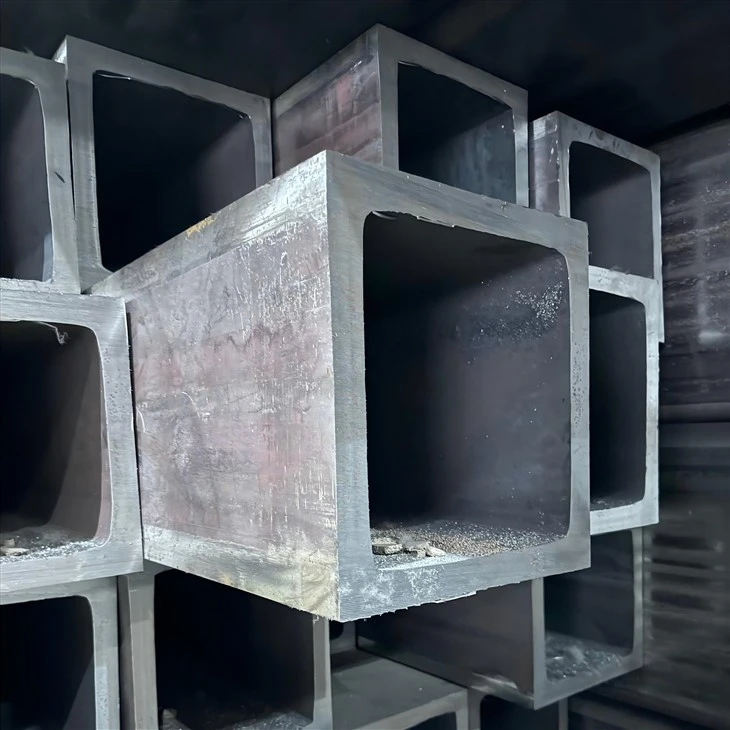
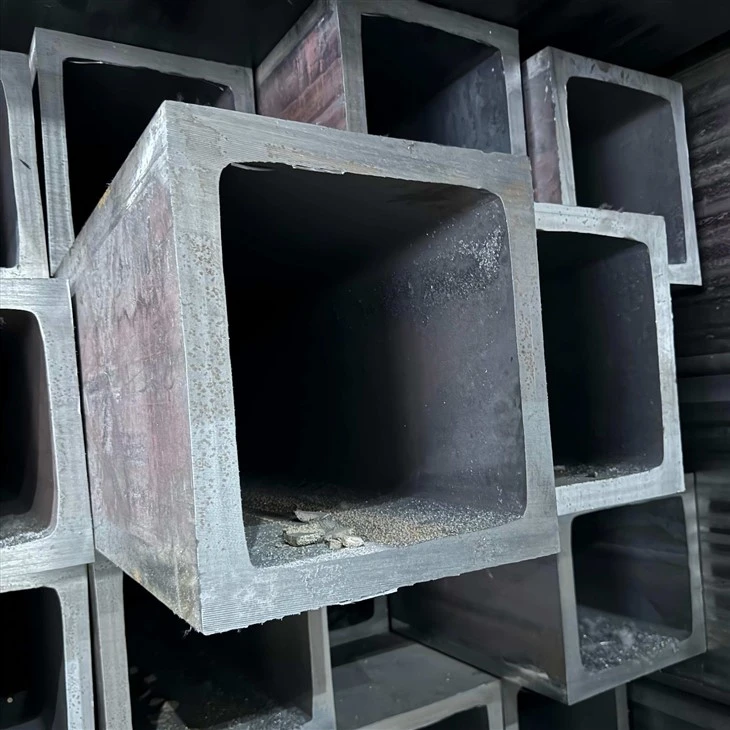
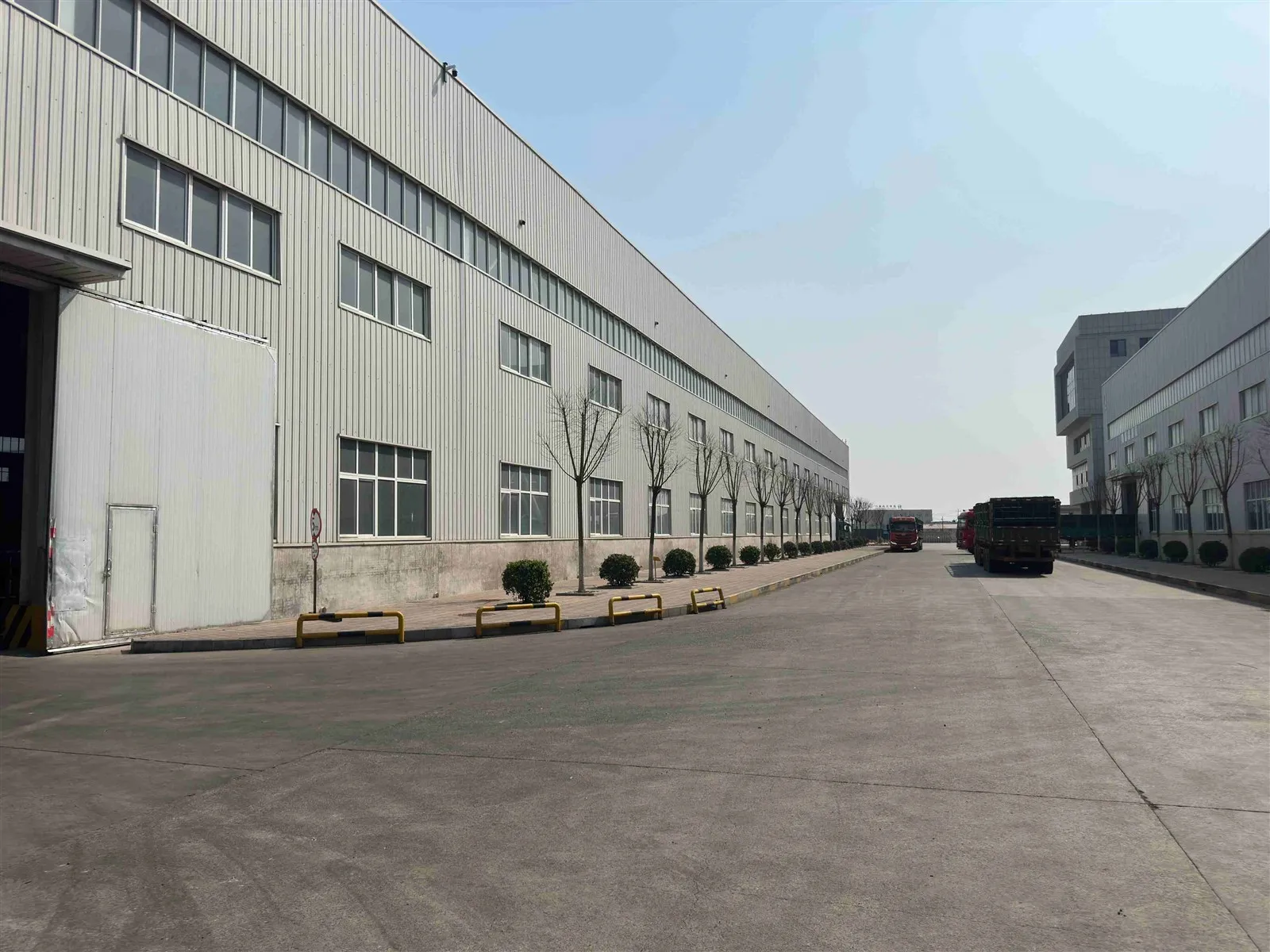
Tianjin Brisk Metalwork Co., Ltd. is one of the leading manufacturers and suppliers of curtain wall hollow sections in China. We have world-leading production equipment and strong manufacturing capabilities. Please feel free to buy bulk durable curtain wall hollow sections from our factory.
Tianjin Brisk Steel is one of the manufacturers of Curtain Wall Hollow Sections in China. Our products are mainly exported to the Middle East, Southeast Asia, Europe, New Zealand, and other regions.If you would like to learn more about our products, feel free to contact us and send your purchase list.


What is a Curtain Wall Hollow Section?
A curtain wall hollow section is a specialized structural steel tube-primarily engineered as a Rectangular Hollow Section (RHS) or Square Hollow Section (SHS)-used as a mullion (vertical support) or transom (horizontal rail) in a building's exterior cladding system.
Unlike standard structural steel tubing, curtain wall sections require exceptional dimensional precision, strict straightness tolerances, and superior surface finishes. They are manufactured using high-quality carbon steel through precise cold-forming or hot-finishing processes, often followed by advanced zinc-galvanizing or custom powder-coating to ensure long-term resistance to weathering.

Cold Rolled HF Welded Sharp Corner RHS (Standard Curtain Wall)
- Raw coil inspection → Uncoil & flatten → Edge milling → Roll forming → HF welding → Weld bead grinding → UT inspection → Stress relief annealing → Sizing & sharp corner pressing → Straightening & fixed-length cutting → End deburring → Shot blasting → Galvanizing/fluorocarbon coating → Marking & packing
Hot Extruded Sharp Corner RHS (High-end Curtain Wall)
- Round tube incoming test → Full annealing → Reheating & hot extrusion for sharp 90° corners → Corner fine grinding → Straightening & CNC cutting → Low-temperature impact test → Shot blasting → Surface coating → End cap protection & packing
Key Benefits of Steel Hollow Sections in Curtain Wall Systems
While aluminum is frequently used for low-rise framing, steel hollow sections are the undisputed choice for heavy-duty, long-span, and high-rise curtain walls due to several key advantages:
1. Massive Load-Bearing Capacity & Span Lengths
Steel possesses a modulus of elasticity that is roughly three times higher than aluminum ($200,000 \text{ MPa}$ vs. $70,000 \text{ MPa}$). This tremendous stiffness allows steel hollow sections to span massive vertical heights between building floors without requiring intermediate bracing, enabling architects to design soaring, uninterrupted glass atriums.
2. Sleek, Slim Sightlines
Because steel is inherently stronger than alternative metals, engineers can specify much slimmer mullion profiles to handle identical structural wind loads. This minimizes visual obstruction from the interior and maximizes the intake of natural daylight.
3. Excellent Thermal Stability
Steel has a significantly lower coefficient of thermal expansion than aluminum. This means steel curtain wall frameworks expand and contract far less during extreme temperature fluctuations between day and night, reducing stress on glass seals and preventing expensive structural air/water leaks.
4. Superior Fire Resistance
Steel retains its structural integrity at much higher temperatures than aluminum, which melts quickly under intense heat. Utilizing steel hollow sections inherently boosts the passive fire safety rating of the building's perimeter envelope.
Frequently Asked Questions (FAQ)
Q: Why use steel hollow sections instead of aluminum for curtain walls?
A: Aluminum is ideal for standard storefronts, but it lacks the structural modulus to support massive, multi-story glass spans without bending. Steel hollow sections allow for much taller vertical spans, thinner profile sightlines, better fire ratings, and significantly less thermal movement, making them mandatory for high-end or high-rise architectural facades.
Q: What surface treatments are recommended for outdoor facade steel?
A: To ensure a lifespan matching the building itself, steel sections are typically treated with hot-dip galvanization or premium zinc-rich primers. For visible architectural applications, they are finished with high-durability PVDF liquid coatings or architectural-grade powder coatings that resist UV fading and atmospheric corrosion.
Q: Can custom geometric profiles be manufactured for specialized facade designs?
A: Yes. Modern architecture frequently requires non-standard shapes, such as sharp-cornered rectangular tubes, laser-welded profiles, or trapezoidal configurations. Our advanced manufacturing facility offers custom cold-forming and precision laser-welding services to match unique architectural blueprints.
Q: How do you ensure the straightness required for perfect glass alignment?
A: Glazing systems require incredibly tight tolerances; any twisting or bowing in the steel mullion will cause the glass panels to misalign or crack. Our curtain wall profiles undergo rigorous inline tension straightening and automated eddy-current tolerance checks to guarantee straightness metrics that exceed standard ASTM and EN parameters.
Contact Us
Sourcing structural steel for high-visibility architectural envelopes demands a manufacturer with a proven track record in precision engineering. Our state-of-the-art facility specializes in the production of high-tolerance, sharp-cornered, and heavy-wall structural hollow sections optimized specifically for the facade industry. Every order is fully traceable and delivered alongside an authenticated EN 10204 3.1 Material Test Certificate (MTC).



Hot Tags: curtain wall hollow sections, China curtain wall hollow sections manufacturers, suppliers, factory, EN 10210 HOT FINISHED HOLLOW SECTION, hollow section agent, hollow section application solution, hollow section surplus, hollow section tube, precision hollow section


