

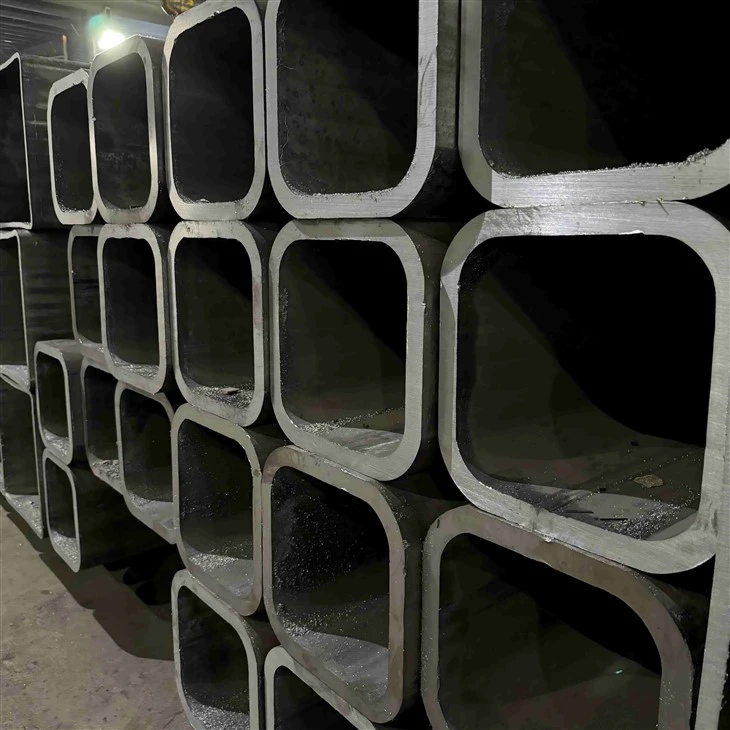
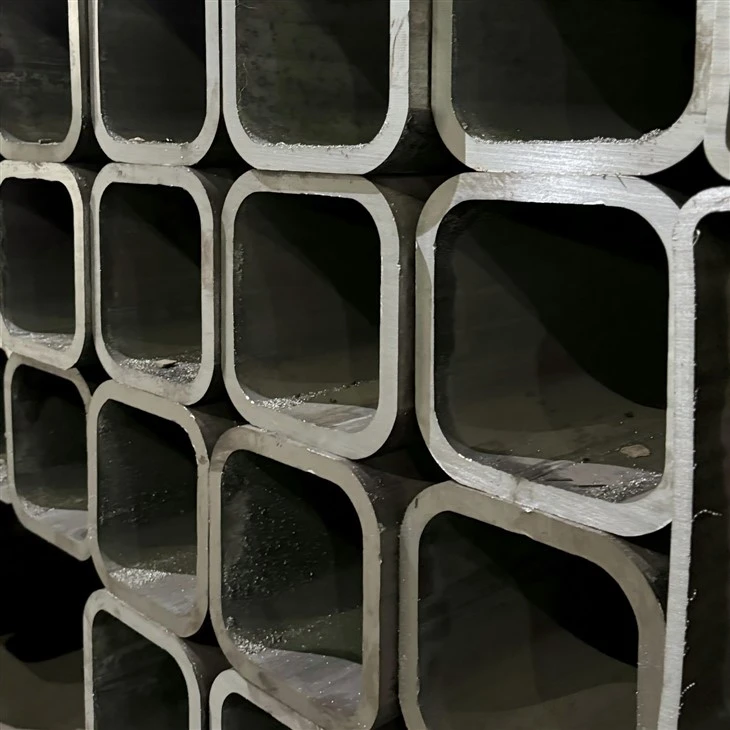
Tianjin Brisk Steel is one of the manufacturers of ASTM A500 Steel Tube in China. Our products are mainly exported to the Middle East, Southeast Asia, Europe, New Zealand, and other regions.If you would like to learn more about our products, feel free to contact us and send your purchase list.


Understanding the ASTM A500 Specification
Sourcing the right structural tube requires a clear understanding of the metallurgical and testing parameters defined by the American Society for Testing and Materials (ASTM):
- The Cold-Forming Advantage: ASTM A500 tubes are cold-formed from flat-rolled steel strips and welded longitudinally using High-Frequency Induction (ERW) technology. Cold forming increases the steel's yield and tensile strength through a natural process called work hardening, resulting in a highly rigid structure with a smooth, aesthetically pleasing surface ideal for exposed architectural applications.
- Grading System Breakdown (Grades B & C): The specification is divided into distinct material grades, with Grade B and Grade C being the industry standards:
- Grade B: The traditional benchmark, offering reliable yield strength (up to 317 MPa (46,000 psi) for shaped tubes).
- Grade C: A higher-strength formulation providing up to 345MPa (50,000psi) yield strength, allowing engineers to decrease wall thicknesses and save total steel tonnage without compromising structural load thresholds.
Core Geometric Profiles
ASTM A500 steel tubes are manufactured in three primary shapes to accommodate different structural engineering requirements:
1. Square Hollow Sections (SHS)
Featuring equal side dimensions and symmetrical cross-sections, square ASTM A500 tubes provide uniform resistance to compression and buckling along both axes. They are widely used as structural columns and posts.
2. Rectangular Hollow Sections (RHS)
With a distinct strong axis and weak axis, rectangular tubes are optimized for bending applications. They serve as efficient structural beams, joists, and machinery cross-members where loads are applied primarily in one direction.
3. Round Hollow Sections (CHS)
Round A500 tubing provides excellent torsional (twisting) resistance and aerodynamic efficiency. These are frequently deployed in space frames, handrails, truss networks, and aesthetic architectural pillars.


Technical Specifications: Grades and Mechanical Properties
The ASTM A500 specification is divided into several grades (primarily Grade A, Grade B, Grade C, and Grade D). Among these, Grade B and Grade C are the most frequently requested in international trade due to their superior strength characteristics.
Here is a breakdown of the minimum mechanical property requirements according to the standard:
| Profile Shape & Grade | Minimum Yield Strength | Minimum Tensile Strength | Minimum Elongation |
| Shaped (Square/Rectangular) | |||
| Grade B | 46,000 psi (317 MPa) | 58,000 psi (400 MPa) | 23% |
| Grade C | 50,000 psi (345 MPa) | 62,000 psi (427 MPa) | 21% |
| Round Profiles | |||
| Grade B | 42,000 psi (290 MPa) | 58,000 psi (400 MPa) | 23% |
| Grade C | 46,000 psi (317 MPa) | 62,000 psi (427 MPa) | 21% |
Key Takeaway: Grade C offers higher yield and tensile strength compared to Grade B, making it the preferred choice for projects aiming to minimize total steel weight without sacrificing structural load capacity.
Frequently Asked Questions (FAQ)
Q: What is the maximum wall thickness available for ASTM A500 tubing?
A: Per the ASTM standard, the maximum wall thickness for cold-formed A500 structural tubing is 0.625 inches (15.88 mm). If your project requires walls thicker than 5/8", you may need to look into hot-finished specifications like ASTM A106 or EN 10210.
Q: Can ASTM A500 tubing be hot-dip galvanized?
A: Yes, absolutely. While it is produced with a bare finish, A500 steel tubing can be fully hot-dip galvanized post-production or coated with a zinc-rich primer to provide decades of outdoor rust protection in corrosive or coastal environments.
Q: How are the corner radii calculated for square/rectangular A500 tubes?
A: For cold-formed welded square and rectangular tubes, the outside corner radius typically does not exceed three times the specified wall thickness ($3t$). Maintaining a precise corner radius is critical for ensuring proper fit-up with connecting brackets and structural bolts.
Q: What is the difference between ASTM A500 and ASTM A513?
A: ASTM A500 is engineered specifically for structural and load-bearing applications (buildings, bridges, frames) and mandates specific yield, tensile, and impact tests. ASTM A513 is intended for mechanical and ornamental applications (furniture, consumer goods, automotive parts) where tight aesthetic and dimensional tolerances matter more than heavy structural load capacity.
BRISK STEEL
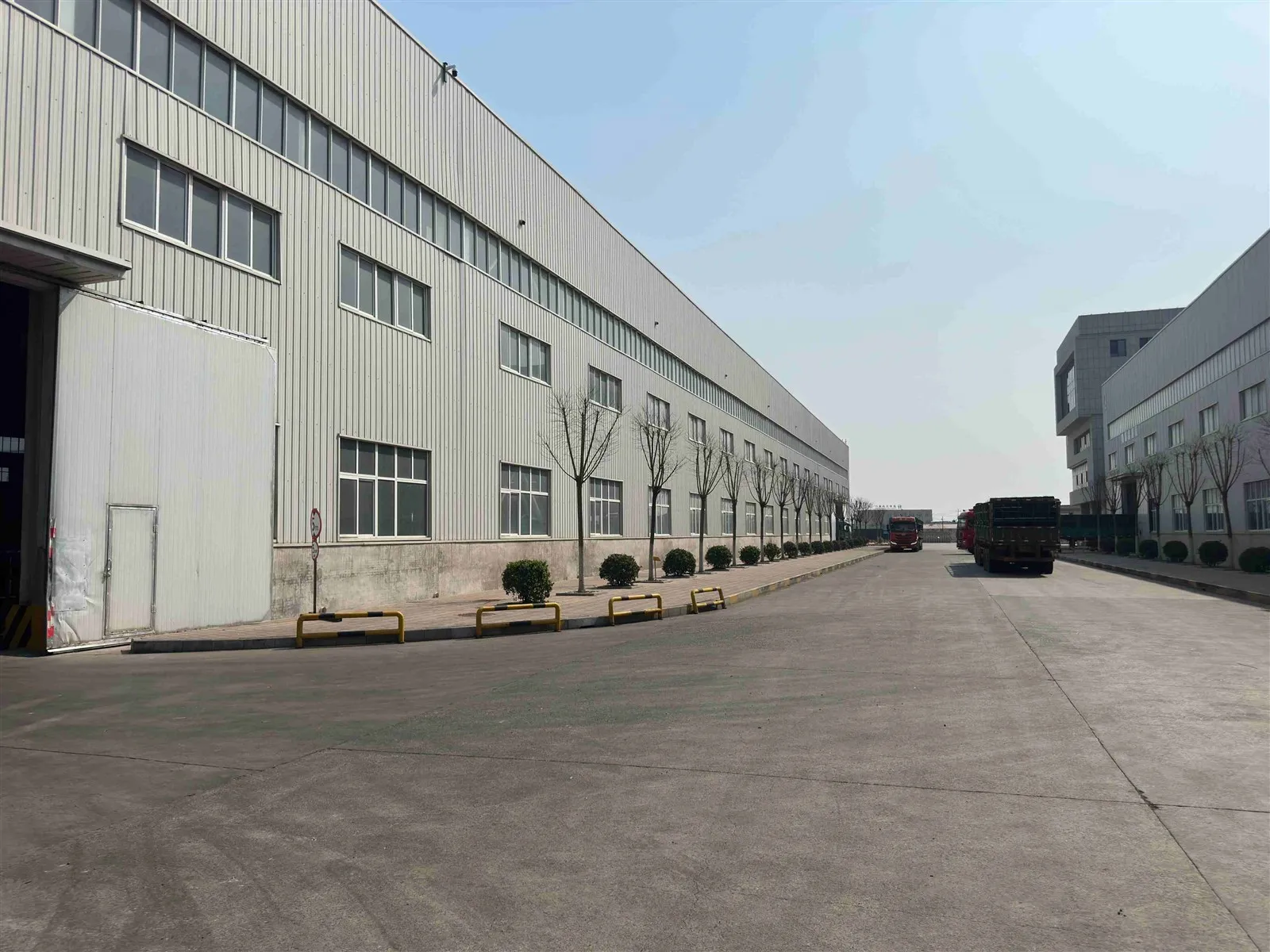
As an ISO 9001 certified manufacturer and global exporter, our facility integrates advanced rolling mills, automated sizing lines, and rigorous non-destructive testing (NDT) to ensure every tube delivers maximum field performance. We provide comprehensive EN 10204 3.1 Material Test Certificates (MTC) with every shipment, ensuring complete traceability and compliance with your local building codes.



Hot Tags: astm a500 steel tube, China astm a500 steel tube manufacturers, suppliers, factory


