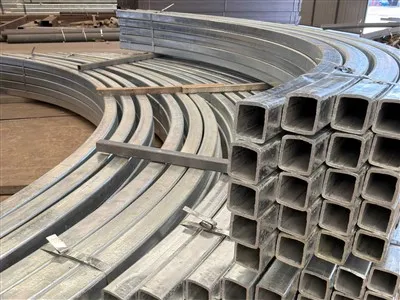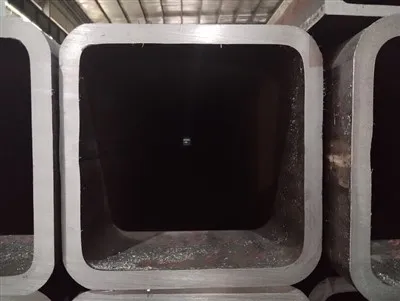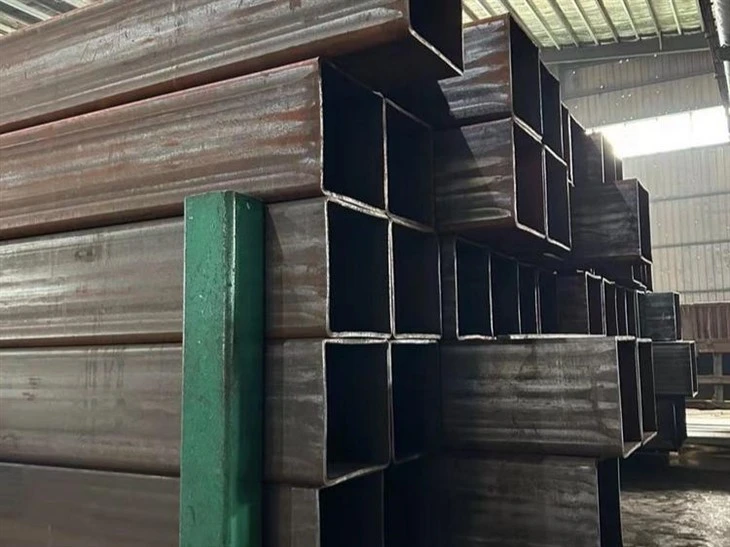
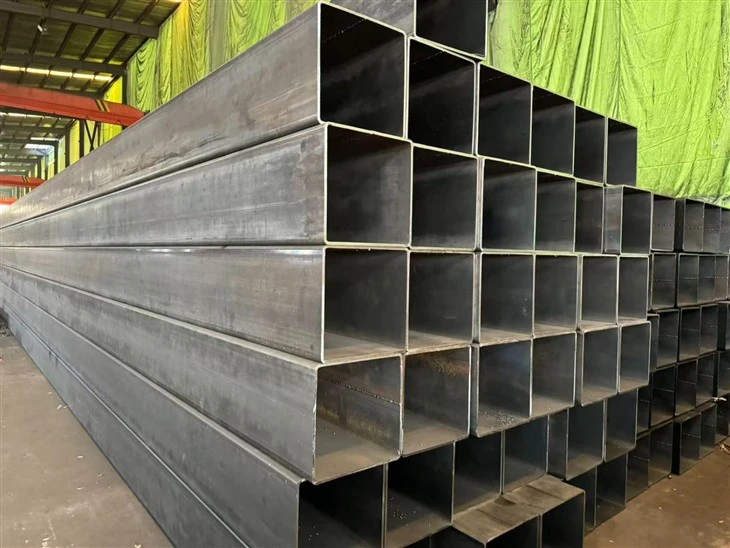
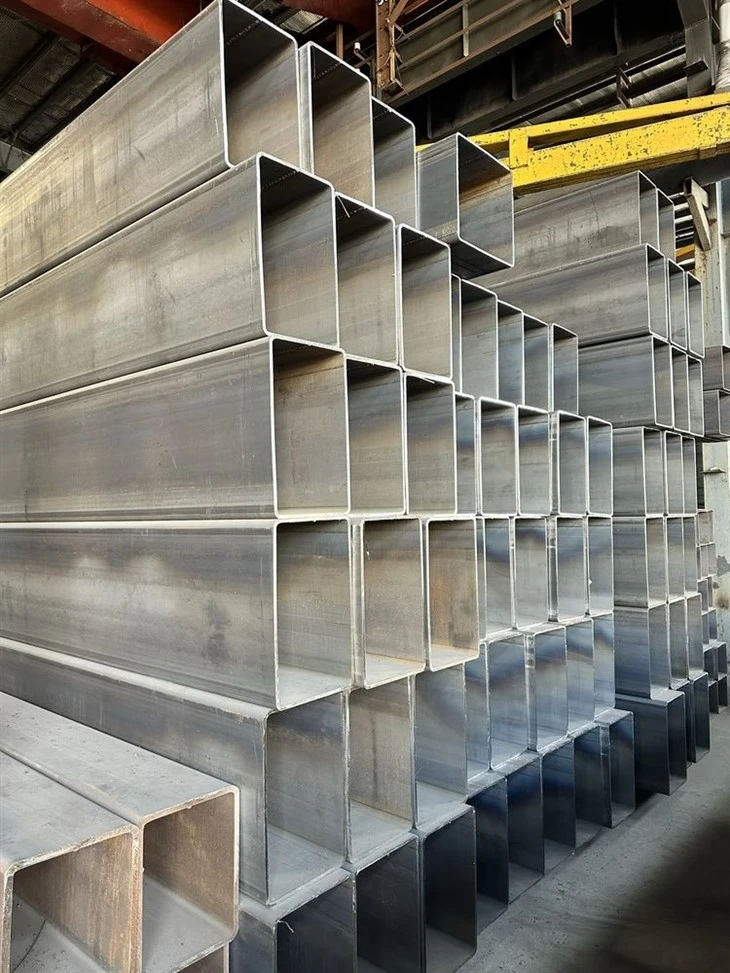

Tianjin Brisk Steel is one of the manufacturers of Cold Formed Structural Hollow Section EN10219 in China. Our products are mainly exported to the Middle East, Southeast Asia, Europe, New Zealand, and other regions.If you would like to learn more about our products, feel free to contact us and send your purchase list.


What Is EN10219 Hollow Section?
EN10219 is the European standard governing cold formed welded structural hollow sections manufactured from non-alloy and fine grain structural steels. The tube is formed from steel strip or plate at ambient temperature, then welded along the seam - typically by high-frequency induction welding - without the subsequent hot-forming step used for EN10210 sections.
Because the forming happens cold, the corner areas of the section undergo strain hardening, which increases yield strength locally at the corners compared to the flat faces. Designers working to EN 1993 (Eurocode 3) account for this effect directly in structural calculations, making EN10219 one of the most widely used hollow section standards for general steel construction across Europe and export markets that follow European design codes.
Steel Grades Covered
| Grade | Notes |
|---|---|
| S235JRH | Base grade, general structural use |
| S275J0H | Impact-tested at 0°C |
| S275J2H | Impact-tested at -20°C |
| S355J0H | Higher strength, 0°C impact rating |
| S355J2H | Higher strength, -20°C impact rating |
| S355K2H | Higher strength, enhanced -20°C toughness |
| S420MH / S460MH | Higher-strength thermomechanically rolled grades, less commonly stocked |
The "H" designation identifies the grade as applicable to hollow sections rather than flat or long steel products.
Dimensional Range
- CHS: roughly 21.3 mm to 660 mm outside diameter, depending on mill
- SHS: roughly 20 x 20 mm up to 400 x 400 mm
- RHS: roughly 40 x 20 mm up to 500 x 300 mm
- Wall thickness: roughly 2.0 mm to 25 mm, with heavier walls available from some mills
Actual stocked sizes vary between suppliers - always request a current size and grade availability list before specifying, especially for larger sections or non-standard wall thicknesses.
Manufacturing Characteristics
- Cold roll-formed from coil, then welded and sized to final dimensions
- No subsequent heat treatment applied (distinguishes it from EN 10210)
- Sharper, more angular corner profile than hot finished equivalents
- Corner strength increase is a recognized design factor under Eurocode 3
- Available in black (as-welded) finish or hot-dip galvanized on request
- Generally more cost-efficient to produce than hot finished sections, particularly in smaller and mid-range sizes
Where It's Used
- General structural steel frames for commercial and industrial buildings
- Roof trusses, purlins, and secondary structural steelwork
- Steel columns and beams in low-to-mid rise construction
- Agricultural and warehouse structures
- Fencing, handrail, and architectural structural elements
- Fabricated steel furniture and equipment frames
FAQ
Q: Why are cold formed hollow sections generally less expensive than hot finished ones?
A: Cold forming is typically a faster, less energy-intensive production process since it skips the additional heating step used for hot finished sections. This generally makes EN10219 sections more cost-competitive, particularly in smaller sizes with high production volumes.
Q: Does cold forming weaken the steel?
A: Not overall - cold forming actually increases yield strength at the corners due to strain hardening, though it can slightly reduce ductility in those localized areas. Eurocode 3 provides design methods that account for this corner strengthening effect rather than treating it as a weakness.
Q: What is the difference between S355J0H and S355J2H?
A: Both are the same base strength grade (S355), but they differ in the temperature at which Charpy impact toughness is verified - J0H is tested at 0°C, while J2H is tested at a lower temperature of -20°C, making J2H more suitable for structures exposed to colder service conditions.
Q: Can EN10219 hollow sections be used for outdoor structures?
A: Yes, provided the appropriate corrosion protection is applied - commonly hot-dip galvanizing per EN ISO 1461 - and the design accounts for the environmental exposure conditions in accordance with the applicable structural code.


Hot Tags: cold formed structural hollow section en10219, China cold formed structural hollow section en10219 manufacturers, suppliers, factory