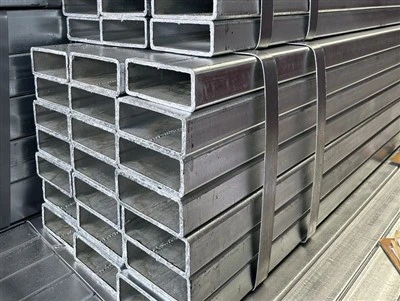
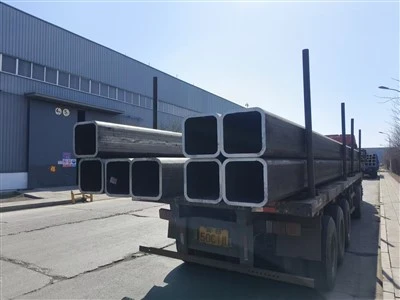
Tianjin Brisk Metalwork Co., Ltd. is one of the leading manufacturers and suppliers of astm a53 carbon steel pipe specification in China. We have world-leading production equipment and strong manufacturing capabilities. Please feel free to buy bulk durable astm a53 carbon steel pipe specification from our factory.
Tianjin Brisk Steel is one of the ASTM A53 Carbon Steel Pipe Specification in China. Our products are mainly exported to the Middle East, Southeast Asia, Europe, New Zealand, and other regions.If you would like to learn more about our products, feel free to contact us and send your purchase list.


Quick Reference Table
| Parameter | Grade A | Grade B |
|---|---|---|
| Carbon (max) | 0.25% | 0.30% |
| Manganese (max) | 0.95% | 1.20% |
| Phosphorus (max) | 0.05% | 0.05% |
| Sulfur (max) | 0.045% | 0.045% |
| Yield Strength (min) | 30,000 psi (207 MPa) | 35,000 psi (241 MPa) |
| Tensile Strength (min) | 48,000 psi (331 MPa) | 60,000 psi (414 MPa) |
| Available Types | E, S, F | E, S |
| Size Range | 1/8" – 26" NPS | 1/8" – 26" NPS |
| Finish | Black or Galvanized | Black or Galvanized |
Grade B accounts for the large majority of A53 orders placed worldwide, mainly because its higher strength allows thinner walls at equivalent pressure ratings - a direct material-cost advantage on large orders.
The Part of the Spec Most Buyers Skip: Type Letters
A53 is not one product. The standard defines three manufacturing types, and mixing them up on a purchase order is one of the most common sourcing errors we see repeated across markets.
- Type S (Seamless): Pierced and rolled from a solid billet, no weld seam at all. Used where a fully homogeneous wall is required.
- Type E (Electric-Resistance Welded): Coil steel formed into a tube and welded along a single longitudinal seam using electric resistance current. This is the dominant production method for A53 today because it holds tighter dimensional tolerance at lower cost than Type S.
- Type F (Furnace-Butt Welded, Continuous Weld): An older, lower-cost process limited to smaller diameters and Grade A only. Type F is rarely stocked outside of specific fencing and low-pressure applications.
A purchase order that simply says "ASTM A53 pipe" without a type letter leaves the mill to decide, which is exactly how a project ends up with continuous-weld pipe on a job that assumed electric-resistance-welded material.
Reading the Full Designation String
A complete, unambiguous A53 callout looks like this: ASTM A53 Type E, Grade B, NPS 6, Schedule 40, Black
Each segment carries a separate meaning:
- Type - manufacturing process (E/S/F)
- Grade - chemistry and strength tier (A/B)
- NPS - nominal pipe size, not the actual outside diameter
- Schedule - wall thickness designation
- Finish - black (mill finish) or galvanized
Dropping any one of these fields is a common cause of order confusion. A mill test report that lists "A53 Gr. B" with no type still meets the letter of a vague PO, but it may not meet the actual engineering intent if seamless pipe was assumed.
Testing and Certification Built Into the Standard
A53 requires each length of pipe to pass one of two acceptable pressure tests - hydrostatic or a nondestructive electric test - with the method used stated on the mill certificate. Grade B additionally permits (but Grade A does not always carry) supplementary requirements when specified, such as impact testing for low-temperature service. A mill certificate compliant with A53 should show: heat number, chemical analysis, tensile/yield results, the test method used, and type/grade/size identification traceable to the physical pipe marking.
Where the Confusion Usually Shows Up in Practice
A regional contractor once received a delivery of "A53 Grade B" pipe for a compressed-air distribution line and rejected it on receipt because the outside diameter didn't match the piping isometrics. The mill certificate was chemically and mechanically compliant - but the order had been placed by NPS size only, without confirming the schedule, and the supplier had defaulted to Schedule 40 while the drawings called for Schedule 80. Nothing on the certificate was wrong; the purchase order simply hadn't specified enough of the designation string to prevent the assumption.
FAQ
Q: Does a higher grade letter always mean better pipe?
A: No - Grade A and Grade B are simply two different chemistry/strength combinations within A53, not a quality ranking. Grade A's lower carbon content gives it slightly better cold-bending and welding characteristics, while Grade B's higher strength allows thinner walls at the same pressure rating. The correct grade is the one that matches the design calculation, not the one with the "better" letter.
Q: Can Type E and Type S pipe be used interchangeably?
A: For most pressure-piping applications where both meet the same chemistry and mechanical requirements, yes - A53 treats them as equivalent for design purposes. Some specifications or end users still require seamless (Type S) specifically for certain services, so the project spec sheet should always be checked before substituting one for the other.
Q: Is A53 pipe automatically suitable for structural use?
A: Not without a separate design check. A53's minimum yield strength is lower than ASTM A500's for round structural tube of the same nominal size, so a design based on A500 capacity tables cannot assume A53 pipe will perform the same way.
Q: What does "black" mean on an A53 mill certificate?
A: Black refers to the uncoated, as-manufactured mill finish - it is not a grade or a defect, simply the absence of galvanizing. Black A53 pipe still carries the same chemistry, mechanical, and testing certification as galvanized A53 of the same type and grade.


Hot Tags: astm a53 carbon steel pipe specification, China astm a53 carbon steel pipe specification manufacturers, suppliers, factory, ASTM A500 Carbon Steel Structural Tubing, hollow section business, hollow section channels, hollow section downpipes, hollow section supply and demand, production of hollow section