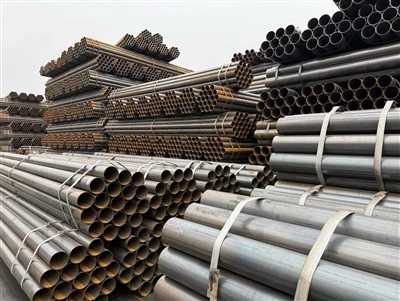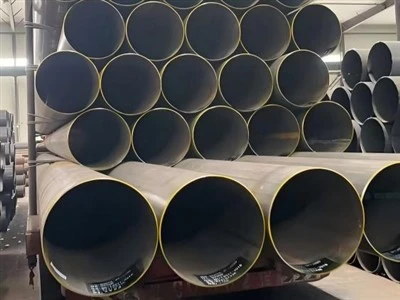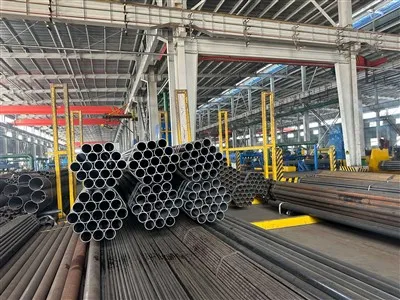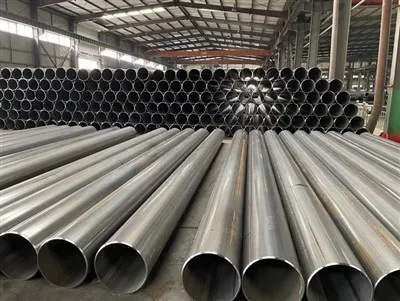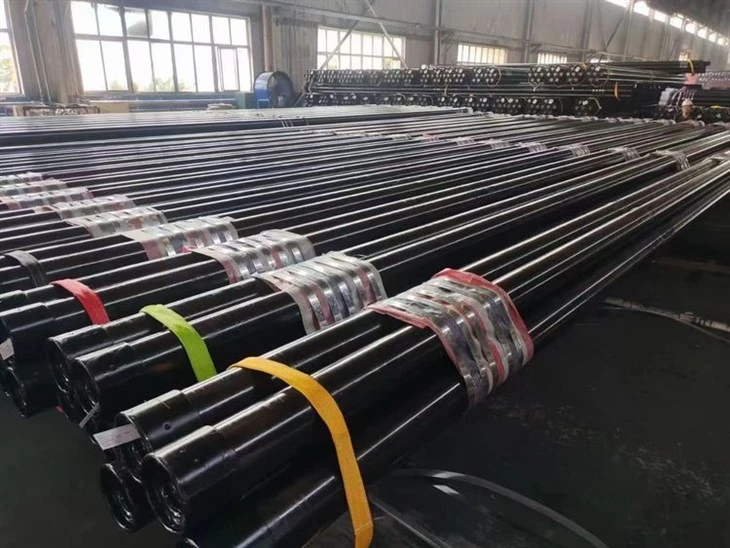
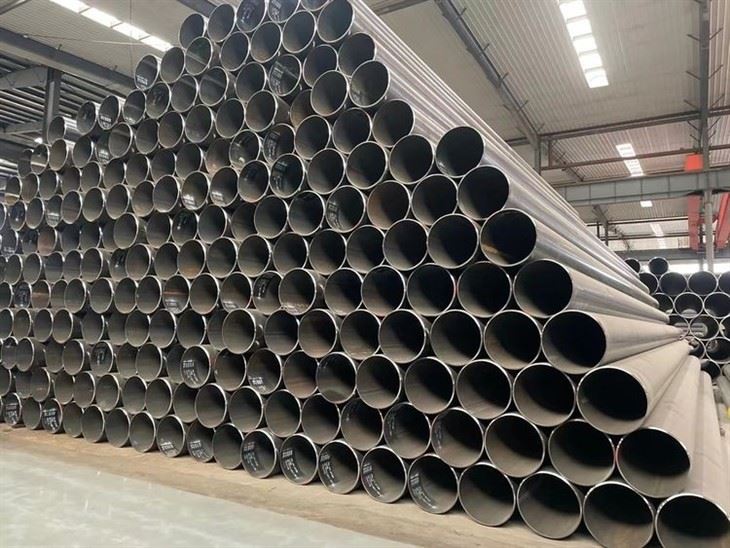
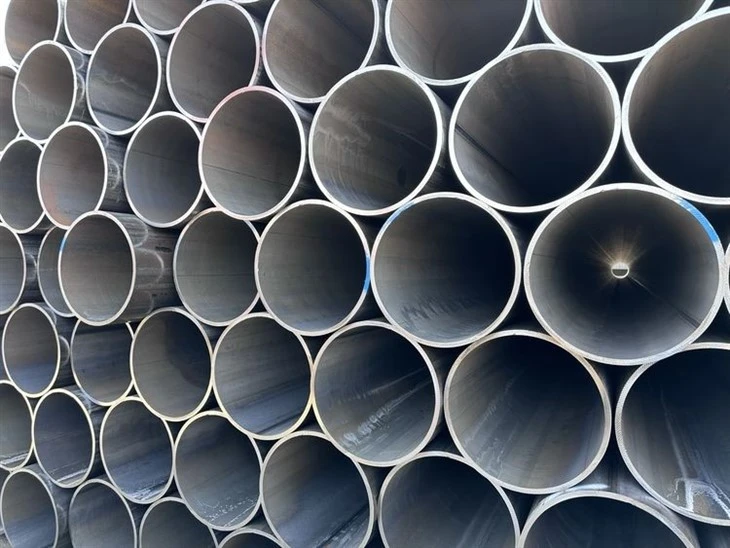
Tianjin Brisk Steel is one of the manufacturers of ERW Water Well Casing Pipe in China. Our products are mainly exported to the Middle East, Southeast Asia, Europe, New Zealand, and other regions.If you would like to learn more about our products, feel free to contact us and send your purchase list.
PRODUCT
Tianjin Brisk Steel focus on produce and supply hollow section and steel pipe


Key Specifications
| Item | Specification |
|---|---|
| Standards offered | ASTM A53 (Type E, Grade A/B), API 5L (Grade B, X42–X52), EN 10219 / EN 10217 |
| Related design standard | AWWA A100 (Standard for Water Wells) - for diameter/wall selection |
| Manufacturing process | Electric Resistance Welding (ERW), full-body normalized |
| End types | Plain end (field-welded joints) or threaded and coupled |
| OD range | Commonly 4" to 24" (114.3 mm–610 mm), larger sizes available on request |
| Wall thickness | Typically 4.78 mm–9.53 mm, selected per depth and formation load |
| Length | Standard mill lengths, commonly 6 m / 20 ft, random or cut lengths |
| Testing | Hydrostatic test, tensile test, weld seam inspection, dimensional check |
| Coating | Bare, or anti-rust oil for transit; galvanized option for corrosive groundwater |
Why Choose ERW Casing for Water Wells
- Lower cost per foot - ERW casing from coil is generally more economical than seamless pipe, which matters on deep wells where hundreds of feet of casing are needed.
- Uniform roundness and wall thickness - helps ensure a consistent annular space for grouting and reduces the risk of screen or pump misalignment.
- Field-weldable joints - plain-end ERW casing can be butt-welded on site to reach total well depth without relying on threaded couplings, which is standard practice for municipal and irrigation wells.
- Standard availability across grades - ASTM A53, API 5L, and EN 10219/10217 are all high-volume, widely stocked specifications, so sizing and wall-thickness options are typically available without long custom lead times.
Where ERW Water Well Casing Is (and Isn't) the Right Choice
Good fit:
- Municipal, agricultural, industrial, and residential water supply wells
- Monitoring and observation wells where a general welded steel pipe standard is acceptable to the local authority
- Wells in stable to moderately unstable formations where field-welded joints are acceptable
Needs extra evaluation:
- Projects whose specification explicitly requires a dedicated water-well pipe standard (rather than a general-purpose pipe standard) - confirm with the engineer of record before substituting A53, API 5L, or EN 10219/10217 material
- Highly corrosive or aggressive groundwater (low pH, high chloride, high dissolved oxygen) - consider galvanized casing or a higher wall-thickness allowance
- Very deep wells where collapse pressure governs design - wall thickness and grade should be verified by a well design engineer against AWWA A100 collapse resistance criteria, not selected by diameter alone
- Wells requiring NSF/ANSI 61 certification for potable water contact - confirm the specific coating and mill certification cover this before ordering
Frequently Asked Questions (FAQ)
Q: Is ASTM A53 or API 5L pipe actually approved for use as water well casing?
A: Neither ASTM A53 nor API 5L is a pipe-specific "water well" standard - they are general-purpose welded steel pipe standards. Using them as water well casing is common, accepted industry practice for many wells, but it's the buyer's or engineer's responsibility to confirm the local well code or project specification permits a general-purpose pipe standard rather than requiring a dedicated water-well pipe standard.
Q: What's the difference between ASTM A53 and API 5L casing?
A: ASTM A53 is a general mechanical and low/medium-pressure pipe standard commonly used in construction and water service; API 5L is a pipeline transportation standard with somewhat stricter chemistry and testing requirements and higher-strength grade options (X42, X52, etc.). For water well casing, either can work - API 5L grades generally offer a higher minimum yield strength margin where that matters.
Q: Is ERW casing safe for drinking water wells?
A: Standard carbon steel ERW casing is widely used in potable water wells, but if the project specifically requires NSF/ANSI 61 certification (common for municipal supply wells), confirm the specific coating and mill certification are certified for that purpose - do not assume standard mill-finish pipe automatically qualifies.
Q: What size casing do I need for my well?
A: Casing diameter is driven by the pump bowl diameter plus clearance, not by the drilled borehole size alone. A common rule of thumb is at least 2 inches larger ID than the pump bowl, but the correct size should be confirmed against AWWA A100 guidance and your specific pump manufacturer's clearance requirements.



Hot Tags: erw water well casing pipe, China erw water well casing pipe manufacturers, suppliers, factory