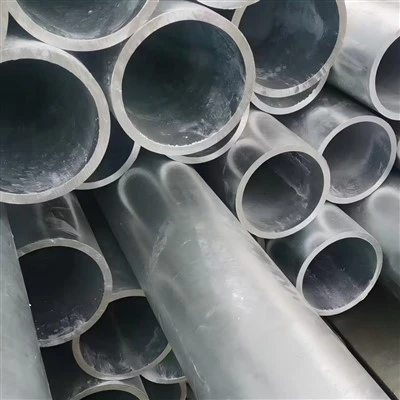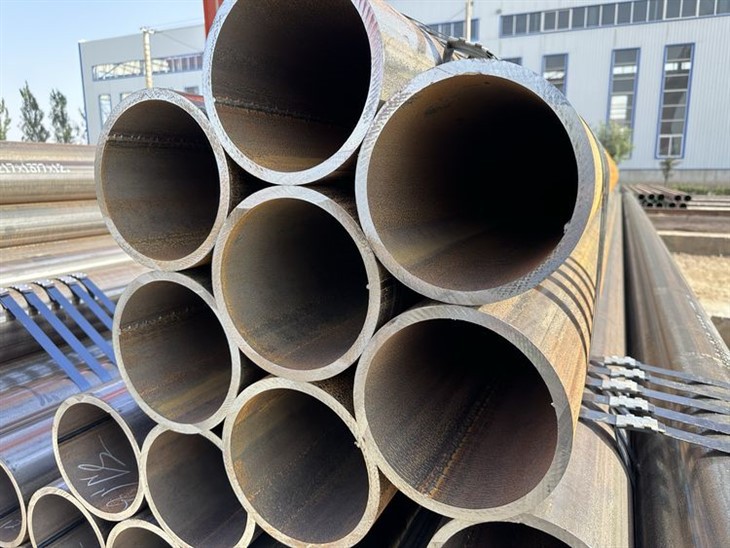


Tianjin Brisk Steel is one of the Construction ERW Steel Pipe in China. Our products are mainly exported to the Middle East, Southeast Asia, Europe, New Zealand, and other regions.If you would like to learn more about our products, feel free to contact us and send your purchase list.


What Construction ERW Pipe Is Used For
Construction sites use ERW round pipe across a wide range of temporary and permanent applications:
- Temporary works - shoring, bracing, guardrail systems, and barricades that come down once a phase of work is complete
- Formwork support - props and bracing for concrete formwork, where consistent OD matters for standard clamp and coupler fittings
- General site conduit and sleeves - protective casing for cables and utility runs through slabs, walls, and underground routing
- Handrails and guardrails - both temporary fall-protection rail during construction and permanent guardrail once the building is complete
- Non-structural framing - signage posts, site fencing, equipment mounts, and other elements that don't carry building loads but still need a durable steel section
This is a different use case from structural framing tube (which carries calculated building loads under an engineered design) or fencing-specific galvanized pipe (which is sized and finished for long-term outdoor perimeter use). Construction ERW pipe sits in between - it needs to be dependable and properly specified, but the sourcing priority is usually consistent quality across a large, mixed-size order rather than a single tightly engineered spec.
How Construction ERW Pipe Is Made
Like other ERW pipe, construction-grade tube starts as flat steel strip, which is uncoiled, formed into a round shape through a series of forming rolls, and welded along a single seam using high-frequency electric resistance welding. The weld seam is normalized or heat-treated by many mills to relieve stress in the weld zone, and the tube is sized, straightened, and cut to length.
For construction applications, mills typically produce this pipe in standard black (uncoated) finish or with a basic mill coating (oiled or lightly primed) for corrosion protection during storage and transport, rather than a full galvanized or painted finish - buyers who need long-term outdoor corrosion resistance should specify hot-dip galvanized pipe instead, since black finish pipe is intended primarily for indoor, temporary, or short-service applications.
Standards and Grades
- ASTM A53 Type E, Grade B - the most commonly specified US standard for general-purpose welded steel pipe, covering both mechanical properties and basic pressure ratings.
- ASTM A500 - used where the pipe is functioning as structural tube rather than piping (round HSS sections for posts and light framing).
- EN 10255 - the European standard for non-alloy steel tubes suitable for welding and threading, commonly used for construction-site pipe in EN-standard markets.
- JIS G 3444 - the Japanese standard for carbon steel pipes for general structural purposes (STK series), widely referenced in Asia-Pacific construction sourcing.
Wall thickness for general construction pipe is typically classified as Standard (Schedule 40 equivalent), Extra Strong (Schedule 80 equivalent), or a lighter site-fabrication gauge, depending on whether the pipe needs to carry load, resist impact, or simply serve as conduit.
Common Sizes for Construction Use
| Application | Typical OD Range | Typical Wall Thickness |
|---|---|---|
| Formwork props / shoring | 48–60 mm | 2.5–3.5 mm |
| Temporary guardrail | 33–48 mm | 2.0–3.0 mm |
| Conduit / sleeves | 20–100 mm | 1.5–3.0 mm |
| Site fencing / barricades | 33–48 mm | 1.8–2.5 mm |
| Light structural posts | 60–114 mm | 3.0–5.0 mm |
Frequently Asked Questions (FAQ)
Q: Can the same pipe be used for both formwork props and guardrail?
A: Often yes, if the OD and wall thickness match both applications' fitting systems and load requirements, which is one reason many contractors standardize on one or two pipe sizes across multiple site uses to simplify ordering and reduce leftover stock. That said, always confirm the load rating for each specific use rather than assuming interchangeability without checking.
Q: Is threaded (NPT) end pipe available for construction use?
A: Yes - many mills offer threaded-and-coupled pipe as an option for applications like temporary water lines, compressed air distribution, or handrail systems using threaded fittings, in addition to plain-end pipe for welded or clamped connections. Specify which end condition you need when ordering, since threading is typically a separate finishing step from the base pipe production.
Q: How do I know if I need Schedule 40 or a lighter wall thickness?
A: Schedule 40 (or the metric equivalent Standard weight) is a reasonable default for general construction use where some load or impact resistance is expected, while lighter gauge pipe is acceptable for pure conduit or sleeve applications with no structural role. For anything load-bearing, it's worth confirming the required wall thickness against your actual load case rather than defaulting to a schedule by habit.
Q: Does construction-grade ERW pipe need to be galvanized?
A: Not necessarily - it depends on how long the pipe will be in service and whether it's exposed to weather. Indoor or short-duration temporary works are commonly specified in black finish, while pipe intended for extended outdoor exposure or repeated reuse across projects benefits from at least a basic coating, with hot-dip galvanizing being the standard choice for long-term outdoor service.


Hot Tags: construction erw steel pipe, China construction erw steel pipe manufacturers, suppliers, factory, erw pipe, erw pipe durability, erw pipe elbows, erw pipe import market, erw pipe joint strength, erw pipe sanctions