


Hey there! As an LSAW pipe supplier, I'm super stoked to walk you through the production process flow of LSAW pipes. It's a pretty fascinating journey from raw materials to the final product, and I'm gonna break it down for you step by step.
Step 1: Raw Material Inspection
Before anything else, we start with the raw materials. We receive steel plates, which are the building blocks of our LSAW pipes. These plates need to meet strict quality standards. We check the chemical composition to make sure it has the right amount of elements like carbon, manganese, and others. We also look at the mechanical properties, such as tensile strength and yield strength. This is crucial because the quality of the raw materials directly affects the quality of the final pipe. For example, if the steel plate has impurities or doesn't meet the required strength, the pipe might not be able to withstand the pressure it's designed for. If you're interested in specific types of steel pipes, you can check out ASTM A671/A672 CL42 STEEL PIPE.
Step 2: Plate Cutting
Once the raw materials pass the inspection, it's time to cut the steel plates into the right size. We use advanced cutting machines to ensure precise cuts. The length and width of the cut plates depend on the specifications of the LSAW pipes we're making. This step is important because accurate cutting ensures that the pipes will have the correct dimensions and fit together properly during the subsequent manufacturing processes.
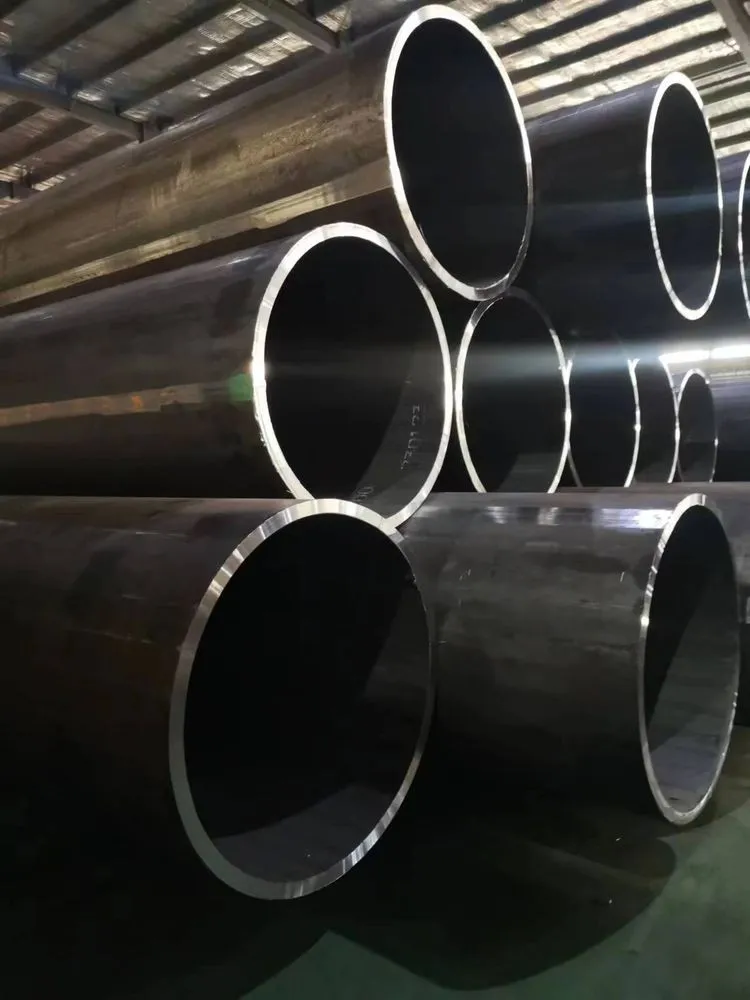

Step 3: Edge Milling
After cutting, we perform edge milling on the plates. This process involves machining the edges of the plates to create a smooth and straight surface. The edges need to be milled to a specific angle and width to ensure a proper fit when the plates are formed into a pipe. Edge milling also helps to remove any burrs or irregularities on the edges, which could affect the welding quality later on.
Step 4: Plate Bending
Now comes the fun part - bending the plates into a circular shape. We use large bending machines to gradually curve the plates until they form a cylinder. This process requires a lot of precision and control to ensure that the pipe has a uniform diameter and wall thickness. The bending process is carefully monitored to prevent any defects, such as wrinkles or cracks, from forming on the pipe.
Step 5: Welding
Once the plates are bent into a cylinder, it's time to weld the edges together. We use submerged arc welding (SAW) for LSAW pipes. SAW is a highly efficient and reliable welding method that provides strong and durable welds. During the welding process, a layer of flux is placed over the welding area to protect the weld from oxidation and contamination. The welding wire is fed into the welding area, and an electric arc is created between the wire and the pipe. The heat from the arc melts the wire and the edges of the pipe, fusing them together. After the initial welding, we often perform a second pass of welding to ensure the weld quality. If you want to know more about LSAW pipes in general, check out LSAW Pipes.
Step 6: Nondestructive Testing
After welding, we conduct nondestructive testing (NDT) on the pipes. NDT is a crucial step to ensure the integrity of the welds and the overall quality of the pipes. We use methods such as ultrasonic testing (UT), radiographic testing (RT), and magnetic particle testing (MT) to detect any internal or surface defects in the pipes. UT uses high-frequency sound waves to detect flaws inside the pipe, while RT uses X-rays or gamma rays to create an image of the internal structure of the pipe. MT is used to detect surface and near-surface defects in ferromagnetic materials. Any pipes that fail the NDT are either repaired or rejected.
Step 7: Expansion and Straightening
Once the pipes pass the NDT, we perform expansion and straightening operations. Expansion helps to improve the roundness and dimensional accuracy of the pipes. We use hydraulic expansion machines to expand the pipes to the desired diameter. Straightening is also important to ensure that the pipes are straight and free from any bends or twists. We use straightening machines to apply pressure to the pipes and correct any deviations from the straight line.
Step 8: Final Inspection
After expansion and straightening, the pipes undergo a final inspection. We check the dimensions, surface finish, and mechanical properties of the pipes to ensure that they meet the customer's specifications and industry standards. We also perform a hydrostatic test on the pipes to check their pressure resistance. During the hydrostatic test, the pipes are filled with water and pressurized to a specific level for a certain period of time. Any pipes that show signs of leakage or failure during the hydrostatic test are rejected.
Step 9: Coating and Packaging
Once the pipes pass the final inspection, we apply a coating to the pipes to protect them from corrosion. There are different types of coatings available, such as epoxy coating, polyethylene coating, and zinc coating. The choice of coating depends on the application and the environment in which the pipes will be used. After coating, the pipes are packaged for shipping. We use appropriate packaging materials to protect the pipes during transportation and storage.
Step 10: Shipping
Finally, the finished LSAW pipes are ready to be shipped to our customers. We work with reliable logistics partners to ensure that the pipes are delivered safely and on time. We also provide all the necessary documentation, such as quality certificates and inspection reports, to our customers.
If you're in the market for high-quality LSAW pipes, whether it's ASTM A671/A672 CL42 STEEL PIPE, LSAW Pipes, or ASTM A252 Piling Pipe, don't hesitate to reach out to us. We're here to provide you with the best products and services. Let's start a conversation about your specific needs and see how we can work together!
References
- Industry standards and guidelines for LSAW pipe manufacturing
- Technical literature on steel plate properties and welding processes


