


Hey there! As a supplier of SSAW pipes, I often get asked about the maximum temperature these pipes can withstand. It's a crucial question, especially when you're using these pipes in various industrial applications. So, let's dive right in and explore this topic in detail.
First off, let's understand what SSAW pipes are. SSAW stands for Spiral Submerged Arc Welded. These pipes are made by spirally bending a steel strip and then welding the edges together using the submerged arc welding process. They're widely used in different industries like oil and gas, water transportation, and construction. You can find more info about Ssaw Pipe on our website.
Now, the maximum temperature that SSAW pipes can handle depends on several factors. One of the most important factors is the type of steel used in the pipe. Different steels have different heat resistance properties. For example, carbon steel, which is commonly used in SSAW pipes, has a certain limit when it comes to high temperatures.
Carbon steel SSAW pipes can generally withstand temperatures up to around 400 - 500 degrees Celsius. At these temperatures, the mechanical properties of the steel start to change. The strength of the steel begins to decrease, and it becomes more ductile. This means that the pipe might start to deform under pressure at higher temperatures.
However, if you need pipes that can handle even higher temperatures, there are other options available. For instance, alloy steels can be used to make SSAW pipes. Alloy steels have additional elements like chromium, nickel, and molybdenum added to them. These elements improve the heat resistance of the steel.
Alloy steel SSAW pipes can withstand temperatures well above 500 degrees Celsius. Some high - performance alloy steel pipes can handle temperatures up to 800 degrees Celsius or even more. But these pipes are more expensive due to the cost of the alloying elements and the more complex manufacturing process.
Another factor that affects the maximum temperature tolerance of SSAW pipes is the thickness of the pipe wall. Thicker - walled pipes can generally withstand higher temperatures better than thinner - walled pipes. This is because the thicker wall provides more mass and can dissipate heat more effectively. It also offers more resistance to deformation under high - temperature conditions.
The welding quality also plays a significant role. In SSAW pipes, the submerged arc welding process is used to join the edges of the steel strip. A high - quality weld is essential for the pipe to maintain its integrity at high temperatures. If the weld has defects like porosity or lack of fusion, it can become a weak point in the pipe. At high temperatures, these weak points can lead to cracks and failures.
In industrial applications, the environment in which the pipes are used also matters. If the pipes are exposed to corrosive substances along with high temperatures, the maximum temperature they can withstand might be reduced. Corrosion can weaken the steel, making it more vulnerable to damage at high temperatures.
Let's talk about some specific applications. In the oil and gas industry, SSAW pipes are often used to transport hot fluids. For example, in oil refineries, the pipes need to handle the high - temperature oil and gas products. In such cases, the choice of pipe material and its temperature - resistance capabilities are carefully considered. ASTM A671/A671M LSAW Steel Pipe is another type of pipe used in similar applications, and it also has its own temperature - related specifications.
In the construction industry, SSAW pipes can be used in heating systems. The pipes need to carry hot water or steam. Here, the temperature requirements are usually not as extreme as in some industrial processes, but still, the pipes need to be able to handle the heat without any issues.
In the piling industry, ASTM A252 Piling Pipe is used. While the temperature requirements in piling might not be as high as in some other applications, it's still important to understand the temperature limits of the pipes. For example, if the pipes are used in an area with geothermal activity, they might be exposed to higher - than - normal temperatures.
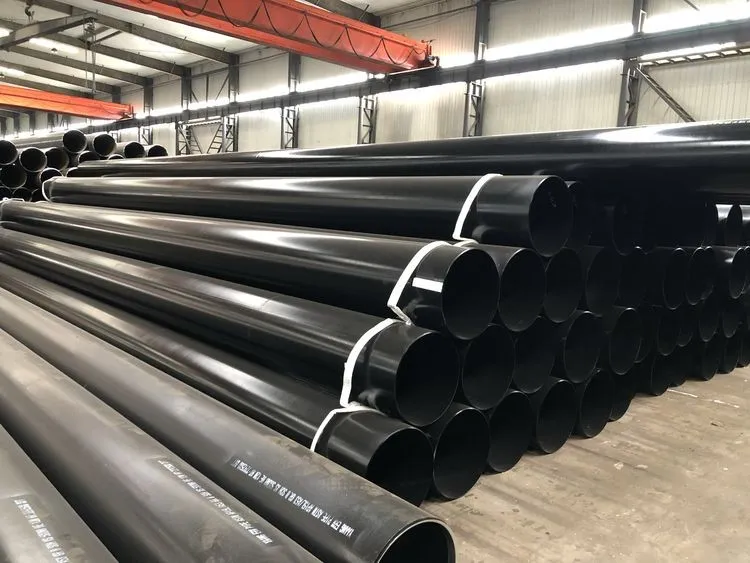

So, as you can see, determining the maximum temperature that SSAW pipes can withstand is not a straightforward answer. It depends on multiple factors including the type of steel, pipe wall thickness, welding quality, and the application environment.
If you're in the market for SSAW pipes and need to know the exact temperature - resistance capabilities for your specific application, don't hesitate to reach out. We're here to help you choose the right pipes that meet your requirements. Whether you need pipes for a small - scale project or a large - scale industrial application, we've got you covered.
Contact us to discuss your needs and get a quote. We can provide you with detailed information about the different types of SSAW pipes we offer and their temperature - related specifications. Let's work together to find the best solution for your project.
References
- "Handbook of Steel Pipe Engineering"
- Industry standards and specifications for SSAW pipes


