


Hey there! I'm a supplier of square tubes, and today I wanna chat about one of the most important aspects of square tubes: their load - bearing capacity.
So, what exactly is the load - bearing capacity of a square tube? Well, it's the maximum amount of weight or force that a square tube can handle without failing or deforming in an unacceptable way. This is super crucial in a whole bunch of applications, like construction, machinery, and even in some DIY projects.

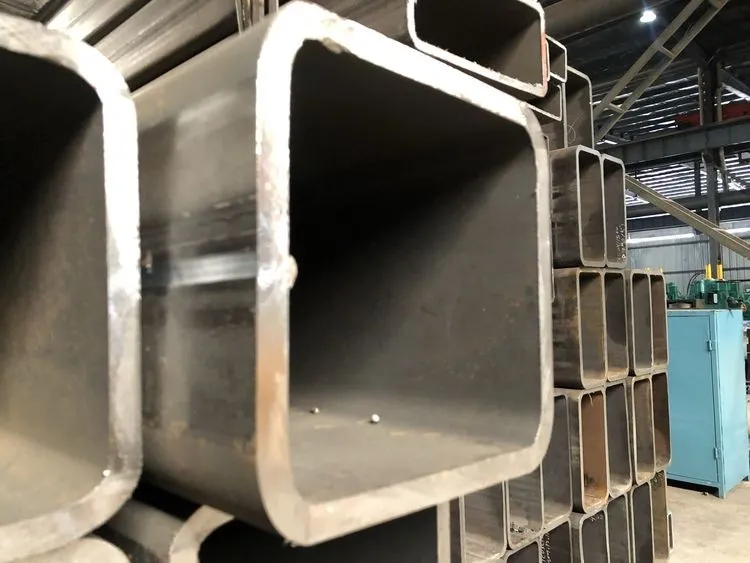
There are several factors that can affect the load - bearing capacity of a square tube. First off, the material of the tube plays a huge role. Different materials have different strengths. For example, steel square tubes are known for their high strength and durability. We offer a variety of steel square tubes, such as ASTM A252/A252M STEEL PILE PIPE, AS1163 C350 HOLLOW SECTION, and S460NH STEEL HOLLOW SECTIONS. Each of these materials has its own unique properties that impact the load - bearing capacity.
The thickness of the tube wall is another key factor. A thicker wall generally means a higher load - bearing capacity. Think of it like this: if you have two square tubes of the same size but one has a thicker wall, the thicker - walled tube can handle more weight because it has more material to resist the forces acting on it.
The size of the square tube also matters. Larger square tubes can often carry more load than smaller ones, but it's not always that simple. The ratio of the side length to the wall thickness also comes into play. A well - proportioned square tube will have a better load - bearing performance.
Let's talk about how we calculate the load - bearing capacity. There are some complex engineering formulas involved, but I'll try to break it down in a simple way. Engineers use principles of mechanics and materials science to figure out how much stress a tube can take. Stress is basically the force per unit area. They consider things like the type of load (is it a static load, like a building sitting on the tube, or a dynamic load, like a moving machine part?) and the way the load is applied (is it evenly distributed or concentrated in one spot?).
For static loads, we can use some basic equations based on the material's yield strength and the cross - sectional area of the tube. The yield strength is the point at which the material starts to deform permanently. If the stress on the tube exceeds the yield strength, it's in trouble.
When it comes to dynamic loads, things get a bit more complicated. Dynamic loads can cause vibrations and fatigue in the tube over time. Fatigue is when the material weakens due to repeated loading and unloading. So, for applications with dynamic loads, we need to take extra precautions and use materials that are more resistant to fatigue.
In construction, square tubes are used all the time. They're used in building frames, support structures, and even in bridges. In these applications, the load - bearing capacity is absolutely critical. A failure of a square tube in a building could lead to a collapse, which is obviously a huge safety hazard. That's why it's so important to choose the right square tube with the appropriate load - bearing capacity for the job.
In machinery, square tubes are used as structural components. They need to be able to handle the forces generated by the moving parts of the machine. For example, in a conveyor system, the square tubes that support the conveyor belt need to be strong enough to carry the weight of the belt and the materials being transported.
Now, if you're working on a DIY project, you might not need to do all the complex calculations. But it's still important to have a general idea of the load - bearing capacity of the square tube you're using. You don't want your project to fall apart after you've put all that hard work into it.
So, how do you choose the right square tube for your needs? Well, that's where I come in. As a square tube supplier, I have a lot of experience in helping customers find the perfect tube for their projects. I can look at your requirements, whether it's the load - bearing capacity, the size, or the material, and recommend the best option for you.
If you're in the market for square tubes and want to know more about their load - bearing capacity or just need some advice on which tube to choose, don't hesitate to reach out. We can have a chat about your project, and I'll do my best to provide you with the right solution. Whether you're a big construction company or a hobbyist working on a small project, I'm here to help.
In conclusion, the load - bearing capacity of a square tube is a complex but important concept. It depends on factors like the material, wall thickness, and size of the tube. By understanding these factors and working with a knowledgeable supplier, you can ensure that you get the right square tube for your project. So, if you're interested in purchasing square tubes, let's start a conversation and see how we can make your project a success.
References
- Mechanics of Materials textbooks
- Engineering handbooks on structural design


