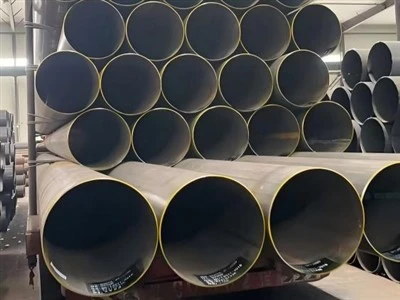
Hey there! As an ERW pipe supplier, I often get asked about the flow rate of fluids in ERW pipes. It's a super important topic, especially when you're looking to use these pipes for various applications. So, let's dive right in and break it down.
What are ERW Pipes?
First things first, let's quickly talk about what ERW pipes are. ERW stands for Electric Resistance Welded. These pipes are made by rolling a steel strip into a tube and then welding the edges together using electric resistance. They're widely used in different industries because they're cost - effective, have good strength, and are available in a variety of sizes.
Factors Affecting Fluid Flow Rate in ERW Pipes
There are several factors that can influence the flow rate of fluids in ERW pipes.
Pipe Diameter
The diameter of the pipe plays a huge role. A larger diameter pipe generally allows for a higher flow rate. Think of it like a highway. A wider highway can handle more cars at once, right? Similarly, a bigger pipe can carry more fluid. For example, if you're comparing a 2 - inch diameter ERW pipe to a 4 - inch diameter one, the 4 - inch pipe will have a much higher potential flow rate. This is because the cross - sectional area of the pipe increases with the square of the radius. So, even a small increase in diameter can lead to a significant increase in flow capacity.
Fluid Viscosity
Viscosity is a measure of a fluid's resistance to flow. Fluids like honey are highly viscous, while water is less viscous. In an ERW pipe, a more viscous fluid will flow more slowly than a less viscous one. This is because the internal friction within the fluid is higher. When the fluid has to move through the pipe, the high internal friction makes it harder for the fluid to flow smoothly. So, if you're transporting a thick oil through an ERW pipe, you can expect a lower flow rate compared to when you're transporting water.
Pipe Roughness
The internal roughness of the ERW pipe also affects the flow rate. A smooth - walled pipe offers less resistance to fluid flow. Over time, pipes can develop corrosion or deposits on the inside, which increase the roughness. This roughness creates turbulence in the fluid flow, which in turn slows down the flow rate. For instance, if an old ERW pipe has a lot of rust on the inside, the fluid won't be able to flow as freely as it would in a new, smooth - walled pipe.
Pressure
Pressure is another key factor. Higher pressure can push the fluid through the pipe at a faster rate. If you increase the pressure at the inlet of the ERW pipe, the fluid will flow more quickly. However, there are limits to how much pressure you can apply. Excessive pressure can cause the pipe to burst, especially if it's not designed to withstand high pressures. So, it's crucial to find the right balance between pressure and the pipe's pressure - rating.
Calculating the Flow Rate
There are a few ways to calculate the flow rate of fluids in ERW pipes. One of the most common methods is using the Darcy - Weisbach equation. This equation takes into account the pipe diameter, length, roughness, and the properties of the fluid. But it can be a bit complex for those who aren't into engineering calculations.


A simpler way, especially for water flow, is to use the Hazen - Williams formula. This formula is based on the assumption that the fluid is water and gives a good estimate of the flow rate. The formula is (Q = 0.2785 C D^{2.63} S^{0.54}), where (Q) is the flow rate in cubic meters per second, (C) is the Hazen - Williams coefficient (which depends on the pipe material and condition), (D) is the pipe diameter in meters, and (S) is the slope of the energy grade line.
Applications and Flow Rate Requirements
Different applications have different flow rate requirements.
Water Supply
In water supply systems, the flow rate needs to be sufficient to meet the demand of the consumers. For a small residential building, a relatively small - diameter ERW pipe might be enough. But for a large commercial complex or an industrial facility, larger pipes with higher flow rates are required. For example, a high - rise apartment building might need a 6 - inch or 8 - inch diameter ERW pipe to ensure a steady supply of water to all the units.
If you're interested in pipes for water supply, you might want to check out our API 5L GR.X42 ERW STEEL PIPE. It's a great option with good strength and durability.
Oil and Gas Transportation
In the oil and gas industry, the flow rate is crucial for efficient production and transportation. The pipes need to be able to handle large volumes of oil or gas over long distances. High - pressure and large - diameter ERW pipes are often used in this industry. For instance, in a long - distance oil pipeline, pipes with diameters of 12 inches or more might be used to ensure a high flow rate.
Scaffolding
In scaffolding applications, the flow rate isn't really a concern. However, the strength and quality of the pipes are. Our EN10219 SCAFFOLDING PIPE is designed to meet the strict requirements of scaffolding construction. It provides a stable and safe structure for workers.
Industrial Processes
In various industrial processes, different fluids need to be transported at specific flow rates. For example, in a chemical plant, chemicals need to be transferred at a precise flow rate to ensure the proper operation of the production process. The choice of ERW pipe depends on the type of fluid, its viscosity, and the required flow rate. Our ASTM A53 GR.B ERW STEEL PIPE is a popular option for many industrial applications due to its versatility and reliability.
Importance of Choosing the Right Pipe
Choosing the right ERW pipe for your application is crucial. If you choose a pipe with a too - small diameter, you won't be able to achieve the required flow rate. This can lead to inefficiencies in your system, such as low water pressure in a water supply system or slow production in an industrial process.
On the other hand, if you choose a pipe that's too large, it can be a waste of resources and money. A larger pipe is more expensive, and it might also require more space for installation. So, it's important to carefully consider the flow rate requirements and other factors before making a decision.
Conclusion
So, there you have it! The flow rate of fluids in ERW pipes is influenced by several factors, including pipe diameter, fluid viscosity, pipe roughness, and pressure. Calculating the flow rate can be done using different methods, depending on your needs. And choosing the right ERW pipe for your application is essential for ensuring efficient operation.
If you're in the market for ERW pipes and need help with choosing the right ones for your specific flow rate requirements, don't hesitate to reach out. We're here to assist you in finding the perfect solution for your project.
References
- Crane, D. S. (1988). Flow of fluids through valves, fittings, and pipe. Technical Paper No. 410. Crane Co.
- Streeter, V. L., & Wylie, E. B. (1981). Fluid mechanics. McGraw - Hill.