


Hey there! As an LSAW pipe supplier, I often get asked about the common sizes of LSAW pipes. So, I thought I'd put together this blog post to share some insights on this topic.

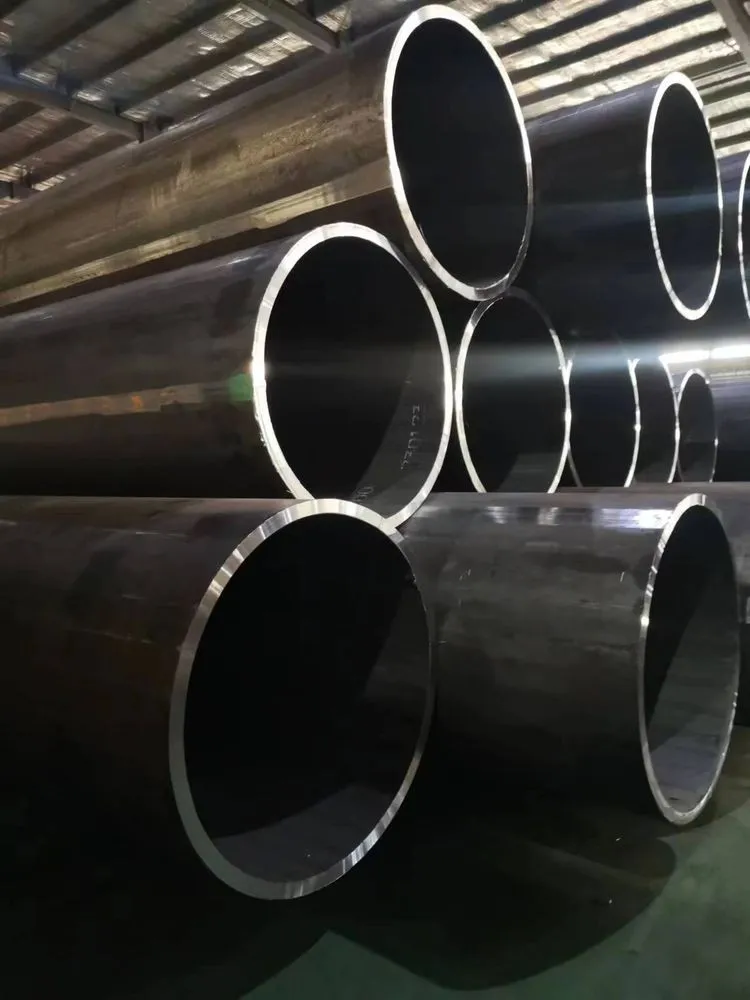
First off, let's quickly understand what LSAW pipes are. Longitudinal Submerged Arc Welded (LSAW) pipes are made by bending a steel plate into a cylindrical shape and then welding the edges together using a submerged arc welding process. These pipes are known for their high strength, good weldability, and are widely used in various industries like oil and gas, water supply, and structural applications.
Common Diameter Sizes
The diameter of LSAW pipes can vary quite a bit depending on the application. In general, diameters can range from as small as 16 inches (about 406.4 mm) up to a massive 100 inches (around 2540 mm).
For smaller - scale applications such as some building structures or local water distribution systems, pipes with diameters in the range of 16 - 24 inches (406.4 - 609.6 mm) are commonly used. These pipes are relatively easier to handle and install, and they can provide sufficient flow capacity for these types of projects.
When it comes to large - scale infrastructure projects like long - distance oil and gas pipelines, larger diameter pipes are preferred. Pipes with diameters of 36 inches (914.4 mm), 48 inches (1219.2 mm), or even 60 inches (1524 mm) are quite common. The larger the diameter, the more fluid (either oil, gas, or water) the pipe can transport at a given pressure, which is crucial for efficient long - distance transportation.
Wall Thickness Sizes
Wall thickness is another important aspect of LSAW pipes. It determines the pipe's ability to withstand internal pressure and external forces. Wall thicknesses can range from around 6 mm to 50 mm or more.
For low - pressure applications, like some drainage systems or non - critical water supply lines, pipes with a wall thickness of 6 - 12 mm might be sufficient. These thinner - walled pipes are lighter and more cost - effective.
In high - pressure applications, such as transporting oil or gas over long distances, much thicker walls are required. Wall thicknesses of 20 - 50 mm are not uncommon. The extra thickness provides the necessary strength to prevent the pipe from bursting under high internal pressures and also helps to resist external forces like soil pressure and impacts.
Length Sizes
The length of LSAW pipes also varies. Standard lengths are typically around 12 meters (about 39.37 feet). However, we can also produce pipes in custom lengths according to the customer's requirements.
Some projects may need shorter lengths for easier handling and installation in confined spaces. For example, in some indoor industrial piping systems, pipes of 6 - 9 meters might be more suitable. On the other hand, for large - scale pipeline projects, longer lengths can reduce the number of joints, which in turn reduces the risk of leakage and installation time.
Different Standards and Their Associated Sizes
There are several international standards for LSAW pipes, and each standard has its own set of common sizes.
The EN 10219 S355JR LSAW PIPE is a popular European standard. Under this standard, pipes are available in a wide range of diameters and wall thicknesses. The standard is designed to ensure high - quality pipes for various applications, from general construction to more demanding industrial uses.
The ASTM A671/A672 CL42 STEEL PIPE is an American standard. It is widely used in the oil and gas industry in the United States and other countries. Pipes conforming to this standard often come in sizes that are optimized for high - pressure and high - temperature applications, with larger diameters and thicker walls being common.
The En 10219 LSAW Pipe also has its own defined size ranges. This standard focuses on ensuring the pipes' mechanical properties and weld quality, and the available sizes are well - suited for a variety of European and international projects.
Factors Affecting Size Selection
When choosing the right size of LSAW pipes for a project, several factors need to be considered.
The first is the flow rate. If you need to transport a large volume of fluid in a short time, you'll need a larger diameter pipe. For example, a high - capacity water treatment plant will require pipes with large diameters to handle the large volume of water flowing through the system.
Pressure is another crucial factor. High - pressure applications demand thicker - walled pipes to prevent leaks and ruptures. For instance, in an oil pipeline that transports oil at high pressures over long distances, a thick - walled pipe is a must.
The installation environment also plays a role. In areas with difficult terrain or limited space, smaller - diameter and shorter - length pipes might be more practical. On the other hand, in open - field pipeline projects, larger and longer pipes can be used to improve efficiency.
Why Choose Our LSAW Pipes
As an LSAW pipe supplier, we have a wide range of sizes available to meet different customer needs. We use high - quality steel materials and advanced manufacturing processes to ensure the pipes' quality and performance.
Our pipes are produced in strict accordance with international standards, whether it's the EN 10219, ASTM A671/A672, or other relevant standards. This means you can trust the pipes' mechanical properties, weld quality, and overall reliability.
We also offer custom - made solutions. If you have a project with specific size requirements that are not in our standard range, we can work with you to produce the pipes you need. Our experienced team will guide you through the entire process, from design to production and delivery.
Let's Connect
If you're in the market for LSAW pipes, whether you need standard sizes or custom - made ones, we'd love to hear from you. We can provide detailed information about our products, offer competitive prices, and help you choose the right sizes for your project. Just reach out to us, and let's start a conversation about your LSAW pipe needs.
References
- Various industry reports on LSAW pipe manufacturing and applications.
- Standards documents such as EN 10219 and ASTM A671/A672.


