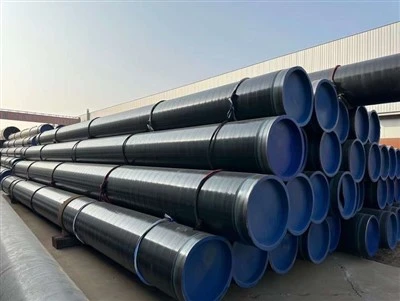
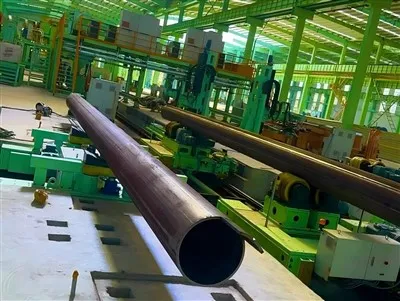
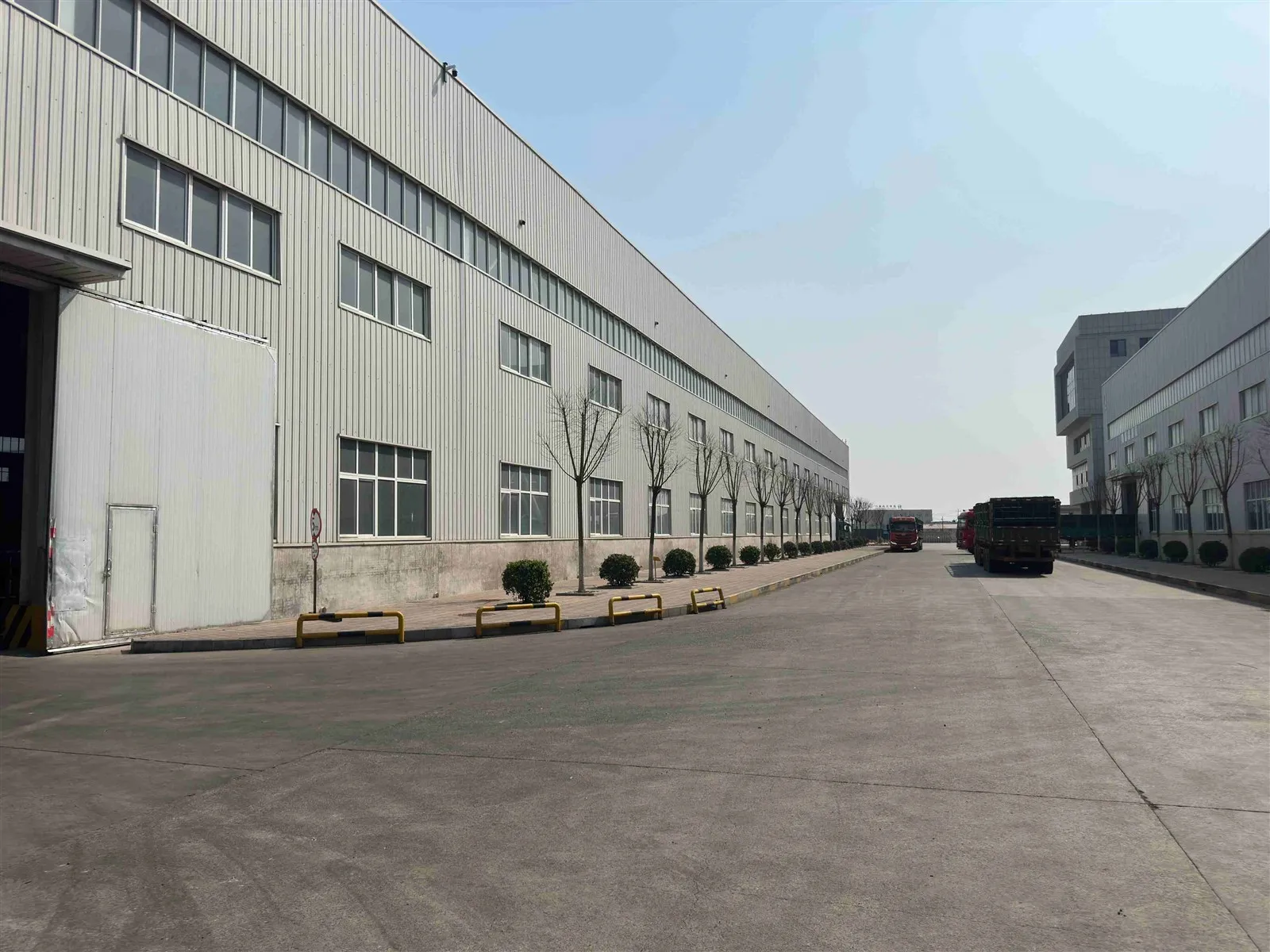
Tianjin Brisk Steel is one of the manufacturers of Heavy Wall Thickness LSAW Pipe in China. Our products are mainly exported to the Middle East, Southeast Asia, Europe, New Zealand, and other regions.If you would like to learn more about our products, feel free to contact us and send your purchase list.


Fast Technical Specs & Primary Capability Summary
Direct Factory Procurement Specs | Fully Certified to API 5L PSL1/PSL2, ASTM A252 & EN 10219/10210
Outer Diameter (OD): 16"to 60"+(406.4mm- 1524mm+)
Wall Thickness (WT): 0.375" to 2.000"+(9.5mm - 50.0mm+)
Steel Grades:
Line Pipe: API 5L Grade B, X42, X52, X60, X65, X70, X80 (PSL1 & PSL2 / Sour Service)
Structural Steel: S275J2H, S355JR, S355J2H, S355K2H (EN 10219/10210), ASTM A252 Grade 2 & 3
Pipe Lengths: 6.0m, 11.8m, 12.0m, or Custom Fixed Lengths up to 18.0m
Key Certifications & NDT: 100% UT/RT Inspected, Hydrotested, EN 10204 3.1/3.2 MTRs, ISO 9001, NACE MR0175 / ISO 15156 Compliant
Coating Capabilities: 3LPE, 3LPP, FBE, Dual-Layer FBE, Liquid Epoxy Internal Lining, Anti-Corrosion Primer
Solved Engineering Pain Points: Why Specifying Heavy Wall LSAW Matters
Engineers and procurement managers face severe operational risks when sourcing extra-large, heavy-wall pipes for high-consequence projects. Our manufacturing process directly resolves these critical job site challenges:
Pipe Collapse & Buckling Under Extreme Hydrostatic & Cyclic Pressure
- The Risk: Subsea risers, deepwater flowlines, and ultra-high-pressure hydrocarbon transmission lines are subject to massive external crushing forces and internal cyclic loading. Standard-wall or slightly out-of-round welded pipes fail under hoop stress limits, resulting in catastrophic buckling.
- Our Engineering Solution: By utilizing cold-formed heavy carbon steel plates up to 50mm+ thick combined with full-length mechanical expansion (O-expansion), our heavy wall LSAW (SAWL) pipe achieves high dimensional roundness (≤0.5% end ovality) and uniform stress distribution. This guarantees maximum collapse resistance under deepwater or high-yield operating pressures.
Hydrogen-Induced Cracking (HIC) in H2S Sour Environments
- The Risk: Conveying wet H2S-containing sour gas or crude oil leads to atomic hydrogen absorption, causing internal blistering, Stepwise Cracking (SWC), and catastrophic Sulfide Stress Corrosion Cracking (SSCC) along weld seams.
- Our Engineering Solution: We utilize vacuum-degassed, fine-grained TMCP (Thermo-Mechanical Controlled Processing) steel plates with ultra-low sulfur (≤ 0.002%) and phosphorus (≤ 0.012%) limits, supplemented by calcium treatment for inclusion shape control. Fully tested and compliant with NACE MR0175 / ISO 15156, our pipes guarantee long-term asset integrity in sour service applications.
High Field Weld Failure Rates & Installation Delays
- The Risk: Out-of-round pipe ends, uneven bevel angles, and wall thickness eccentricity cause severe "hi-lo" misalignments during site girth welding. This dramatically increases weld repair rates, extends vessel charter times, and inflates field installation budgets.
- Our Engineering Solution: Precision JCOE step-by-step press forming combined with mechanical end-sizing ensures tight outer diameter tolerances (±0.2% at ends) and strict wall thickness tolerances (+10.0% /-5.0%). Field crews can achieve rapid, automated fit-up and defect-free girth welds on onshore lay-barges or site trenches.
Understanding LSAW Manufacturing

- Plate Edge Milling & Pre-Bending: Premium TMCP carbon steel plates are 100% ultrasonically tested for internal laminations before high-precision milling tools chamfer plate edges. Hydraulic crimping units pre-bend plate edges to the exact radius of the target diameter.
- Step-by-Step JCOE Press Forming: The crimped plate enters a heavy-duty hydraulic press, where it is progressively formed into a "J" shape, a "C" shape, and finally an "O" shape. Unlike continuous roll-forming methods that introduce high residual stress, JCOE cold forming maintains structural uniformity across ultra-thick walls.
- Continuous Double-Sided Submerged Arc Welding (SAW): The open seam is tack-welded under protective gas before entering continuous multi-wire internal (ID) and external (OD) submerged arc welding stations. This process delivers deep, defect-free weld penetration with high toughness values in both the weld metal and heat-affected zone (HAZ).
- Full-Length Mechanical Cold Expansion: The welded pipe undergoes full-body mechanical expansion. This crucial operation accomplishes three goals: it relieves internal residual stresses from forming and welding, increases yield strength via controlled cold-work hardening, and ensures tight roundness tolerances.
- Post-Weld Heat Treatment (PWHT) & Final Precision Machining: Where specified, stress-relieving or normalizing heat treatment is applied, followed by precision end beveling (30° / 37.5° per ASME B16.25) for automatic field welding.
Technical Comparison: API 5L PSL1 vs. PSL2 Quality Levels
For energy pipeline applications, specifying the correct Product Specification Level (PSL) ensures compliance with safety factors without over-specifying project costs:
| Property / Requirement | API 5L PSL1 (Standard Line Pipe) | API 5L PSL2 (Critical / Sour Service) |
| Primary Project Use | Onshore low-pressure transmission, utility lines, structural piling | High-consequence areas (HCA), subsea, high-pressure gas, sour gas |
| Chemical Composition | Standard C, Mn, P, S limits | Lower maximum C, P, S; strict Carbon Equivalent (CE) controls |
| Impact Toughness Testing | Optional (only when explicitly requested) | Mandatory Charpy V-Notch (CVN) testing at 0℃ or sub-zero |
| Yield Strength Limits | Minimum yield strength specified | Minimum and Maximum yield strength caps enforced |
| Weld Repair Policy | Allowed under strict qualification procedures | Strictly Prohibited on pipe body; limited on weld seam |
| Traceability & Testing | Heat-based certification | Individual pipe heat tracking and non-destructive testing |
Manufacturing Method Comparison: Heavy Wall LSAW vs. ERW vs. Seamless
Understanding how heavy wall LSAW compares against alternative steel pipe manufacturing processes helps procurement teams balance budget restrictions and performance requirements:
| Feature / Capability | Heavy Wall LSAW (SAWL) | Seamless (SML) Steel Pipe | Electric Resistance Welded (ERW) |
| Production Method | JCOE plate forming + double SAW welding | Hot billet piercing & mandrel rolling | Cold roll forming + HF induction welding |
| Maximum Outer Diameter | Up to 60"+ (1524mm+) | Limited (Usually ≦28" / 711 mm) | Limited (Usually ≦24" / 610mm) |
| Maximum Wall Thickness | Ultra-Thick (Up to 50mm+) | Thick (Up to 60mm) | Moderate (Usually ≦22mm) |
| Weld Seam Integrity | High (100% UT/RT inspected ID/OD weld) | None (Solid body) | High (Requires post-weld seam heat treatment) |
| Dimensional Accuracy | Superior (Expanded for high roundness) | Moderate (Subject to wall eccentricity) | Excellent |
| Sour Service Suitability | Exceptional (Controlled TMCP Plate) | Excellent | Moderate (HAZ vulnerable to cracking) |
| Custom Size Availability | High for custom OD/WT combinations | Low for non-standard large ODs | Limited to standard strip coil sizes |
Comparative Analysis: LSAW vs. SSAW vs. ERW Pipes
When procuring large-diameter structural pipes, selecting the wrong manufacturing process can lead to structural compromises or severe cost overruns. The table below outlines the professional engineering comparison between LSAW and other common pipe types:
| Feature / Metric | LSAW (Longitudinal SAW) | SSAW (Spiral SAW) | ERW (Electric Resistance Welded) |
| Manufacturing Weld Seam | Single/Double straight longitudinal seam | Continuous spiral helical seam | High-frequency induction longitudinal seam |
| Weld Length per Meter | Minimum (1.0m of weld per meter of pipe) | High (up to 1.5-2.0 m of weld per meter) | Minimum (1.0 m of weld per meter of pipe) |
| Residual Stress Level | Extremely Low (Relieved via mechanical expansion) | High (High residual stress from continuous spiral twisting) | Moderate to High (Requires localized seam annealing) |
| Wall Thickness Range | Very Thick (6.0 mm - 80.0 mm) | Thin to Medium (6.0 mm - 25.4 mm) | Thin to Medium (1.5 mm - 22.0 mm) |
| Geometric Accuracy | Excellent (Perfect roundness & straightness) | Moderate (Prone to spiral twisting and ovality) | Good (Limited to smaller diameters) |
| Risk of Local Buckling | Extremely Low (Optimized for heavy columns) | Higher (Helical weld orientation reduces pure axial resistance) | Moderate (Limited by thickness-to-diameter ratio) |
| Typical Cost Profile | Premium (High-quality plate, complex JCOE processing) | Economical (Manufactured directly from hot-rolled steel coils) |
Highly Economical (High-speed production, limited size range) |
Procurement Verdict: For critical load-bearing columns, bridge piers, dynamic offshore wind monopiles, or high-risk seismic zones, LSAW is the only technically compliant choice. SSAW should be reserved for low-stress water transmission, drainage, or low-load auxiliary piling.
Frequently Asked Questions (FAQ)
Q: What is the main structural difference between LSAW (SAWL) and SSAW (SAWH) pipes?
A: LSAW (Longitudinal Submerged Arc Welded) pipe is manufactured from individual steel plates and features a single straight longitudinal weld seam. SSAW (Spiral Submerged Arc Welded) pipe is rolled from continuous steel coils into a helical spiral seam. LSAW pipes offer higher dimensional precision, lower residual stress, superior collapse resistance under external pressure, and a shorter overall weld length per joint (which reduces defect probability). Consequently, LSAW is the required standard for high-pressure gas transmission, sour gas service, subsea risers, and heavy structural piling.
Q: Can heavy wall LSAW pipes be used in wet sour gas (H2S) service?
A:Yes. When ordered to API 5L PSL2 with NACE MR0175 / ISO 15156 compliance, our LSAW pipes are manufactured using vacuum-degassed TMCP steel plates featuring ultra-low sulfur (≦0.002%) and phosphorus (≦ 0.012%) content. They undergo mandatory laboratory qualification testing for Hydrogen-Induced Cracking (HIC per NACE TM0284) and Sulfide Stress Corrosion Cracking (SSCC per NACE TM0177) to prevent catastrophic field failures.
Q: Why is full-length mechanical cold expansion (O-expansion) necessary for heavy wall pipes?
A:Mechanical cold expansion involves expanding the formed and welded pipe by approximately 1.0% to 1.5% along its entire length using internal hydraulic segments. This critical operation achieves three main goals:
- It relieves high residual stresses introduced during JCOE cold forming and submerged arc welding.
- It increases the yield strength of the steel through controlled work hardening.
- It guarantees precise outer diameter roundness, straightness, and pipe-end geometry, enabling fast alignment during field girth welding.
Q: How does wall thickness affect the maximum allowable operating pressure (MAOP) of a pipeline?
A: Per Barlow's Formula (P=2St/D), internal design pressure (P) is directly proportional to wall thickness (t) for a given diameter (D) and allowable stress level (S). Increasing wall thickness allows pipelines to transport natural gas or crude oil at significantly higher operating pressures without increasing the outer pipeline footprint or requiring exotic, ultra-high-grade steels that are difficult to field-weld.
Q: What documentation is provided with international shipments of heavy wall LSAW pipe?
A: All export shipments are accompanied by a complete quality documentation package, including EN 10204 Type 3.1 or 3.2 Mill Test Reports (MTRs) detailing heat numbers, chemical ladle analysis, mechanical tension test results, CVN impact energy values, hydrostatic test logs, and NDT inspection certificates. Third-Party Inspection (TPI) endorsement certificates from SGS, Bureau Veritas (BV), DNV, or Lloyd's Register can also be provided upon request.



Hot Tags: heavy wall thickness lsaw pipe, China heavy wall thickness lsaw pipe manufacturers, suppliers, factory