SHS vs. RHS vs. CHS: Which Hollow Section Is Best for Your Project?
In contemporary structural engineering and architectural design, the selection of optimal structural profiles is paramount to achieving a balance between structural integrity, economic efficiency, and aesthetic appeal. Among the vast array of structural steel shapes, Hollow Structural Sections (HSS)-comprising Square Hollow Sections (SHS), Rectangular Hollow Sections (RHS), and Circular Hollow Sections (CHS)-have emerged as indispensable components.
Each geometry possesses distinct mechanical properties, manufacturing nuances, and fabrication characteristics that make it uniquely suited for specific loading conditions and environments. This comprehensive article provides an in-depth engineering analysis of SHS, RHS, and CHS, evaluating their structural behavior, fabrication complexities, and application suitability to guide project managers, engineers, and fabricators in making informed procurement decisions.

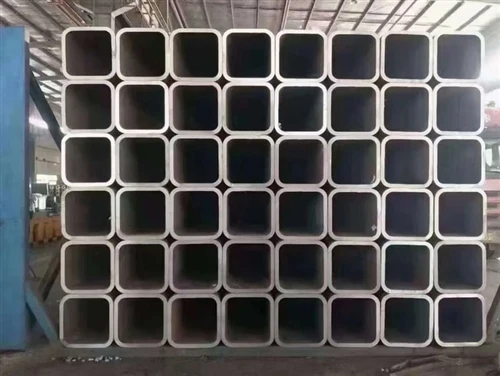
Square Hollow Sections (SHS)

Rectangular Hollow Sections (RHS)

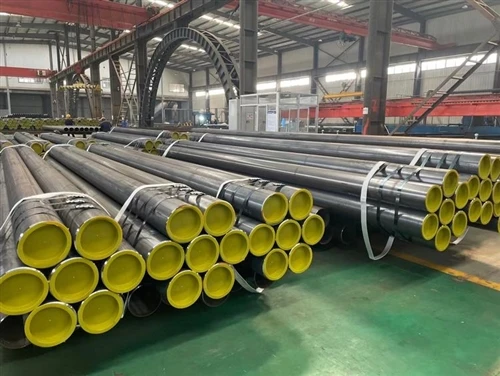
Circular Hollow Sections (CHS)
1. Understanding the Fundamentals of Hollow Structural Sections (HSS)
Hollow Structural Sections are cold-formed or hot-finished welded steel tubes utilized extensively in load-bearing applications. Governed by international standards such as EN 10219 (cold-formed) and EN 10210 (hot-finished), or ASTM A500 and ASTM A1085 in North America, these sections are recognized for their high strength-to-weight ratios compared to traditional open profiles like Universal Beams (I-beams) or channels.
The primary advantage of any hollow section lies in its distribution of material away from the central longitudinal axis. This geometric configuration significantly enhances the section's resistance to torsion and buckling, making HSS highly efficient under multi-directional loading conditions.
2. Circular Hollow Sections (CHS): The Pinnacle of Uniformity and Aerodynamics
Structural and Geometrical Attributes
Circular Hollow Sections (CHS) represent the historical foundation of hollow structural profiles. Characterized by a perfectly symmetrical cross-section, the geometric properties of a CHS-such as the moment of inertia (I ), section modulus (Z ), and radius of gyration (r )-are uniform in all radial directions.
For a CHS: Ix=Iy and Zx=Zy
Mechanical Advantages
-
Exceptional Torsional Resistance: Due to its closed, circular profile, shear stresses induced by torsional moments are distributed uniformly along the perimeter. CHS exhibits the highest torsional constant (J ) among all structural profiles of equivalent weight, making it highly resistant to twisting.
-
Optimal Compression Behavior: Under axial compression, the uniform radius of gyration prevents localized weak-axis buckling. Consequently, CHS functions as an exceptionally efficient column or strut.
-
Low Aerodynamic Drag: The rounded profile of CHS yields a significantly lower drag coefficient (Cd) when subjected to wind or fluid forces compared to sharp-edged square or rectangular profiles. This minimizes wind-induced vibrations and lateral loads on tall or exposed structures.
Primary Applications
-
Offshore and Marine Structures: Oil rigs, wind turbine jackets, and port facilities utilize CHS to mitigate wave and wind forces.
-
Truss Systems and Space Frames: Long-span roofs, sports stadiums, and airport terminals frequently employ CHS tubes as chord and web members due to their efficiency in axial tension and compression.
-
Mechanical and Fluid Conveyance: Combining structural support with fluid transport, CHS is widely used in industrial piping and crane booms.
3.Square Hollow Sections (SHS): The Symmetric Balance of Strength and Fabricablity Structual and Geometrical Attributes
Square Hollow Sections (SHS) represent a structural compromise between the geometric symmetry of CHS and the flat-surface practicality of traditional open sections. An SHS possesses equal widths and depths (B = H ), maintaining identical moments of inertia and section moduli across both the major (X-X ) and minor (Y-Y ) axes.
Mechanical and Practical Advantages
-
Symmetrical Bending and Compression: Like CHS, SHS performs predictably under axial compression and multi-directional bending because Ix = Iy. However, it offers higher flexural strength along its principal axes than a CHS of equivalent cross-sectional area.
-
Simplified Connection Design: The flat faces of an SHS greatly simplify the cutting, profiling, and joining processes. Unlike CHS, which requires complex profile cutting (fish-mouth or saddle cuts) for intersecting joints, SHS members can be straight-cut and welded directly to other flat surfaces.
-
Bolting Feasibility: Flat surfaces allow for straightforward bolting using blind bolts or standard through-bolts when welding is impractical on-site.
Primary Applications
-
Modular Construction and Framing: Residential and commercial steel framing, where columns must support uniform perimeter loads.
-
Industrial Equipment and Machinery: Chasses, conveyor supports, and manufacturing platforms that require rigid, square mounting surfaces.
-
Architectural Feature Columns: Exposed structural steelwork (AESS) where clean, linear geometry is desired.
4. Rectangular Hollow Sections (RHS): Optimized for Directional Flexure
Structural and Geometrical Attributes
Rectangular Hollow Sections (RHS) feature an asymmetrical cross-section where the depth (H ) exceeds the width (B ). This asymmetry means that the mechanical properties along the major axis (X-X ) are significantly higher than those along the minor axis (Y-Y ).
Ix > Iy and Zx > Zy
Mechanical and Practical Advantages
-
High Flexural Efficiency: RHS is specifically engineered to resist bending moments applied to its major axis. When a beam is subjected to a load acting primarily in one direction (e.g., gravity loads on a floor beam), RHS provides maximum strength with minimum material usage, closely mimicking the efficiency of an I-beam but with superior torsional stability.
-
Space Optimization and Low Profile: The rectangular profile allows engineers to minimize the depth of floor or wall cavities. By orienting the deep axis vertically, high load capacities can be achieved within narrow architectural envelopes.
-
Excellent Torsional Rigidity under Eccentric Loading: While slightly less efficient than CHS in pure torsion, RHS provides substantial resistance to lateral-torsional buckling (LTB), a common failure mode in open sections like universal beams.
Primary Applications
-
Floor Joists, Purlins, and Lintels: Applications where loading is predominantly unidirectional and bending resistance is the primary design driver.
-
Vehicle Chassis and Transportation Frameworks: Trailers, bus bodies, and agricultural machinery utilize RHS to handle high bending forces while maintaining flat planes for panel mounting.
-
Curtain Walling and Facade Engineering: RHS serves as the vertical mullion or horizontal transom in glass facade systems, resisting wind loads over long spans while maintaining a slim profile from interior viewpoints.
5. Comparative Engineering Analysis
To systematically determine which hollow section is best for a given project, engineers must analyze several critical performance metrics. The table below outlines the relative performance characteristics of CHS, SHS, and RHS under identical material volumes.
|
Performance Metric
|
Circular Hollow Section (CHS)
|
Square Hollow Section (SHS)
|
Rectangular Hollow Section (RHS)
|
|
Pure Torsional Resistance
|
Excellent (Highest efficiency)
|
Good
|
Moderate
|
|
Unidirectional Bending (X-X)
|
Moderate
|
Good
|
Excellent (Highest efficiency)
|
|
Bi-directional Bending (X-X & Y-Y)
|
Good
|
Excellent
|
Moderate
|
|
Axial Compression (Column)
|
Excellent (No weak axis)
|
Excellent (No weak axis)
|
Moderate (Governed by minor axis)
|
|
Aerodynamic Efficiency
|
Excellent (Cd ≈ 0.6 - 1.2)
|
Poor (Cd ≈ 2.0)
|
Poor (Cd ≈2.0)
|
|
Ease of Joint Fabrication
|
Complex (Requires profiling)
|
Simple (Straight cuts)
|
Simple (Straight cuts)
|
|
Space/Volumetric Efficiency
|
Poor (Leaves dead space)
|
Moderate
|
Excellent (Low profile)
|
6. Fabrication, Joint Design, and Economic Considerations
While structural efficiency is vital, the ultimate cost of a project is heavily influenced by fabrication labor, detailing, and coating processes.
Joint Preparation and Welding
-
CHS Joints: Connecting CHS members in a truss configuration requires specialized CNC plasma profiling machines to execute precise saddle cuts. The welding profile varies continuously around the joint perimeter, shifting from a fillet weld to a butt weld depending on the angle of intersection. This demands highly skilled welders or automated robotic systems, inflating labor costs.
-
SHS and RHS Joints: Joints involving flat-faced sections require simple square or miter cuts. Welds are typically uniform fillet welds along straight lines, reducing fabrication time and lowering the threshold for welder qualification.
Surface Treatment and Maintenance
The total surface area of a profile dictates the volume of paint, fireproofing, or galvanizing required.
-
For a given cross-sectional area, CHS possesses the smallest perimeter/surface area, translating directly to lower costs for protective coatings and corrosion mitigation.
-
The absence of sharp corners in CHS also prevents the premature thinning of coatings, which frequently occurs at the sharp 90-degree corners of SHS and RHS profiles due to surface tension during paint curing.

Bent galvanized rectangular tube

Black Painted Seamless Steel Pipe

3-layer polyethylene coated steel pipe
7. Selection Matrix: Which Hollow Section is Best for Your Project?
Choosing the correct profile depends on aligning the primary design driver of your project with the strengths of the specific hollow section.
Choose CHS When:
-
The structure is exposed to environmental fluid dynamics: Bridges, offshore platforms, telecommunication towers, and lighting poles benefit from the low wind resistance of CHS.
-
Torsion or dynamic twisting is the governing load: Drive shafts, crane structures, and round architectural canopies.
-
Aesthetics require organic or soft lines: Exposed structural steel columns in public spaces, airports, and museums.
Choose SHS When:
-
Columns face multi-directional or symmetrical loading: Multi-story building columns, corner posts, and perimeter supports where wind and gravity loads interact equally.
-
Simple, multi-planar connections are required: Space frames or structural grids where beams must frame into a column from four directions at right angles.
-
A balanced, sturdy appearance is desired: Industrial equipment frames, balustrades, and gates.
Choose RHS When:
-
The application is a beam subjected to primary vertical loads: Long-span roof purlins, floor beams, and lintels over door or window openings.
-
Architectural space is restricted: Situations where structural members must be concealed within thin drywall partitions or shallow ceiling voids.
-
Flat mounting surfaces are mandatory: Manufacturing conveyor lines, vehicle frames, and glass facade support structures where panels or mechanical components must be flush-mounted.
8. Conclusion
There is no singular "best" hollow section; rather, the optimal choice depends entirely on the mechanical demands and fabrication constraints of the project.
-
CHS reigns supreme in pure axial compression, torsional efficiency, aerodynamic performance, and coating economy, despite its higher fabrication complexity.
-
SHS provides the ideal structural compromise for columns and multi-directional frames, offering symmetrical strength paired with simple, cost-effective fabrication.
-
RHS serves as the most efficient flexural profile, outperforming the others when handling directional bending moments while optimizing spatial constraints.
By carefully evaluating loading conditions, connection configurations, and long-term maintenance costs against the unique characteristics of SHS, RHS, and CHS, you can design structures that are both structurally sound and financially optimized.
Navigating the complexities of structural steel procurement and engineering design requires specialized expertise. If you need further assistance or tailored solutions for your next project, please do not hesitate to contact our company. Our team of experienced professionals is dedicated to providing you with expert advice, precise technical support, and premium steel products to ensure your project's ultimate success.