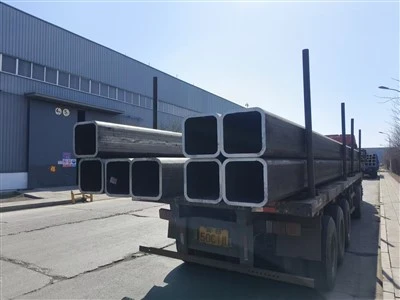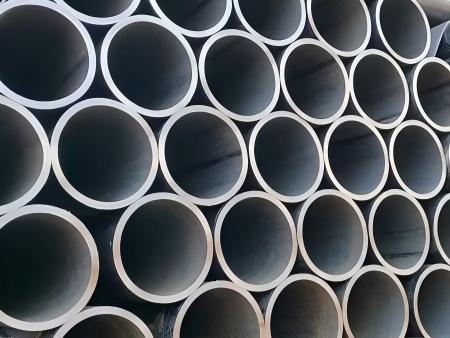


Tianjin Brisk Metalwork Co., Ltd. is one of the leading manufacturers and suppliers of welded pipe astm a53 in China. We have world-leading production equipment and strong manufacturing capabilities. Please feel free to buy bulk durable welded pipe astm a53 from our factory.
Tianjin Brisk Steel is one of the manufacturers of Welded Hollow Section Pipe ASTM A53 in China. Our products are mainly exported to the Middle East, Southeast Asia, Europe, New Zealand, and other regions.If you would like to learn more about our products, feel free to contact us and send your purchase list.


Types and Grades, and Why the Distinction Matters
ASTM A53 organizes welded pipe into two production types:
- Type F - furnace butt-welded, continuous weld process, available only in Grade A, and generally limited to smaller NPS sizes
- Type E - electric-resistance-welded (ERW), available in both Grade A and Grade B, and by far the more common welded option in the current market
Within Type E, Grade B carries higher minimum yield and tensile strength than Grade A and has become the de facto standard grade requested by most buyers - Grade A is comparatively rare in new orders. If your inquiry doesn't specify a grade, it's worth confirming with your supplier whether they default to Grade B, since assuming the wrong grade can create a mismatch with your project's strength requirements.
Reading the Standard Correctly
A common point of confusion: A53 pipe is sized by NPS (Nominal Pipe Size) and schedule (wall thickness classification - Sch 40, Sch 80, etc.), not by a direct outside-diameter-and-wall-thickness callout the way ASTM A500 tube is specified. Two pipes with the same NPS designation but different schedules will have the same outside diameter but different wall thickness and different internal bore - this matters both for structural capacity calculations and for any application where flow or fit is relevant.
- Size range: roughly NPS 1/8 through NPS 26 (larger sizes exist but are less commonly stocked)
- Common schedules: Sch 10, Sch 20, Sch 30, Sch 40 (standard weight), Sch 80 (extra strong), among others
- Length: typically supplied in random or fixed lengths around 6 m or 12 m, with cut lengths available on request
Structural Use: What to Know Before Substituting for A500
Because welded A53 pipe is often less expensive and more readily available than A500 structural tube in equivalent sizes, it's tempting to treat the two as interchangeable for structural framing. A few real differences are worth knowing before making that call:
- Tolerances are looser. A53's outside diameter and wall thickness tolerances are wider than A500's, which can matter for close-fit connections or precise structural detailing.
- A53 has no mandatory impact toughness requirement, whereas some structural applications specify impact-tested material - if your project has cold-climate or dynamic loading considerations, confirm whether this matters for your design.
- A500 is purpose-built as a structural specification, with mechanical property minimums set specifically for structural design use, while A53's strength requirements were established primarily around pressure service.
None of this makes A53 unsuitable for structural use - it's used structurally all the time, particularly for scaffolding, guardrail, secondary framing, and general fabrication - but a structural engineer should confirm whether A53 or A500 is the correct call for a given load-bearing member rather than treating the choice as purely a cost decision.
Surface Finish Options
- Black (uncoated) - standard mill finish, typically used indoors or where subsequent coating/painting will be applied
- Hot-dip galvanized - zinc coating applied per ASTM A123/A153, used for outdoor or corrosion-prone applications; galvanized A53 pipe is also commonly requested for fencing, handrail, and general outdoor structural framing
Common Applications
- Scaffolding uprights and horizontal bracing
- Guardrail, handrail, and fencing framework
- Low-rise structural support and general building framing where A500-level tolerances aren't required
- Water, steam, and low-pressure air conveyance (its original intended use)
- General fabrication - equipment frames, racking, and welded assemblies
FAQ
Q: What's the actual difference between Type E and Type F welded A53 pipe?
A: Type F is produced by a continuous furnace butt-welding process and is limited to Grade A in smaller sizes, while Type E is electric-resistance-welded and available in both Grade A and Grade B. Type E has become the dominant welded product in the current market, and Type F is comparatively uncommon in new supply.
Q: Can welded A53 pipe be used structurally, or is it only for fluid conveyance?
A: It's routinely used both ways. A53 was originally developed with pressure piping in mind, but its wide availability and NPS sizing make it a common choice for scaffolding, handrail, fencing, and secondary structural framing. For primary load-bearing structural members, however, ASTM A500 is generally the more appropriate and more commonly specified structural standard.
Q: Is Grade A or Grade B more common for welded A53 pipe?
A: Grade B is the more commonly ordered grade today due to its higher strength, and many suppliers treat it as the default unless Grade A is specifically requested. Grade A is less frequently stocked in new production runs.
Q: How do I know what schedule to order?
A: Schedule determines wall thickness for a given NPS size, which in turn affects both pressure rating (for fluid use) and structural capacity (for load-bearing use). This should be determined based on your specific pressure or load requirements - Sch 40 is a common general-purpose choice, but it isn't universally correct for every application.


Hot Tags: welded pipe astm a53, China welded pipe astm a53 manufacturers, suppliers, factory, API5L SEAMLESS STEEL PIPE, hollow section analysis, hollow section industrial design, hollow section innovation, hollow section parts, hollow section stock