

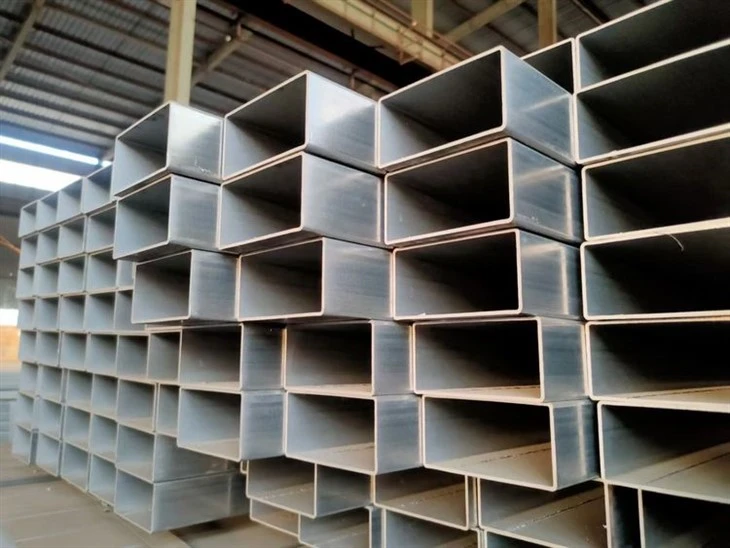
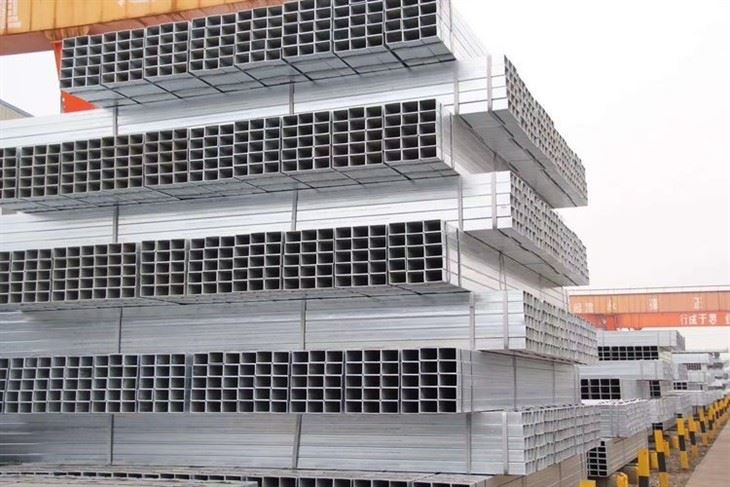
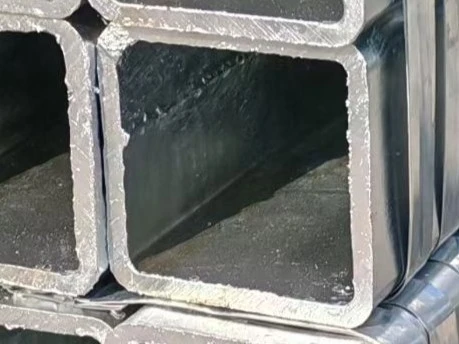
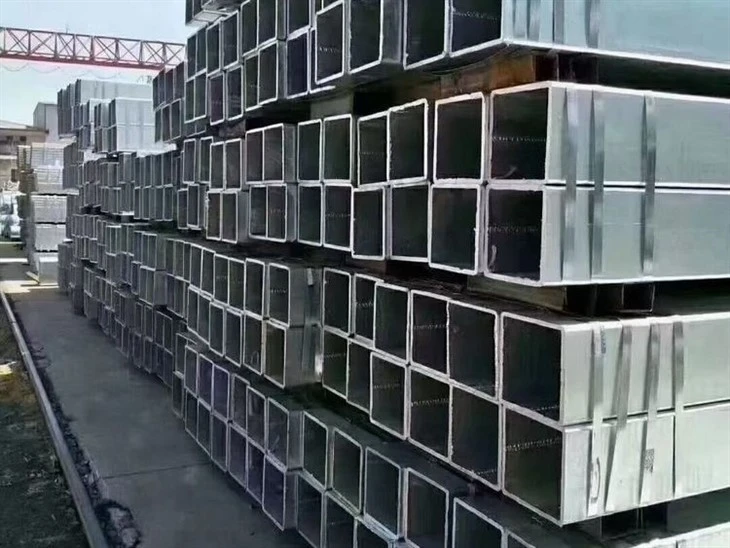
Tianjin Brisk Metalwork Co., Ltd. is one of the leading manufacturers and suppliers of pre-galvanized rectangular hollow section in China. We have world-leading production equipment and strong manufacturing capabilities. Please feel free to buy bulk durable pre-galvanized rectangular hollow section from our factory.
Tianjin Brisk Steel is one of the manufacturers of Pre-Galvanized Rectangular Hollow Section in China. Our products are mainly exported to the Middle East, Southeast Asia, Europe, New Zealand, and other regions.If you would like to learn more about our products, feel free to contact us and send your purchase list.
PRODUCT
Tianjin Brisk Steel focus on produce and supply hollow section and steel pipe


How Pre-Galvanized RHS Is Made
- Coil galvanizing – steel strip is cleaned, annealed, and passed through a bath of molten zinc on a continuous hot-dip line, then cooled and coiled.
- Slitting – the galvanized coil is slit to the strip width needed for the target tube size.
- Roll forming – the strip is progressively rolled through a series of forming stations into a rectangular profile.
- ERW welding – the edges are fused together by electric resistance welding to close the section.
- Sizing and cutting – the tube is sized to final dimensions and cut to length.
Because welding occurs after the coil is already coated, the weld line itself is left with a thin or bare strip of unprotected steel unless a secondary weld-seam treatment (such as zinc-rich paint touch-up) is applied by the mill.
Standards and Coating Designations
Common coating weight for pre-galvanized structural tube falls around Z180–Z275 (100–150 g/m² total both sides), noticeably lighter than the coating typically achieved by post-fabrication hot-dip galvanizing.
Typical Applications
- Indoor structural framing and mezzanine floor supports
- Warehouse racking and shelving frames
- Light steel fabrication, workshop equipment, machine frames
- Fencing and gate frames in low-to-moderate corrosion environments
- Furniture, display stands, and retail fixture frames
- General purpose construction where the tube will be painted or powder-coated as a final finish
Common Pain Points With Pre-Galvanized RHS
Weld seam corrosion. The most frequently reported issue is premature rusting along the weld line, since the ERW process burns off the zinc coating right at the seam. In humid or outdoor settings, this thin rust line can appear within months even though the rest of the tube looks fine - buyers sometimes mistake this for a defective batch when it's actually inherent to the pre-galvanized process.
Coating damage during forming. Roll forming bends the coated strip through multiple tight radii, which can micro-crack or thin the zinc layer at the corners of the rectangular profile, especially on smaller wall thicknesses. This is rarely visible without close inspection but can shorten corrosion life at the corners compared to the flat faces.
Inconsistent coating class between suppliers. "Pre-galvanized" is used loosely in the market, and some suppliers do not clearly disclose whether the strip was coated to Z180, Z275, or a lighter class. Two tubes that both say "pre-galvanized" on the packing list can have significantly different actual zinc coating weight and therefore different corrosion life - this is a common source of disputes after delivery.
White rust from tight stacking. Newly formed pre-galvanized tube is often bundled tightly for transport. If bundles get wet in transit or storage and don't dry out or ventilate, zinc oxide (white rust) can form between tubes in contact, especially at the bundle's outer layers.
Not always suitable for direct burial or wet environments. Because the coating weight is lighter than hot-dip-after-fabrication tube, and the seam is a weak point, pre-galvanized RHS is generally not recommended for ground contact, permanent outdoor structures in coastal areas, or high-humidity industrial atmospheres - buyers sometimes select it for these applications based on price alone and find the coating degrades faster than expected.
Cutting and drilling exposes bare steel. Any site cutting, drilling, or notching removes the coating locally. Unlike some coatings with strong galvanic "self-healing" at cut edges, thin pre-galvanized coatings offer only limited sacrificial protection at these exposed points, so touch-up with zinc-rich paint is often needed for long-term protection.
FAQ
Q: Why does the weld seam on pre-galvanized tube rust first?
A: The ERW welding process generates enough heat to burn off the thin zinc coating right at the weld line. Since this narrow strip of steel is left bare or only lightly protected, it's typically the first place surface rust appears, even while the rest of the tube remains intact.
Q: Can pre-galvanized RHS be used outdoors?
A: It can be used outdoors in low-to-moderate corrosion environments, especially where the structure will also be painted or where periodic maintenance is expected. For coastal, high-humidity, or permanent unpainted outdoor use, hot-dip galvanized-after-fabrication tube generally performs better over the long term.
Q: Does pre-galvanized tube need painting?
A: It's not mandatory, but painting or powder-coating is common practice for pre-galvanized structural tube used outdoors or in visible architectural applications, both for appearance and to add a barrier layer over the thinner zinc coating.
Q: How should pre-galvanized RHS be stored before installation?
A: Bundles should be stored off the ground, under cover, and with airflow between layers where possible. Avoid leaving wet bundles stacked tightly for extended periods, since trapped moisture between tubes is the main cause of white rust staining before the material is even installed.


Hot Tags: pre-galvanized rectangular hollow section, China pre-galvanized rectangular hollow section manufacturers, suppliers, factory, EN 10219 S355J2H HOLLOW SECTIONS, hollow section delivery, hollow section manufacturer, hollow section outlook, hollow section potential, hollow section thickness


