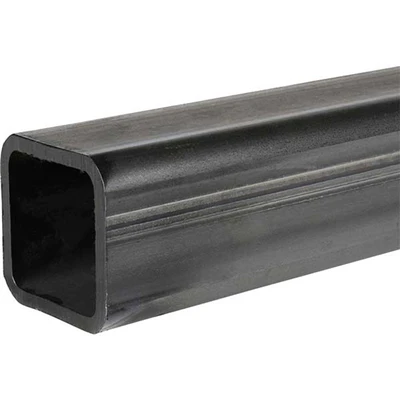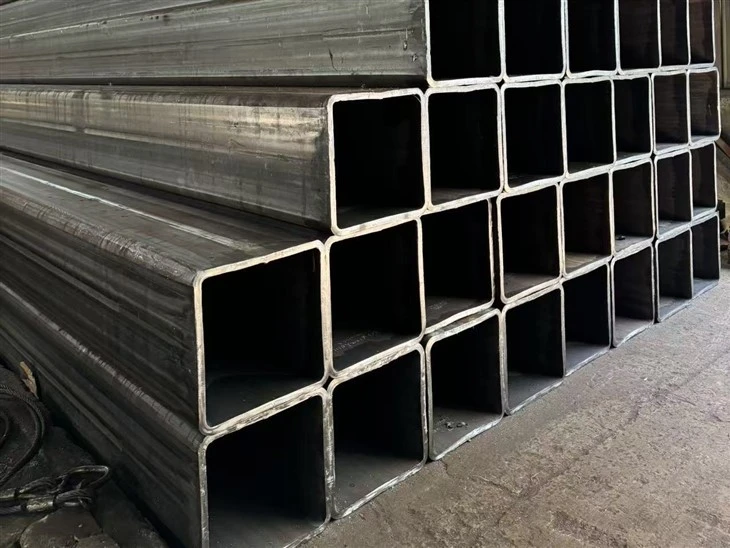

Tianjin Brisk Steel is one of the EN10219 S275J2H Rectangular Hollow Section Pipe in China. Our products are mainly exported to the Middle East, Southeast Asia, Europe, New Zealand, and other regions.If you would like to learn more about our products, feel free to contact us and send your purchase list.


Quick specification reference
| Item | Specification |
|---|---|
| Standard | EN 10219-1 (mechanical/technical delivery), EN 10219-2 (tolerances) |
| Grade | S275J2H |
| Minimum yield strength | 275 MPa (nominal, thickness-dependent per EN 10219-1 table) |
| Minimum tensile strength | 370-410 MPa depending on thickness |
| Impact test requirement | 27 J minimum, tested at -20 degC (the "J2" designation) |
| Section shape | Rectangular hollow section (RHS), cold-formed and welded |
| Size range | 50x30 mm to 400x200 mm typical, larger on request |
| Wall thickness | 3 mm to 16 mm typical |
| Chemistry | C <=0.18%, Mn <=1.50%, similar residual limits to other S275 subgrades - J2 requirement is about testing, not a separate chemistry table |
| Delivery condition | Cold-formed, welded, as-formed (no post-weld normalizing) |
Breaking the designation down piece by piece:
- S275 - structural steel with a minimum yield strength of 275 MPa. This part is common to JR, J0, J2, and K2 subgrades alike; it doesn't change based on impact-testing class.
- J2 - the material is Charpy V-notch impact tested and guaranteed to absorb a minimum of 27 J of energy at -20 degC. This is one step up from J0 (tested at 0 degC) and two steps up from JR (tested at +20 degC, essentially room temperature).
- H - denotes a hollow section per EN 10219, distinguishing it from the equivalent flat/plate or open-section product under EN 10025.
The practical difference between these subgrades isn't strength - it's how the steel behaves under sudden impact loading at low temperature, which matters for brittle-fracture resistance in service conditions the base S275 yield number says nothing about.
Impact-test subgrade comparison
| Subgrade | Test temperature | Minimum impact energy | Typical use case |
|---|---|---|---|
| JR | +20 degC (room temp) | 27 J | Indoor, ambient-temperature static structures |
| J0 | 0 degC | 27 J | Outdoor structures in moderate climates, non-critical members |
| J2 | -20 degC | 27 J | Outdoor structures in cold climates, dynamically loaded or fracture-critical members |
| K2 | -20 degC | 40 J | Higher-consequence structures needing a larger toughness margin at the same test temperature |
J2H sits in the middle of this range deliberately - it's specified often enough to be a stock item at most mills that run S275, without requiring the additional testing volume K2 demands. JR and J0 are lower cost and faster to certify since they either skip impact testing (JR is sometimes accepted without a dedicated low-temperature Charpy run, depending on the mill's standard practice) or test at a less demanding temperature.
When J2H is the right call - and when it's more than the job needs
J2H earns its place on a spec in a few recurring situations:
- Outdoor structural steelwork in a climate that sees winter temperatures well below freezing - the -20 degC test temperature is chosen to bracket realistic low-temperature service conditions for much of the world's temperate and continental climate zones.
- Members subject to dynamic, cyclic, or impact loading - crane runway supports, members near vibrating equipment, or anything where fatigue and sudden loading combine with low-temperature service.
- Fracture-critical connections - members where a brittle failure would be disproportionate to the load involved, where the engineer wants a documented toughness margin rather than relying on ambient-temperature JR properties.
Where J2H is genuinely more than the job needs: indoor structures at controlled ambient temperature, or outdoor structures in consistently mild climates with no realistic exposure to sub-zero service temperatures. In those cases JR or J0 will meet the same yield and tensile requirements at a lower cost and shorter lead time, and specifying J2H there isn't wrong so much as it's paying for a test result the structure will never actually be exposed to.
FAQ
Q: Does J2H cost more than JR for the same section size?
A: Generally yes, though the difference is usually modest rather than dramatic - it reflects the additional impact testing and certification, not a different steel chemistry or production process. For outdoor or dynamically loaded structures, the cost difference is normally small relative to the risk of specifying an inadequate subgrade.
Q: Can I substitute S275J2H where a drawing calls for S275JR?
A: Generally yes, since J2H meets every requirement JR does plus the low-temperature impact test - going up a subgrade rarely causes a compliance problem, though it's still worth confirming with your engineer if the substitution changes cost or lead time in a way that matters for the project.
Q: What does the mill certificate need to show for a J2H order?
A: Chemical composition, tensile test results (yield, tensile strength, elongation), and Charpy V-notch impact test results at -20 degC with the absorbed energy value, traceable to heat and batch number. If the certificate doesn't show a Charpy result at the specified temperature, the material hasn't been verified as J2H regardless of what the mill calls it.
Q: Is S275J2H the same designation under other national standards?
A: The impact-test-subgrade naming convention (JR/J0/J2/K2) is specific to EN standards. Other systems - ASTM, GB/T, JIS - specify toughness requirements differently, sometimes through Charpy testing at a stated temperature and sometimes not at all for the equivalent general structural grade, so a direct designation-for-designation substitution across standards isn't safe without checking the actual test requirements each one carries.


Hot Tags: en10219 s275j2h rectangular hollow section pipe, China en10219 s275j2h rectangular hollow section pipe manufacturers, suppliers, factory, hollow section in engineering, hollow section quality control, hollow section representative, hollow section standards, standard hollow section, weather resistant hollow section