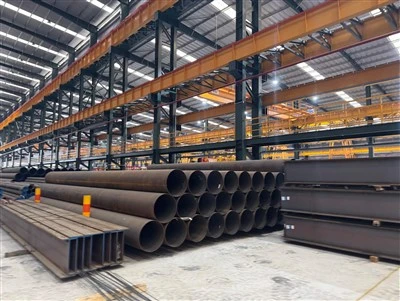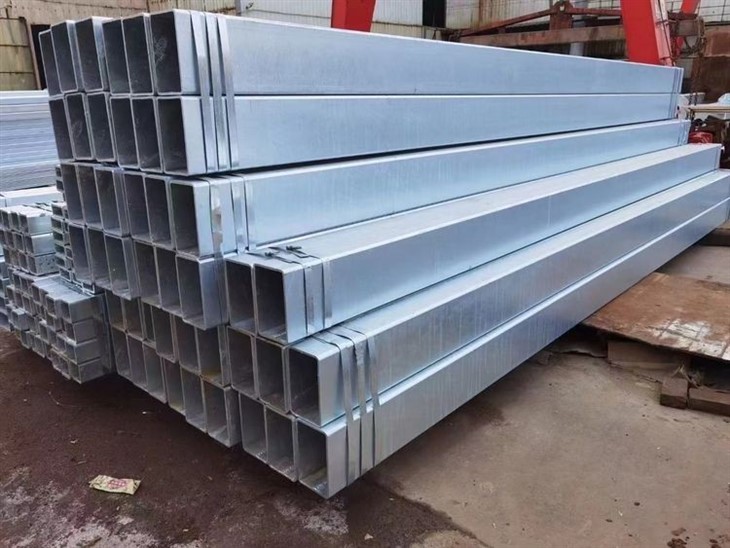


Tianjin Brisk Metalwork Co., Ltd. is one of the leading manufacturers and suppliers of hot-dip galvanized square & rectangular steel tube for structural framing in China. We have world-leading production equipment and strong manufacturing capabilities. Please feel free to buy bulk durable hot-dip galvanized square & rectangular steel tube for structural framing from our factory.
Tianjin Brisk Steel is one of the Hot-Dip Galvanized Square & Rectangular Steel Tube for Structural Framing in China. Our products are mainly exported to the Middle East, Southeast Asia, Europe, New Zealand, and other regions.If you would like to learn more about our products, feel free to contact us and send your purchase list.


Why Framing Applications Choose Galvanized Square/Rectangular Tube
- Load-bearing efficiency of the closed section. Square and rectangular hollow sections resist bending and torsion more efficiently than open sections (angles, channels) of similar weight, because the closed profile distributes stress around the full perimeter rather than concentrating it in a single web or flange. For frame columns and beams carrying combined loads - wind, snow, dead load, and lateral bracing forces - this efficiency translates into lighter structures for the same load rating.
- Corrosion resistance where connections are exposed. Framing structures are full of bolted connections, base plates, and welded gussets - all places where moisture collects and corrosion typically starts first on unprotected steel. A hot-dip zinc coating protects these areas the same way it protects the flat tube surface, and its sacrificial action continues to protect the base metal even where a bolt hole or weld has locally disturbed the coating.
- No repainting cycle for the life of the frame. Structural steel that will be difficult or expensive to access later - solar array supports, elevated equipment platforms, agricultural building frames - benefits from a coating that doesn't need scheduled maintenance. Hot-dip galvanizing is applied once, at the mill or a dedicated galvanizing plant, and typically outlasts the building's first major renovation cycle.
- Dimensional consistency for bolted connections. Because framing tube is usually joined with base plates, cap plates, and bolted gusset connections rather than field-welded joints only, tight control on outside dimensions and squareness matters more here than in some other tube applications - a tube that's slightly out of square complicates plate fit-up across a whole structure.
How the Tube Is Made
The base square/rectangular tube starts as ERW round pipe, formed and welded from steel strip, then passed through a series of forming rolls that reshape the round section into a square or rectangular profile while the weld is still at or near forming temperature. This keeps the corner radii consistent and avoids re-heating the tube separately for shaping.
After forming, cutting, and any required weld inspection, the tube is hot-dip galvanized following the same pickle-flux-dip sequence used for round pipe: acid cleaning to remove scale, a flux bath, then full immersion in molten zinc around 450°C.

Standards and Sizing for Structural Use
- ASTM A500 - the primary US standard for cold-formed welded square and rectangular structural tubing, defining Grades A, B, and C by yield and tensile strength.
- ASTM A123/A123M - governs hot-dip galvanized coating requirements applied to the formed A500 tube.
- EN 10219 - the European standard for cold-formed welded structural hollow sections, commonly paired with EN ISO 1461 for hot-dip coating requirements.
Framing projects most often specify Grade B (46 ksi minimum yield) as a baseline for general structural work, moving to Grade C (50 ksi) where higher load capacity is needed without increasing section size. Common structural sizes run from 50×50 mm up to 200×200 mm square, and from 60×40 mm up to 250×150 mm rectangular, in wall thicknesses from roughly 2.5 mm up to 8 mm depending on span and load.
Frequently Asked Questions (FAQ)
Q: Is galvanized structural tube as strong as black (uncoated) tube of the same grade?
A: Yes - hot-dip galvanizing doesn't reduce the steel's yield or tensile strength for standard structural wall thicknesses. The mechanical properties are set by the steel grade (A500 Grade B or C, for example) before galvanizing, and the coating process at normal bath temperatures doesn't meaningfully change those properties in typical structural sections.
Q: Can galvanized square tube be welded on site without losing corrosion protection?
A: It can be welded, but welding burns off the zinc coating in the heat-affected zone. Standard practice is to grind or clean the weld area after welding and apply a zinc-rich cold galvanizing compound to restore local corrosion protection - this is a normal part of erecting galvanized structures, not a defect in the material.
Q: What's the difference between A500 and EN 10219 tube, and does it matter which one I order?
A: Both are cold-formed welded structural hollow section standards, but they're calibrated to different regional grade and tolerance systems. If your structural engineering was done to US codes, specify A500; if it was done to Eurocode, specify EN 10219 - mixing standards on one project can create confusion around allowable stress values even if the physical tube looks similar.
Q: Does hot-dip galvanized tube need any additional coating for coastal or industrial environments?
A: In more aggressive environments - coastal salt exposure or industrial atmospheres with sulfur dioxide - a duplex system (a paint or powder coat applied over the hot-dip zinc) is often specified to extend service life beyond what zinc alone would achieve. Ask about your specific site environment before defaulting to zinc-only coating on projects in these conditions.


Hot Tags: hot-dip galvanized square & rectangular steel tube for structural framing, China hot-dip galvanized square & rectangular steel tube for structural framing manufacturers, suppliers, factory, erw pipe bending process, erw pipe bends, erw pipe coating process, erw pipe connectors, erw pipe joint strength, square erw pipe