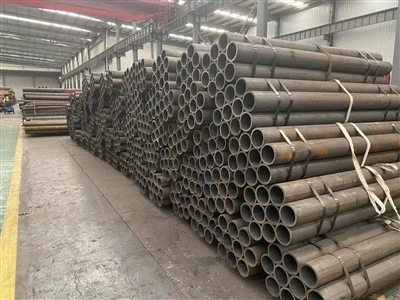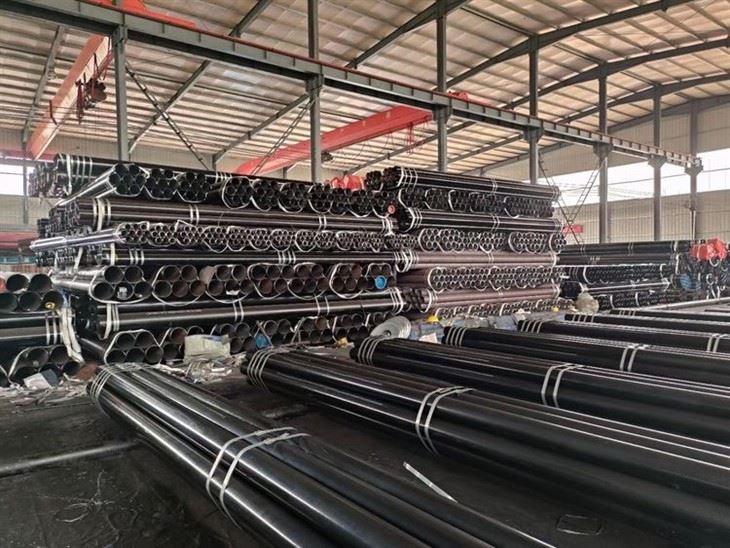
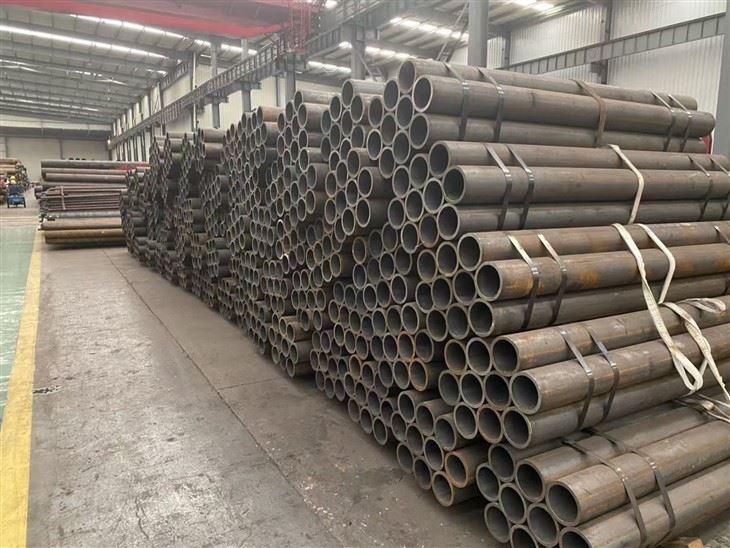
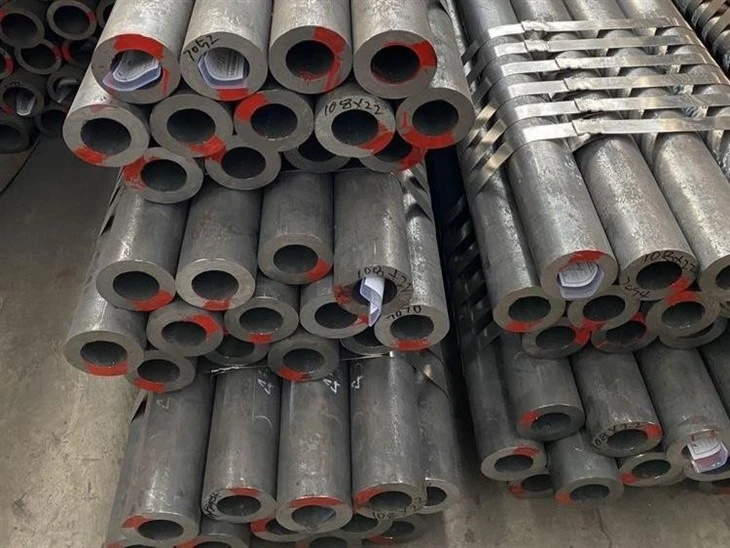
Tianjin Brisk Steel is one of the ASTM A106 High Pressure Steel Pipe in China. Our products are mainly exported to the Middle East, Southeast Asia, Europe, New Zealand, and other regions.If you would like to learn more about our products, feel free to contact us and send your purchase list.


Quick Spec Reference
| Parameter | Typical Range |
|---|---|
| Outer Diameter | 10.3mm (⅛") – 660mm (26") NPS |
| Wall Thickness | Schedule 40 – Schedule 160, XXS |
| Standard | ASTM A106, Grade A, B, or C |
| Production Method | Seamless only (hot-worked or cold-drawn) - no welded process permitted under this standard |
| Minimum Yield Strength | 205 MPa (Gr. A) / 240 MPa (Gr. B) / 275 MPa (Gr. C) |
| Minimum Tensile Strength | 330 MPa (Gr. A) / 415 MPa (Gr. B) / 485 MPa (Gr. C) |
| Design Temperature Range | Up to ~480°C (with allowable stress derating above ~340°C) |
| Governing Code | ASME B31.1 (Power Piping), ASME B31.3 (Process Piping) |
| Typical Use | Boiler feed lines, refinery process piping, high-pressure steam lines, power plant piping |
Why "High Pressure" and "Seamless" Are the Same Requirement Here
A106 is written around a single defining requirement that shapes everything else about the standard: the pipe has to be seamless. No welded process - not ERW, not SAW, not any variant - is permitted under A106 at all. That's not a minor manufacturing preference; it's the reason A106 exists as a separate standard from A53 in the first place, even though the two overlap heavily in size range and chemistry.
A weld seam, however well made, is a localized zone with different grain structure and residual stress than the parent pipe. At moderate pressure and ambient temperature, that difference is manageable and welded pipe performs fine - which is exactly what A53 (which permits both seamless and welded/ERW production) is built for. Once a line moves into genuinely high-pressure, high-temperature service - live steam, boiler feed, refinery process streams running at 300°C+ - the seam becomes the part of the pipe most likely to be the limiting factor under sustained thermal cycling and creep. A106 removes that variable entirely by prohibiting welded construction, which is why "A106" and "high pressure" function almost as synonyms in piping specifications even though the standard's title doesn't use the word "pressure" anywhere in it.
Grade A vs. Grade B
| Grade A | Grade B | |
|---|---|---|
| Minimum yield strength | 39,000 psi (269 MPa) | 50,000 psi (345 MPa) |
| Minimum tensile strength | 58,000 psi (400 MPa) | 70,000 psi (483 MPa) |
| Typical use | Lower-load structural, general fabrication | Most building/structural work, higher load-to-weight ratio |
Grade B is what most structural drawings call for by default, since it allows lighter wall for a given load case. Grade A still gets specified where a project's design was run on the lower value, or where a fabricator's existing tooling and welding procedures were qualified against Grade A material. As with any hot-formed structural tube, the mill test report is the only reliable confirmation of which grade a given lot actually meets - don't infer grade from size or wall thickness alone.
Grade A vs Grade B vs Grade C: A Buying Decision, Not Just a Number
| Property | Grade A | Grade B | Grade C |
|---|---|---|---|
| Minimum Yield Strength | 205 MPa (30,000 psi) | 240 MPa (35,000 psi) | 275 MPa (40,000 psi) |
| Minimum Tensile Strength | 330 MPa (48,000 psi) | 415 MPa (60,000 psi) | 485 MPa (70,000 psi) |
| Maximum Carbon Content | 0.25% | 0.30% | 0.35% |
| Typical Availability | Limited - lower-strength niche | By far the most commonly stocked and specified | Specialty order, longer lead time |
Grade B accounts for the overwhelming majority of A106 pipe actually bought and sold - when a spec just says "A106 pipe" without naming a grade, Grade B is what's being assumed by nearly every mill and buyer in practice. Grade A shows up occasionally on services where the lower carbon content's better cold-forming and bending characteristics matter more than the strength difference, such as pipe that will undergo significant field bending. Grade C is a genuine specialty order - higher strength allows thinner wall for the same pressure rating, but few mills stock it and lead times run longer, so it only makes sense to specify when the wall-thickness savings across the project actually justify the sourcing effort.
Frequently Asked Questions (FAQ)
Q: Can ERW or welded pipe be substituted for A106 on a high-pressure steam line?
A: Not under the A106 specification itself - A106 is defined as a seamless-only standard, and substituting welded pipe would mean the material no longer meets A106 at all, regardless of whether it meets the same chemistry and mechanical properties. If welded pipe is being considered for a specific application, that's a different material selection decision the engineer needs to make explicitly, not a substitution within A106.
Q: What's the practical difference between A106 and A53 for a buyer, given how similar the specs look on paper?
A: The core difference is that A53 permits both seamless and welded (ERW) production while A106 is seamless only, and A106 also carries somewhat tighter chemistry and mechanical property requirements aimed at elevated-temperature service. A53 is commonly used for general-purpose and lower-temperature piping, while A106 is specified when the service temperature and pressure make the seamless-only requirement matter.
Q: Does A106 pipe need to be normalized?
A: Not universally - normalizing is a supplementary requirement that can be specified for improved grain structure and toughness, particularly on thicker-wall pipe, but it isn't mandatory under the base A106 standard for every order. If the project's piping class or governing code calls for normalized material, this needs to be stated explicitly on the purchase order.
Q: What size range does A106 actually cover, and what happens above that?
A: A106 covers NPS sizes up to 26" in standard mill production, consistent with the general size ceiling for seamless pipe manufacturing. Projects needing larger-diameter high-temperature pipe typically move to a welded high-temperature standard such as ASTM A672 or A691, which extend into much larger diameters while still meeting elevated-temperature service requirements.


Hot Tags: astm a106 high pressure steel pipe, China astm a106 high pressure steel pipe manufacturers, suppliers, factory, seamless pipe forklift, seamless pipe motor, seamless pipe purchase, seamless pipe strength, seamless pipe tolerance, seamless pipe transportation