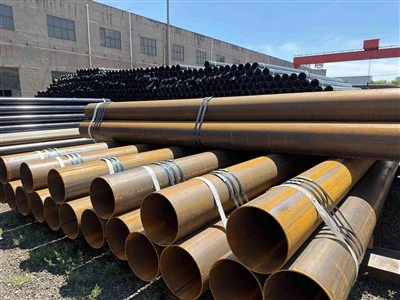
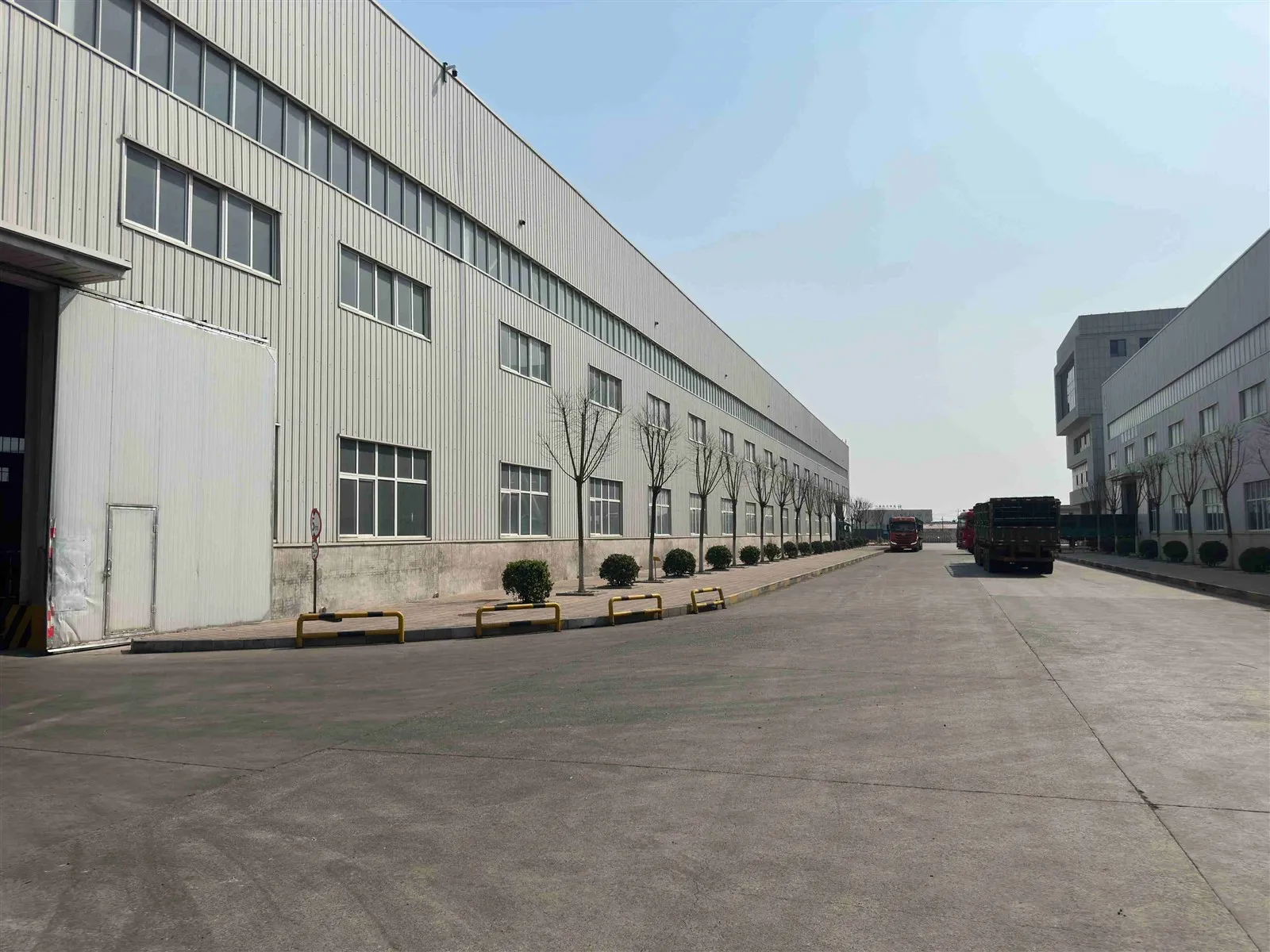
Tianjin Brisk Metalwork Co., Ltd. is one of the leading manufacturers and suppliers of en 10210 erw steel pipe in China. We have world-leading production equipment and strong manufacturing capabilities. Please feel free to buy bulk durable en 10210 erw steel pipe from our factory.
Tianjin Brisk Steel is one of the manufacturers of EN 10210 ERW Steel Pipe in China. Our products are mainly exported to the Middle East, Southeast Asia, Europe, New Zealand, and other regions.If you would like to learn more about our products, feel free to contact us and send your purchase list.


EN 10210 ERW Steel Pipe: Why the "Hot-Finished" Step Changes Everything
Ask five different mills what "EN 10210" means and you'll often get five slightly different answers - some will call it a welded pipe standard, others will insist it's seamless-only, and a few will just point to EN 10219 and shrug. None of them are quite right on their own, and the confusion costs buyers real money when the wrong section ends up on a fatigue-critical connection.
Here's the clearer picture: EN 10210 doesn't care whether the raw tube started as seamless bar or welded strip. What it cares about is the finishing step. Every section under this standard - welded or seamless - passes through a hot-finishing process (normalizing rolling or hot forming) before it earns the EN 10210 classification. That single step is what separates it from cold-formed sections and is the reason engineers reach for it on projects where corner integrity under repeated loading actually matters.
The Part Most Suppliers Skip Explaining
Cold-forming a square or rectangular section bends the corners at room temperature, which work-hardens the steel and leaves locked-in residual stress right where connections tend to concentrate load. Hot-finishing removes that problem almost entirely. The corners come out of the process with a grain structure much closer to the flat faces, and yield strength across the whole section is far more uniform. For a structural engineer sizing a brace for cyclic wind load or a seismic frame, that consistency is often the deciding factor over cheaper cold-formed alternatives.
A quick way to sense-check a quotation: hot-finishing is a genuine additional process step with its own energy and furnace-time cost. If a mill's EN 10210 pricing sits at parity with their EN 10219 pricing for the same dimensions, that's usually a sign the hot-finishing step isn't actually happening, and the label is being applied loosely. Asking for the normalizing furnace record alongside the standard mechanical test certificate is a reasonable request for anything going into a fatigue- or seismic-critical connection - legitimate mills won't hesitate to provide it
Grades, Sizes, and What They're Used For
- S235JRH - general-purpose structural work, lower design loads, most economical option in the range
- S275J0H - a step up in strength for mid-size frames and bracing where S235 falls short on capacity
- S355J2H - the workhorse grade for most commercial structural steelwork, balances strength and weldability
- S460NH - specified when designers need higher capacity without adding section weight, common in long-span or high-rise bracing
Sizes typically run from 21.3 mm up to 630 mm across the outer dimension, with wall thickness between 2.3 mm and 18 mm. Sections ship in standard 6 m or 12 m lengths, with cut-to-length available for projects that need it. Surface options include mill finish, primer, and hot-dip galvanizing for exterior or corrosive-environment use.
What This Means for Specifying Engineers
If a project's design code accounts for corner-region yield strength - which most seismic design provisions do - the material has to actually deliver on that assumption, not just carry a label that says so. Sections used in offshore jackets, seismic bracing, bridge piers, and any structure with meaningful cyclic loading tend to specify EN 10210 by name for exactly this reason. Swapping in a cold-formed section without redoing the connection calculation isn't a minor substitution; it changes the safety margin the engineer originally designed around.
Frequently Asked Questions (FAQ)
Q:Can it carry a CE mark?
A: Yes, provided the producing mill operates a certified Factory Production Control (FPC) system under EN 1090-1.
Q: What is the main difference between EN 10210 and EN 10219 ERW steel pipes?
A: The fundamental difference lies in the manufacturing process and stress relief:
EN 10210 covers hot-finished structural hollow sections. They undergo heat treatment or full hot-forming, which eliminates internal stress, improves low-temperature toughness, and provides uniform grain structure across the entire section (including the weld seam and corners).
EN 10219 covers cold-formed structural hollow sections, which retain residual stresses from cold bending, resulting in slightly lower impact toughness at corner regions.
Q: Does EN 10210 pipe qualify for CE marking?
A:Yes, when produced under a certified Factory Production Control (FPC) system in accordance with EN 1090-1.



Hot Tags: en 10210 erw steel pipe, China en 10210 erw steel pipe manufacturers, suppliers, factory, erw pipe dimensions accuracy, erw pipe efficient, erw pipe guarantee, erw pipe market share, erw pipe plan, erw welded pipe