

The hollow structural section(HSS) is a versatile steel product for fabrication, building, and mechanical purposes. They have a flat and smooth surface along the edges which makes them much easier to connect to other metal sections. The most common uses of HSS are for building columns, frames and beams due to its high strength to weight ratio and the ability to handle high temperature and pressure in a harsh environment. Some other common applications of hollow structural steel are staircases, bridges, trusses, gates, platforms, storage facilities, fencing, guardrails, decking, building facades, roof purlins, protection panels, architectural designs, and many more.
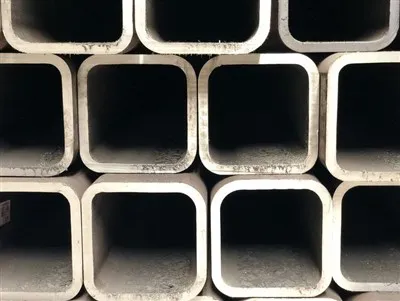
Benefits of using Hollow Structural Sections (HSS)
1. High strength-to-weight ratio
Hollow Structural Sections are able to provide a high compression performance and greater weight saving as they have a high radil of gyration on both axes. This has made them become the most economical and efficient structural member.
2.Less surface area for coating
Hollow Structural Sections require less surface preparation, coating, and painting as they only possess approximately two-thirds of the surface area of the open section in a comparable capacity.
3.Closed section
The closed section of hollow structural sections provides higher cleanliness as they have a minimal surface to collect debris and dust. This has made them an ideal choice for food processing factories or other clean facilities. Closed sections are also good for torsional loads resistance.
4.Low project costs
Hollow structural sections are manufactured with lesser steel material when compared to solid steel products as HSS has an unfilled core. Their high strength-to-weight ratio also allows them to span at a greater distance than solid steel products. This has reduced the number of steel required throughout the whole project. In this case, you can enjoy a lower material cost when using hollow structural sections.
5.High aesthetic appeal
Hollow structural sections have a high aesthetic appeal and are favored architecturally due to their smooth surfaces, closed sections, and rounded corners.
6.Flexible & Highly customizable
They can be modified easily into desired shapes and manufactured in various sizes to match your requirements. The material of HSS also can be recycled easily.
7.Utilized interior space
The interior space of a hollow section can actually provide improvement to the building structure. For example, you can put components of a ventilation system inside the beams or fill the space with concrete to improve their bearing capabilities and be more fire-resistant.
Types of Hollow Structural Sections (HSS)
There are three main types of steel hollow profiles (structural steel tubes): RHS (rectangular hollow profiles), SHS (square hollow profiles) and CHS (round hollow profiles). Each type of hollow profile has its own properties and is used for a specific purpose.
CHS – Round hollow profiles: aesthetics and strength
Circular hollow profiles (CHS), also called round steel pipes, are the first form of hollow profiles. Commonly used in a wide range of structural, mechanical and construction areas. CHS's clean, consistent lines, absence of any protruding edges, and smoothness make it a popular architectural choice for a beautiful appearance in a variety of applications.


