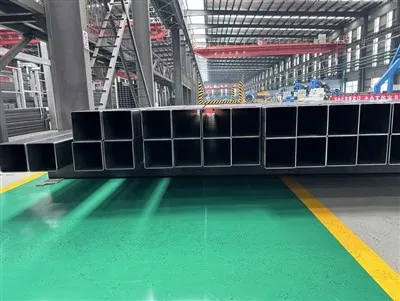
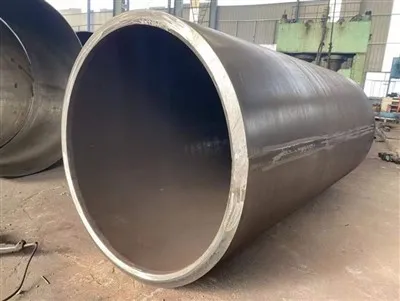
As a supplier of MS (Mild Steel) HOLLOW SECTION, I often encounter inquiries regarding the thermal conductivity of these products. In this blog post, I'll delve into what thermal conductivity is, how it pertains to MS HOLLOW SECTION, and why it matters in various applications.
Understanding Thermal Conductivity
Thermal conductivity is a property that describes a material's ability to conduct heat. It is denoted by the symbol 'k' and is measured in units of watts per meter - kelvin (W/(m·K)). A high thermal conductivity value means that the material can transfer heat quickly, while a low value indicates that the material is a poor conductor of heat and acts more like an insulator.
The thermal conductivity of a material depends on several factors, including its atomic structure, density, and temperature. For metals, the free electrons within the atomic lattice play a crucial role in heat transfer. These electrons can move freely through the material, carrying thermal energy from regions of higher temperature to those of lower temperature.
Thermal Conductivity of MS HOLLOW SECTION
Mild steel is an alloy composed mainly of iron with a small percentage of carbon (typically less than 0.3%). It is known for its relatively high thermal conductivity compared to many non - metallic materials. The thermal conductivity of mild steel at room temperature (around 20°C) is approximately 50 - 60 W/(m·K).
The hollow section design of MS products doesn't significantly change the fundamental thermal conductivity of the mild steel material itself. However, the hollow nature of the section can affect the overall heat transfer characteristics in a structure. For example, the air inside the hollow section acts as an insulator to some extent. Air has a very low thermal conductivity (about 0.026 W/(m·K) at room temperature), so the presence of air in the hollow space can slow down the overall heat transfer through the section.
When considering heat transfer through an MS HOLLOW SECTION, we need to take into account two main mechanisms: conduction through the steel walls and convection and radiation within the hollow space. Conduction through the steel walls occurs as the free electrons in the mild steel carry heat from one side of the wall to the other. Convection within the hollow space happens when the air inside the section is heated, rises, and is replaced by cooler air, creating a circulation pattern. Radiation also plays a role, as the inner surfaces of the hollow section emit and absorb thermal radiation.
Importance of Thermal Conductivity in Applications
The thermal conductivity of MS HOLLOW SECTION is of great importance in various industries and applications.
Construction
In construction, MS HOLLOW SECTION is widely used for structural purposes. Understanding its thermal conductivity is crucial for energy - efficient building design. For instance, in cold climates, minimizing heat loss through the structural elements is essential. By considering the thermal properties of the MS HOLLOW SECTION, architects and engineers can design buildings that require less energy for heating. They can also use additional insulation materials in combination with the hollow sections to further reduce heat transfer.
On the other hand, in some industrial buildings where heat dissipation is necessary, the relatively high thermal conductivity of mild steel can be an advantage. For example, in factories with high - temperature equipment, the MS HOLLOW SECTION can be used to conduct heat away from the equipment and into the surrounding environment.
Automotive Industry
In the automotive industry, MS HOLLOW SECTION is used for various components such as frames and chassis. The thermal conductivity of these sections can affect the heat management of the vehicle. For example, in electric vehicles, where battery thermal management is critical, the ability of the MS HOLLOW SECTION to conduct heat can be utilized to transfer heat away from the battery pack, ensuring its optimal performance and longevity.
Mechanical Engineering
In mechanical engineering, MS HOLLOW SECTION is often used in machinery and equipment. The thermal conductivity of these sections can impact the performance and reliability of the machinery. For example, in heat exchangers, the ability of the MS HOLLOW SECTION to transfer heat efficiently is essential for the proper functioning of the system.


Comparing Different Types of MS HOLLOW SECTION
There are different types of MS HOLLOW SECTION available in the market, such as En 10210 S355nh Hollow Section, Hollow Structural Section, and Square Hollow Section. While the basic thermal conductivity of the mild steel material remains similar across these types, the shape and size of the hollow section can influence the overall heat transfer characteristics.
For example, a square hollow section may have different convection patterns within the hollow space compared to a circular hollow section. The thickness of the steel walls also plays a role. Thicker walls will generally conduct heat more slowly than thinner walls, as there is more material for the heat to pass through.
Factors Affecting the Thermal Conductivity of MS HOLLOW SECTION
Apart from the material properties and the hollow design, several other factors can affect the thermal conductivity of MS HOLLOW SECTION.
Temperature
The thermal conductivity of mild steel varies with temperature. As the temperature increases, the thermal conductivity of mild steel generally decreases. This is because at higher temperatures, the lattice vibrations in the steel become more intense, which can impede the movement of free electrons and thus reduce the heat - transfer efficiency.
Surface Finish
The surface finish of the MS HOLLOW SECTION can also affect its thermal performance. A smooth surface will have less resistance to heat transfer compared to a rough surface. Additionally, the presence of coatings or paints on the surface can act as an insulating layer, reducing the overall heat transfer through the section.
Alloying Elements
Although mild steel is mainly composed of iron and carbon, the presence of small amounts of other alloying elements can affect its thermal conductivity. For example, elements such as chromium, nickel, and manganese can change the atomic structure of the steel and thus influence the movement of free electrons and heat transfer.
Conclusion
In conclusion, the thermal conductivity of MS HOLLOW SECTION is an important property that has significant implications in various industries and applications. While the basic thermal conductivity of mild steel is relatively high, the hollow design and other factors such as temperature, surface finish, and alloying elements can affect the overall heat - transfer characteristics.
As a supplier of MS HOLLOW SECTION, I understand the importance of providing products that meet the specific thermal requirements of our customers. Whether you are in the construction, automotive, or mechanical engineering industry, choosing the right MS HOLLOW SECTION with the appropriate thermal properties can make a big difference in the performance and efficiency of your projects.
If you are interested in purchasing MS HOLLOW SECTION for your projects and have questions about thermal conductivity or other properties, I encourage you to contact me for a detailed discussion. We can work together to select the most suitable products for your specific needs.
References
- Incropera, F. P., DeWitt, D. P., Bergman, T. L., & Lavine, A. S. (2007). Fundamentals of Heat and Mass Transfer. John Wiley & Sons.
- ASM Handbook, Volume 1: Properties and Selection: Irons, Steels, and High - Performance Alloys. ASM International.
- Holman, J. P. (2010). Heat Transfer. McGraw - Hill.