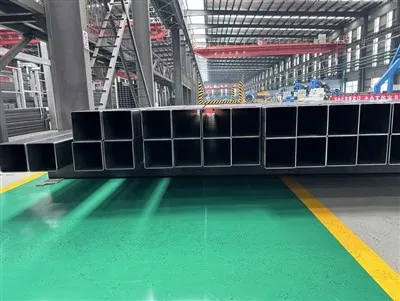
As a supplier of ASTM A36 hollow sections, I've witnessed firsthand the widespread use and popularity of these products in various industries. ASTM A36 is a carbon structural steel with good strength and formability, and its hollow sections are commonly used in construction, machinery, and other fields. However, like any material, ASTM A36 hollow sections have their own set of disadvantages that potential buyers should be aware of. In this blog post, I'll discuss some of the key drawbacks associated with using ASTM A36 hollow sections.
1. Limited Corrosion Resistance
One of the most significant disadvantages of ASTM A36 hollow sections is their relatively poor corrosion resistance. ASTM A36 is a carbon steel, which means it is prone to rust and corrosion when exposed to moisture and oxygen. Unlike stainless steel or other corrosion - resistant alloys, ASTM A36 does not have a protective oxide layer that can prevent the metal from reacting with the environment.


In outdoor applications or in environments with high humidity, chemicals, or saltwater, the corrosion of ASTM A36 hollow sections can be a major concern. Corrosion not only affects the appearance of the sections but also reduces their structural integrity over time. As the metal corrodes, it loses its cross - sectional area, which can lead to a decrease in strength and an increased risk of failure.
To mitigate the corrosion problem, additional protective measures are often required. This may include painting, galvanizing, or applying other anti - corrosion coatings. However, these treatments add to the overall cost of the project and require regular maintenance to ensure their effectiveness. For example, a painted surface may chip or scratch over time, exposing the underlying steel to corrosion.
2. Lower Strength - to - Weight Ratio
Compared to some advanced high - strength steels, ASTM A36 has a relatively low strength - to - weight ratio. The strength - to - weight ratio is an important factor in structural design, especially in applications where weight reduction is a priority, such as in the aerospace and automotive industries.
ASTM A36 has a yield strength of approximately 250 MPa (36,000 psi). While this is sufficient for many general construction applications, there are other steels available that can provide higher strength with less weight. For instance, some high - strength low - alloy (HSLA) steels can have yield strengths of 400 MPa or more, allowing for the use of thinner and lighter sections without sacrificing structural performance.
In projects where weight is a critical factor, using ASTM A36 hollow sections may result in a heavier structure. This can increase transportation costs, installation difficulties, and the overall load on the foundation. Additionally, in applications where dynamic loads are present, such as in bridges or machinery, a lower strength - to - weight ratio may lead to reduced performance and increased energy consumption.
3. Limited Weldability in Some Situations
Although ASTM A36 is generally considered to be weldable, there are some situations where welding can present challenges. The carbon content of ASTM A36 can cause issues during the welding process, especially when welding thick sections or in high - stress applications.
When welding ASTM A36, there is a risk of forming hard and brittle zones in the heat - affected zone (HAZ). These hard zones can be prone to cracking, which can compromise the integrity of the weld joint. To prevent cracking, pre - heating and post - weld heat treatment may be required, especially for thicker sections. These additional steps increase the complexity and cost of the welding process.
In addition, the presence of impurities in the steel, such as sulfur and phosphorus, can also affect weldability. High levels of these impurities can lead to the formation of brittle phases in the weld, reducing its strength and ductility. Therefore, careful control of the steel's chemical composition and proper welding procedures are essential to ensure high - quality welds.
4. Susceptibility to Fire
ASTM A36 hollow sections are not fire - resistant. When exposed to high temperatures, such as in a fire, the strength of the steel decreases significantly. At temperatures above 500°C (932°F), the yield strength of ASTM A36 starts to decline rapidly.
In a fire situation, the loss of strength can cause the structure to deform and collapse. To enhance the fire resistance of ASTM A36 hollow sections, fire - protection measures are often necessary. This can include applying fire - resistant coatings or using fire - rated enclosures. However, these measures add to the cost and complexity of the project.
For example, in a building construction project, the application of fire - resistant coatings to ASTM A36 hollow sections can be a time - consuming and expensive process. The coatings need to be applied to the entire surface of the sections, and their thickness and quality need to be carefully controlled to ensure effective fire protection.
5. Limited Ductility at Low Temperatures
ASTM A36 has limited ductility at low temperatures. Ductility is the ability of a material to deform plastically before fracturing. In cold environments, the ductility of ASTM A36 can decrease significantly, making the steel more brittle.
Brittle fracture is a sudden and catastrophic failure mode that can occur without much warning. In applications where the structure is exposed to low temperatures, such as in arctic regions or in refrigerated storage facilities, the risk of brittle fracture needs to be carefully considered.
To address the low - temperature ductility issue, special grades of steel or additional design considerations may be required. For example, using steels with lower carbon content or adding alloying elements can improve the low - temperature toughness of the steel. However, these solutions may increase the cost of the material.
Conclusion
While ASTM A36 hollow sections are widely used in many industries due to their availability, affordability, and general - purpose suitability, they do have several disadvantages. The limited corrosion resistance, lower strength - to - weight ratio, welding challenges, fire susceptibility, and low - temperature ductility issues are important factors that need to be considered in the design and selection process.
However, it's important to note that these disadvantages do not necessarily mean that ASTM A36 is not a suitable choice for a particular project. In many cases, the benefits of using ASTM A36, such as its cost - effectiveness and ease of fabrication, may outweigh the drawbacks. It all depends on the specific requirements of the application.
If you are considering using ASTM A36 hollow sections for your project, I encourage you to consult with our team of experts. We can provide you with detailed information about the material and help you make an informed decision. Additionally, we also offer a wide range of other steel products, such as API 5L PSL2 X65 Line Pipe, Structural Hollow Sections, and ASTM A618 III HOLLOW SECTIONS, which may be more suitable for your specific needs.
If you have any questions or would like to discuss your procurement requirements, please feel free to contact us. We are committed to providing high - quality products and excellent customer service.
References
- "Structural Steel Design" by Jack C. McCormac
- "Corrosion of Metals" by L. L. Shreir
- "Welding Metallurgy" by John C. Lippold and David J. Kotecki