Hey there! As a supplier of SSAW steel pipes, I'm super excited to take you through the manufacturing process of these amazing pipes. SSAW, which stands for Spiral Submerged Arc Welded, is a type of steel pipe that's widely used in various industries like oil and gas, construction, and water supply. So, let's dive right in and see how these pipes are made!
Step 1: Raw Material Preparation
The first step in making SSAW steel pipes is getting the right raw materials. We usually use high - quality steel coils. These coils are made from different grades of steel, depending on the specific requirements of the end - product. For example, if the pipe is going to be used in a high - pressure environment, we'll choose a steel grade with high strength.
The steel coils are carefully inspected for any surface defects, such as cracks or scratches. We also check the chemical composition and mechanical properties to make sure they meet our standards. Once the coils pass the inspection, they're ready to be processed.
Step 2: Coiling and Forming
After the raw materials are prepared, the steel coils are fed into a coiling machine. This machine unwinds the coil and starts the process of forming the pipe. The steel strip is gradually bent into a spiral shape. The angle of the spiral is carefully controlled to ensure the pipe has the right dimensions and structural integrity.
As the strip is being formed into a spiral, the edges of the strip are brought together. This is a crucial step because the quality of the joint between the edges will determine the strength of the final pipe. The forming process is continuous, and the speed is adjusted according to the thickness and width of the steel strip.
Step 3: Welding
Once the steel strip is formed into a spiral, it's time for welding. SSAW pipes are welded using the submerged arc welding (SAW) process. In this process, a welding electrode is fed into the joint between the edges of the steel strip, and a layer of flux is placed over the welding area.
The flux serves several important functions. It protects the weld from oxidation and contamination by the surrounding air. It also helps to control the cooling rate of the weld, which is essential for achieving good weld quality. When an electric current is passed through the electrode, an arc is created between the electrode and the steel strip. The heat from the arc melts the electrode and the edges of the steel strip, fusing them together to form a strong weld.
The welding process is automated and closely monitored to ensure consistent quality. We use advanced welding equipment and techniques to make sure the welds are defect - free and have the right strength.
Step 4: Cutting and Trimming
After the welding is complete, the continuous spiral pipe is cut into the desired lengths. This is done using a cutting machine, which can make precise cuts according to the customer's specifications.
Once the pipes are cut, they're trimmed to remove any excess material or rough edges. This step is important for ensuring that the pipes have smooth surfaces and accurate dimensions. The trimmed pipes are then ready for further processing or inspection.
Step 5: Inspection and Testing
Quality control is a top priority in our manufacturing process. After the pipes are cut and trimmed, they undergo a series of inspections and tests.
One of the most common tests is the ultrasonic testing (UT). This test uses high - frequency sound waves to detect any internal defects in the pipe, such as cracks or inclusions. Another important test is the hydrostatic testing. In this test, the pipe is filled with water and pressurized to a specified level to check its pressure - bearing capacity.
We also conduct visual inspections to check the surface quality of the pipes. Any pipes that don't meet our quality standards are either re - worked or rejected. Only pipes that pass all the inspections and tests are considered suitable for delivery.
Step 6: Surface Treatment
To protect the pipes from corrosion and improve their appearance, we apply a surface treatment. There are several options for surface treatment, such as painting, galvanizing, or applying an anti - corrosion coating.
Painting is a cost - effective way to protect the pipes. We use high - quality paints that are resistant to weathering and chemicals. Galvanizing involves coating the pipes with a layer of zinc, which provides excellent corrosion protection. Anti - corrosion coatings are also widely used, especially for pipes that will be used in harsh environments.
Step 7: Packaging and Shipping
Once the pipes have passed all the inspections and received the appropriate surface treatment, they're ready for packaging. We use different packaging methods depending on the size and quantity of the pipes. Smaller pipes are usually bundled together, while larger pipes may be individually wrapped.
The packaged pipes are then loaded onto trucks, trains, or ships for shipping. We work closely with reliable logistics partners to ensure that the pipes are delivered to our customers on time and in good condition.


Advantages of SSAW Steel Pipes
SSAW steel pipes have several advantages over other types of pipes. One of the main advantages is their high strength. The spiral welding process creates a strong and continuous weld, which gives the pipes excellent mechanical properties.
Another advantage is their flexibility in size. SSAW pipes can be manufactured in a wide range of diameters and wall thicknesses, making them suitable for various applications. They're also cost - effective compared to some other types of pipes, such as LSAW PIPE.
Applications of SSAW Steel Pipes
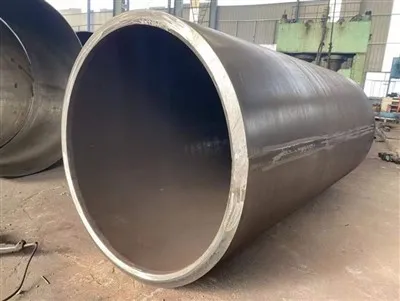
SSAW steel pipes are used in a variety of industries. In the oil and gas industry, they're used for transporting oil, gas, and other fluids. They're also used in the construction industry for building structures, such as bridges and high - rise buildings. In the water supply industry, SSAW pipes are used for water pipelines.
Different Standards of SSAW Pipes
There are different standards for SSAW pipes, such as EN 10217 SSAW PIPE. These standards define the technical requirements for the pipes, including the chemical composition, mechanical properties, and dimensional tolerances. We make sure that all our pipes meet the relevant standards to ensure their quality and performance.
Conclusion
So, that's how SSAW steel pipes are manufactured. It's a complex and precise process that requires advanced equipment, skilled workers, and strict quality control. As a supplier of SSAW steel pipes, we're committed to providing our customers with high - quality products that meet their specific needs.
If you're in the market for SSAW steel pipes, whether it's for a small project or a large - scale industrial application, we'd love to hear from you. We can offer you competitive prices, excellent quality, and reliable delivery. Don't hesitate to contact us for more information or to discuss your procurement needs. Let's work together to find the best solution for your project!
References
- ASME Boiler and Pressure Vessel Code
- API Specification 5L
- EN 10217 standards
- ISO standards related to steel pipes