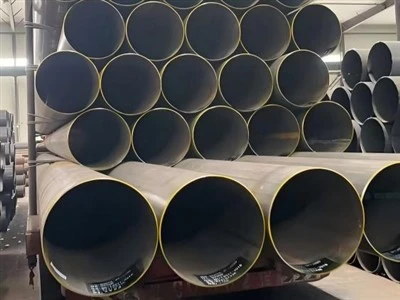
Hey there! As a supplier of seamless steel pipes, I often get asked about the wall thickness tolerance of these pipes. It's a crucial factor that can impact the performance and safety of various applications. So, let's dive into what wall thickness tolerance is and why it matters.
First off, what exactly is wall thickness tolerance? Well, in simple terms, it's the allowable deviation from the specified wall thickness of a seamless steel pipe. Every pipe is manufactured to meet certain standards, and these standards define the acceptable range within which the actual wall thickness can vary.
There are several reasons why wall thickness tolerance is important. For starters, it affects the strength and durability of the pipe. If the wall thickness is too thin, the pipe may not be able to withstand the pressure or load it's designed for, leading to potential failures. On the other hand, if the wall thickness is too thick, it can add unnecessary weight and cost to the project.


Another reason is that wall thickness tolerance can impact the flow characteristics of the fluid or gas that the pipe is carrying. A non - uniform wall thickness can cause turbulence, which can increase energy consumption and reduce the efficiency of the system.
Now, let's talk about the factors that influence wall thickness tolerance. One of the main factors is the manufacturing process. Seamless steel pipes are typically made through processes like hot - rolling or cold - drawing. During these processes, there can be variations in the material properties, temperature, and pressure, which can all affect the final wall thickness.
The type of steel used also plays a role. Different grades of steel have different mechanical properties, and these properties can influence how the steel behaves during manufacturing. For example, some steels may be more prone to deformation, which can lead to larger variations in wall thickness.
The size of the pipe is another important factor. Generally, larger diameter pipes may have a greater wall thickness tolerance compared to smaller diameter pipes. This is because it's more difficult to control the wall thickness precisely over a larger surface area.
Industry standards play a huge role in defining wall thickness tolerance. For instance, the ASTM (American Society for Testing and Materials) has specific standards for different types of seamless steel pipes. Take the ASTM A106 GR.B SMLS PIPE. This standard sets out the requirements for carbon steel seamless pipes for high - temperature service. It also specifies the allowable wall thickness tolerance based on the nominal wall thickness of the pipe.
Similarly, the ASTM A333 Gr.6 Seamless Pipe is used for low - temperature service. The standard for this pipe also includes details about wall thickness tolerance. These standards are in place to ensure that the pipes are of consistent quality and can be used safely in various applications.
When it comes to Seamless Mechanical Pipe, the wall thickness tolerance is also carefully regulated. These pipes are used in a wide range of mechanical applications, such as machinery and automotive parts. The tolerance requirements are often more stringent because of the high - precision nature of these applications.
As a supplier, we take wall thickness tolerance very seriously. We have strict quality control measures in place to ensure that our pipes meet or exceed the industry standards. Our manufacturing facilities are equipped with advanced inspection equipment, such as ultrasonic testing and magnetic particle inspection, to detect any deviations in wall thickness.
We also have a team of experienced quality control engineers who monitor the manufacturing process from start to finish. They take regular samples and measure the wall thickness using precision instruments. If any pipes are found to be outside the acceptable tolerance range, they are either re - worked or rejected.
In addition to meeting the industry standards, we also work closely with our customers to understand their specific requirements. Sometimes, customers may have unique applications that require a tighter or looser wall thickness tolerance. In such cases, we can customize our manufacturing process to meet their needs.
For example, if a customer is using our pipes in a high - pressure application, we can ensure that the wall thickness is as close to the nominal value as possible to ensure maximum safety and performance. On the other hand, if the application is less critical, we may be able to offer a more cost - effective solution with a slightly wider tolerance.
So, if you're in the market for seamless steel pipes, it's important to consider the wall thickness tolerance. A reliable supplier like us can provide you with pipes that meet your quality and performance requirements. Whether you need pipes for industrial applications, construction projects, or mechanical systems, we've got you covered.
If you're interested in learning more about our seamless steel pipes or have specific questions about wall thickness tolerance, don't hesitate to reach out. We're always happy to have a chat and discuss how we can meet your needs. Contact us today to start a conversation about your next project. We're confident that we can provide you with the high - quality seamless steel pipes you're looking for at a competitive price.
References:
- ASTM International standards for seamless steel pipes
- Technical literature on seamless steel pipe manufacturing processes