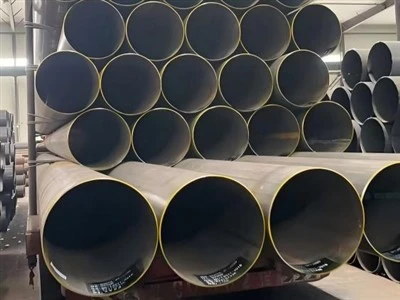
Hey there! As an LSAW pipe supplier, I know how crucial it is to ensure the roundness of our pipes. Roundness is a key factor that can affect the performance and quality of LSAW pipes in various applications. In this blog, I'll share some practical ways to check the roundness of LSAW pipes.
Why Roundness Matters
Before we dive into the checking methods, let's talk about why roundness is so important. When LSAW pipes are used in pipelines, mechanical structures, or other projects, a proper round shape ensures uniform stress distribution. If the pipe is out - of - round, it can lead to uneven pressure on the pipe wall, which may cause premature failure, leakage, or reduced efficiency in the system. For example, in a fluid - transporting pipeline, an out - of - round pipe can disrupt the smooth flow of the fluid, increasing energy consumption and potentially causing blockages.
Visual Inspection
The first and simplest way to check the roundness of LSAW pipes is through visual inspection. This might sound basic, but it can give you a quick initial assessment. Walk around the pipe and look for any obvious deformities or irregularities. You can also use a straightedge. Place the straightedge along the outer surface of the pipe at different positions. If there are significant gaps between the straightedge and the pipe surface, it could indicate a lack of roundness. However, visual inspection has its limitations. It can only detect relatively large - scale irregularities and might not be accurate enough for high - precision applications.
Caliper Measurement
Calipers are a handy tool for measuring the diameter of the pipe at multiple points. You can use either a vernier caliper or a digital caliper. Measure the diameter at several positions along the length of the pipe and at different angles around the circumference. For example, measure the diameter at the two ends and the middle of the pipe, and take readings at 0°, 90°, 180°, and 270° around the pipe. Calculate the difference between the maximum and minimum diameters. A smaller difference indicates better roundness. In general, for most standard LSAW pipes, the allowable deviation in diameter due to roundness is specified in relevant standards. For instance, according to some industry standards, the difference between the maximum and minimum diameters should not exceed a certain percentage of the nominal diameter.
Ring Gauge Testing
Ring gauges are another effective way to check the roundness of LSAW pipes. A ring gauge is a precision - made circular tool with a specific inner diameter. Pass the pipe through the ring gauge. If the pipe fits snugly through the ring gauge without any binding or excessive play, it suggests that the pipe's roundness is within an acceptable range. However, ring gauges are usually designed for specific pipe sizes, so you need to have a set of ring gauges corresponding to different pipe diameters.
Coordinate Measuring Machine (CMM)
For more accurate and detailed roundness measurements, a Coordinate Measuring Machine (CMM) can be used. A CMM uses a probe to measure the coordinates of points on the surface of the pipe. By taking a large number of points around the circumference and along the length of the pipe, the CMM can generate a detailed 3D model of the pipe's surface. Specialized software can then analyze this data to calculate the roundness error. This method is highly accurate and can detect even the slightest deviations in roundness. But it requires expensive equipment and trained operators, so it's often used in high - end manufacturing or quality control laboratories.
Laser Scanning
Laser scanning is a modern and efficient way to check the roundness of LSAW pipes. A laser scanner emits a laser beam that scans the surface of the pipe. As the laser beam moves around the pipe, it measures the distance between the scanner and the pipe surface at multiple points. The data collected is then processed to create a digital model of the pipe. Similar to CMM, software can analyze this model to determine the roundness. Laser scanning is fast, non - contact, and can cover a large area in a short time. It's suitable for both on - site and in - factory inspections.
Standards and Specifications
When checking the roundness of LSAW pipes, it's essential to refer to relevant standards and specifications. Different industries and applications may have different requirements for pipe roundness. For example, SSAW STEEL PIPES used in general construction might have different roundness tolerances compared to ASTM A252 STEEL PIPE PILES used in marine foundations. EN 10219 SSAW PIPE also has its own set of rules regarding roundness. Make sure you are familiar with the specific standards applicable to your pipes to ensure compliance.


Importance of Regular Checks
Regularly checking the roundness of LSAW pipes is not just a one - time thing. It should be an ongoing part of the quality control process. During the manufacturing process, roundness checks can help identify any issues early on, allowing for timely adjustments to the production parameters. For pipes that are already in use, periodic inspections can detect any changes in roundness over time, which could be due to factors such as external forces, corrosion, or wear.
Conclusion
Checking the roundness of LSAW pipes is a multi - step process that involves a combination of simple visual inspections and advanced measurement techniques. By using the right methods and referring to relevant standards, we can ensure that our pipes meet the required quality and performance criteria. As an LSAW pipe supplier, I'm committed to providing high - quality pipes to my customers. If you're in the market for LSAW pipes or have any questions about roundness or other quality aspects, don't hesitate to get in touch. We can have a detailed discussion and find the best solutions for your specific needs.
References
- Pipe Manufacturing and Quality Control Handbook
- Industry Standards for LSAW Pipes
- Technical Papers on Pipe Roundness Measurement