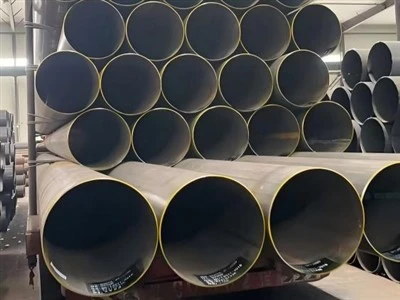
Hey there! As a supplier of EN 10219 hollow sections, I often get asked if these sections can be used in high - stress applications. Well, let's dig into this topic and find out.
First off, what are EN 10219 hollow sections? These are structural hollow sections that are manufactured according to the European standard EN 10219. They come in different shapes like square, rectangular, and circular, and are widely used in various construction and engineering projects.
Properties of EN 10219 Hollow Sections
One of the key factors to consider when thinking about high - stress applications is the material properties of these hollow sections. EN 10219 hollow sections are made from steel, which generally has good strength and ductility. The standard specifies different grades of steel, and each grade has its own set of mechanical properties.
For example, some grades are designed to have high yield strength, which means they can withstand a certain amount of stress before they start to deform permanently. This is crucial in high - stress applications where the structure needs to maintain its shape and integrity under heavy loads. The steel used in EN 10219 sections also has good toughness, which allows it to absorb energy without fracturing easily.
High - Stress Applications
High - stress applications can be found in many industries. In the construction industry, for instance, buildings and bridges often face high stresses due to factors like wind, earthquakes, and the weight of the structure itself. In the mechanical engineering field, machinery and equipment may also operate under high - stress conditions.
Let's take a look at some specific high - stress scenarios where EN 10219 hollow sections could potentially be used. In the construction of high - rise buildings, the columns and beams need to support a huge amount of weight. EN 10219 square or rectangular hollow sections can be used as columns because of their ability to distribute the load evenly. They can also be used in the framework of large industrial buildings, where they need to withstand heavy equipment and storage loads.
In bridge construction, the girders and braces are subjected to high stresses from traffic loads and environmental factors. Circular hollow sections made according to EN 10219 can be a great choice for these components. Their circular shape provides excellent resistance to bending and torsional forces, which are common in bridge structures.
Advantages in High - Stress Situations
There are several advantages of using EN 10219 hollow sections in high - stress applications. One of the main advantages is their high strength - to - weight ratio. Compared to solid steel sections, hollow sections can provide the same level of strength while being lighter. This is beneficial in many ways. It reduces the overall weight of the structure, which in turn reduces the foundation requirements and the cost of construction.
Another advantage is the ease of fabrication. EN 10219 hollow sections can be easily cut, welded, and assembled. This allows for a more efficient construction process, especially in high - stress applications where the components need to be precisely fabricated to meet the design requirements.
Limitations
However, it's not all rosy. There are also some limitations to using EN 10219 hollow sections in high - stress applications. One of the main limitations is the risk of local buckling. In some cases, when the stress is concentrated in a small area of the section, the thin walls of the hollow section may buckle. This can lead to a reduction in the load - carrying capacity of the structure.


To overcome this limitation, proper design and reinforcement measures need to be taken. For example, using stiffeners or increasing the wall thickness of the hollow section can help prevent local buckling.
Comparison with Other Products
It's also important to compare EN 10219 hollow sections with other similar products in the market. For example, API5L / ASTM A53 ERW PIPE is another type of steel pipe that is often used in various applications. While API5L / ASTM A53 ERW pipes are also strong and can be used in high - stress situations, they have different cross - sectional shapes and mechanical properties compared to EN 10219 hollow sections.
EN 10210 S460ML HOLLOW SECTIONS are also an alternative. They are manufactured according to a different European standard, and the S460ML grade is known for its high strength. In some high - stress applications, EN 10210 S460ML sections may be a better choice depending on the specific requirements of the project.
Similarly, API 5L PSL1 X52 Line Pipe is commonly used in the oil and gas industry for transporting fluids under high pressure. While it has its own advantages in that specific application, it may not be the best fit for all high - stress construction or mechanical engineering scenarios.
Making the Right Choice
So, can EN 10219 hollow sections be used in high - stress applications? The answer is yes, but it depends on the specific requirements of the project. Before making a decision, it's important to consider factors like the type of stress (tensile, compressive, or shear), the magnitude of the stress, and the environmental conditions.
If the high - stress application requires a structure with a high strength - to - weight ratio and ease of fabrication, EN 10219 hollow sections can be a great option. However, if the stress levels are extremely high or the application has very specific requirements, it may be necessary to consider other alternatives or to use additional reinforcement techniques.
Conclusion
In conclusion, EN 10219 hollow sections have a lot of potential in high - stress applications. Their unique properties, such as high strength - to - weight ratio and ease of fabrication, make them a viable choice for many high - stress scenarios in the construction and mechanical engineering industries. However, it's important to be aware of their limitations and to make a well - informed decision based on the specific needs of the project.
If you're in the process of planning a high - stress project and are considering using EN 10219 hollow sections, I'd be more than happy to discuss your requirements. We can talk about the best grade of steel, the appropriate section size, and any other details to ensure that you get the most suitable product for your application. Feel free to reach out and start a conversation about your procurement needs.
References
- European Standard EN 10219:2006, Hot finished structural hollow sections of non - alloy and fine grain steels.
- Construction Engineering and Management textbooks.
- Mechanical Engineering handbooks on materials and structures.